TL;DR:
- Expediter services are specialized logistics solutions that accelerate freight movement and customs clearance for time-sensitive shipments. They manage transportation, documentation, and customs processes to ensure on-time delivery across domestic and international supply chains.
Expediter services are defined as specialized logistics solutions that accelerate the movement of freight and customs clearance beyond standard shipping timelines. In import/export operations, the industry more commonly refers to these professionals and platforms as “expediters” or “freight expediters,” though the underlying function aligns closely with what freight forwarding services provide at speed. The expeditor role in logistics covers transportation coordination, customs paperwork support, and real-time shipment monitoring for time-sensitive cargo. For businesses shipping across borders, the difference between a delayed and an on-time delivery often comes down to whether an experienced expediter is managing the process end to end.
What types of expediter services exist and how do they function?
Expediter services fall into several distinct categories, each designed for a specific freight scenario. Understanding the differences helps logistics professionals select the right solution rather than defaulting to the most expensive option.
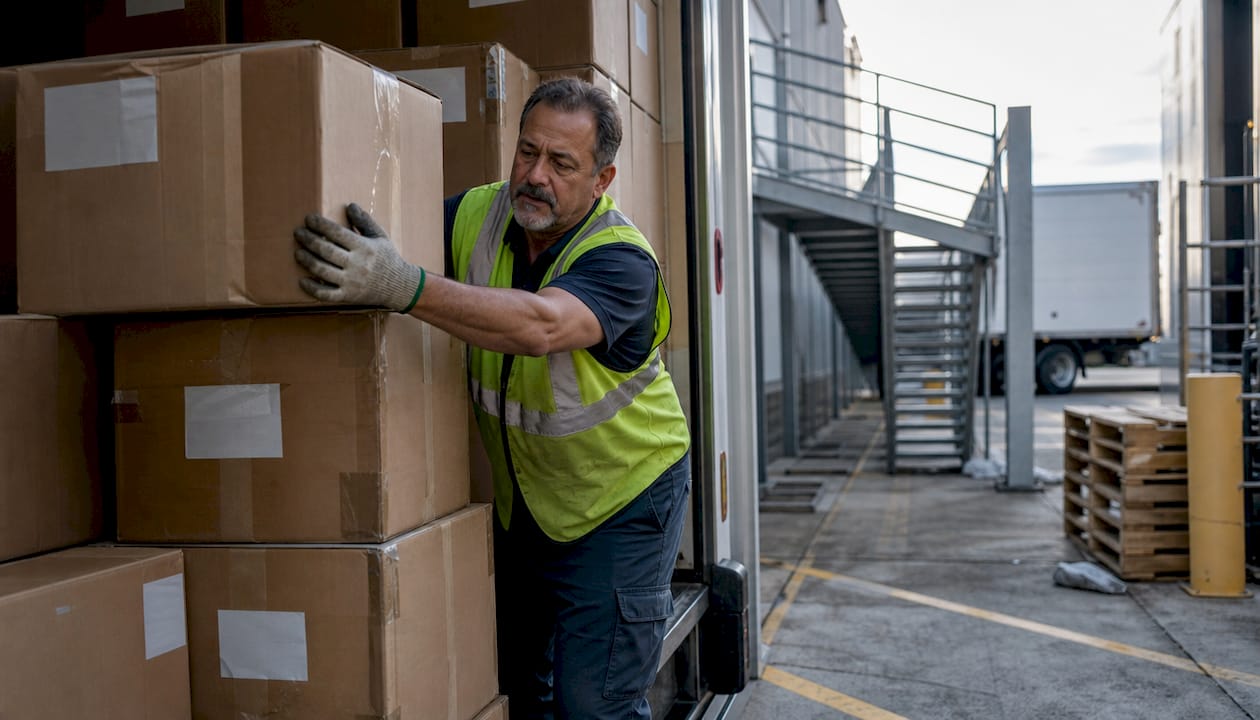
Ground expedited freight moves cargo via dedicated truck or team drivers without the stops and transfers that slow standard less-than-truckload shipments. This option works well for domestic shipments where air freight costs are not justified. Air expedited freight prioritizes speed above all else, routing cargo on the next available flight to the destination. Dedicated expediters manage time-sensitive freight and optimize routing across both ground and air networks, making them the most hands-on option for complex shipments.
Customs clearance expediting is a separate but equally critical function. An expediter working in customs coordinates documentation, tariff classification, and communication with customs authorities to prevent holds that derail even the fastest air shipments. This is where the expeditor role in logistics intersects directly with freight forwarding services. Freight forwarders handle routing, documentation, and communication to maintain smooth global shipments, and expediters operating in this space do the same at a compressed timeline.
The distinction between expedited, express, and standard shipping matters more than most logistics professionals realize. Standard ground shipping moves on shared networks with multiple stops. Express services offer faster guaranteed windows, typically overnight or two-day. Expedited services, in the truest sense, involve dedicated capacity and active management of the shipment from pickup to delivery.
- Domestic expedited: 1–3 business days for most U.S. routes, depending on origin and destination.
- International expedited: 2–5 business days depending on destination country and customs clearance efficiency.
- Customs clearance expediting: Reduces hold times by ensuring documentation is complete before the shipment arrives at the border.
- End-to-end expediting: A single expeditor manages every handoff, from carrier booking to final delivery confirmation.
Pro Tip: When booking expedited international shipping, confirm that customs clearance support is included in the service scope. Transportation speed means nothing if the shipment sits at the border waiting for paperwork.
How do expedited shipping options impact cost and delivery speed?
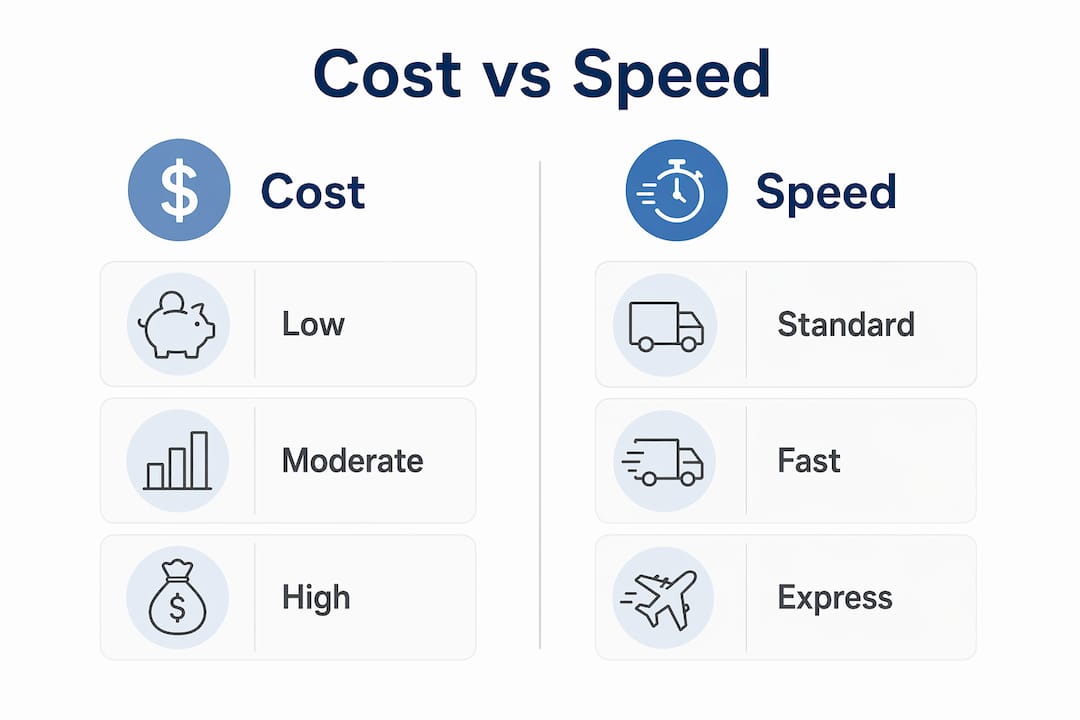
Cost is the most immediate concern when logistics professionals evaluate expediting logistics solutions. Expedited shipping costs more than standard ground shipping, sometimes 2–3 times more. That premium reflects dedicated capacity, priority handling, and the labor involved in active shipment management.
The table below shows how service levels compare across key dimensions for a typical U.S. domestic shipment.
| Service level | Typical transit time | Relative cost | Best use case |
|---|---|---|---|
| Standard ground | 5–7 business days | Baseline | Non-urgent, low-value freight |
| Expedited ground | 2–3 business days | 1.5x baseline | Time-sensitive domestic cargo |
| Overnight/express | 1 business day | 2–3x baseline | Critical parts, perishables |
| International expedited | 2–5 business days | Varies by lane | Urgent cross-border shipments |
Transit time estimates are only reliable when operational windows are respected. Booking after a carrier’s daily pickup turns an overnight service into a two-day transit. That single missed cutoff erases the premium paid for speed. Logistics teams must align warehouse packing schedules with carrier pickup windows, not just booking deadlines.
Over-expediting non-critical freight is a real and underappreciated cost driver. Freight plans should align with product risk tolerance and delivery urgency, not default to the fastest available option. A shipment of standard packaging materials does not warrant the same service level as a production-critical component.
Automated rate-shopping tools help logistics professionals compare carrier rates and transit times in a single view. This avoids the common mistake of manually selecting a carrier based on habit rather than current pricing and availability. The best freight forwarding services integrate rate-shopping directly into their workflows, giving shippers real-time visibility into cost versus speed trade-offs.
Pro Tip: Evaluate your shipment portfolio quarterly. Identify which freight categories are consistently being expedited and ask whether the urgency is real or a symptom of poor inventory planning. Fixing the root cause is cheaper than paying 2–3x on every shipment.
How can import/export businesses integrate expediter services into their logistics strategies?
Integrating expediting logistics solutions into an existing supply chain requires more than selecting a fast carrier. It demands a structured approach that aligns service levels with business priorities and operational realities.
-
Classify freight by urgency and risk. Not every shipment needs expedited handling. Segment your freight into tiers: production-critical, time-sensitive, and standard. Apply expedited options only to the first two categories. A risk assessment framework helps logistics teams evaluate which shipments genuinely justify the premium.
-
Coordinate with freight forwarders and customs brokers early. Customs clearance expediting fails when documentation arrives late. Share commercial invoices, packing lists, and harmonized tariff codes with your customs broker before the shipment departs. Worldwideexpress provides U.S. customs brokerage support that integrates directly with freight forwarding workflows, reducing the gap between transport and clearance.
-
Use fulfillment centers strategically. Positioning inventory closer to key markets reduces the distance freight must travel, which lowers the threshold for when expedited ground shipping becomes sufficient. A warehouse in the Midwest serves both coasts faster than a single East Coast location.
-
Implement automated shipping workflows. Manual carrier selection slows down the booking process and increases the risk of missing cutoff times. Automated systems that pull real-time rates and apply predefined service-level rules remove human delay from the equation.
-
Standardize documentation templates. For repeat international lanes, pre-built documentation templates eliminate the time spent recreating paperwork for each shipment. This is particularly valuable for customs clearance expediting, where incomplete documents are the leading cause of border holds.
-
Track every shipment actively, not passively. Passive tracking means checking status when a problem is reported. Active tracking means monitoring milestones and intervening before a delay becomes a missed delivery. Shipping delays and solutions for global businesses require proactive visibility, not reactive troubleshooting.
The expedite trucking strategies that work best combine carrier discipline with internal process rigor. Speed on the road means nothing if the shipment is not ready when the driver arrives.
What common challenges and best practices exist when using expediter services?
Expediter services deliver results when executed correctly. The most common failures trace back to operational gaps, not carrier performance.
Cutoff time mismanagement is the single most preventable cause of failed expedited shipments. On-time delivery depends on warehouse teams meeting carrier operational windows. A shipment packed 30 minutes after the cutoff pays for overnight service and receives two-day transit.
Relying on marketing labels creates false expectations. “Expedited” definitions vary by carrier, and service-level agreements differ significantly across providers. Logistics professionals must read the specific SLA terms, not the marketing description. A carrier advertising “expedited” service may guarantee delivery within five business days, which is standard for some international lanes.
The following practices separate high-performing expedited logistics operations from those that consistently overpay for underperformance:
- Confirm carrier SLA terms in writing before committing to a service level.
- Build cutoff time compliance into warehouse KPIs, not just carrier scorecards.
- Assign a single point of contact for each expedited shipment to prevent communication gaps.
- Verify customs documentation completeness 24 hours before the shipment departs for international lanes.
- Use global shipping optimization tools to monitor shipment milestones in real time and trigger alerts when a handoff is at risk.
- Review expedited spend monthly and categorize each shipment as justified or preventable.
The cost of a single border hold on an expedited international shipment can exceed the savings from weeks of careful carrier selection. Accurate, complete customs paperwork is not a back-office function. It is a core component of the expedited service itself.
Key Takeaways
Expediter services deliver value only when freight urgency, documentation accuracy, and carrier cutoff compliance work together as a single coordinated process.
| Point | Details |
|---|---|
| Define service levels precisely | “Expedited” means different things to different carriers; always verify the specific SLA terms. |
| Match speed to urgency | Over-expediting non-critical freight adds cost without business value; tier your freight by risk. |
| Customs clearance is part of the service | Incomplete documentation causes border holds that negate even the fastest air transit. |
| Cutoff times are non-negotiable | Missing a carrier pickup window converts overnight service into two-day transit at premium cost. |
| Automate rate shopping | Multi-carrier rate tools prevent overpaying and surface the optimal service level for each shipment. |
What I’ve learned about expediter services after years in the field
The most common misconception I encounter is that expediter services are simply “fast shipping.” They are not. They are a coordinated discipline that requires internal process rigor to match the speed of the carrier.
The businesses that get the most value from expedited logistics solutions are not the ones booking the fastest service on every shipment. They are the ones that have done the harder work of classifying their freight, standardizing their documentation, and aligning their warehouse operations with carrier windows. Speed is the output. Process is the input.
The other observation worth sharing is that customs clearance expediting is where most international shipments actually fail. Logistics professionals spend significant energy selecting the right air carrier and then lose two days at the border because a commercial invoice had the wrong Harmonized System code. The expeditor role in logistics must extend into the documentation process, not just the transportation leg.
Technology is changing the calculus here in genuinely exciting ways. Automated rate-shopping platforms, real-time customs pre-clearance tools, and AI-assisted document verification are compressing the time between booking and departure. The businesses that adopt these tools now will have a structural advantage in 2026 and beyond. The ones still relying on manual processes will keep paying the expedited premium without getting the expedited result.
— Ian
How Worldwideexpress supports your expedited freight and forwarding needs
Worldwideexpress provides freight forwarding services, customs brokerage, and expedited shipping options designed for import/export businesses that cannot afford delays.
The Worldwideexpress approach combines expert customs clearance support with technology-enabled transportation management services, giving logistics professionals a single point of coordination for both the transport and compliance sides of international freight. For businesses ready to build a more disciplined expedited logistics strategy, the freight forwarding 2026 guide is the right starting point. Contact Worldwideexpress directly to discuss a tailored logistics plan for your specific import/export lanes and freight categories.
FAQ
What is an expediter service in logistics?
An expediter service is a logistics solution that accelerates freight movement and customs clearance beyond standard timelines. Dedicated expediters manage shipments end to end, coordinating transportation, documentation, and carrier handoffs for time-sensitive cargo.
How long does expedited shipping take domestically vs. internationally?
Domestic expedited shipping typically delivers within 1–3 business days. International expedited services generally require 2–5 business days, depending on the destination and customs clearance efficiency.
Why does expedited shipping cost more than standard shipping?
Expedited shipping costs 2–3 times more than standard ground shipping because it uses dedicated capacity, priority handling, and active shipment management rather than shared carrier networks.
How do I choose the right expediting service for my shipment?
Evaluate the shipment’s urgency, product risk tolerance, and destination customs requirements. Confirm the carrier’s specific SLA terms rather than relying on marketing labels, and use automated rate-shopping tools to compare cost and transit time across service levels.
What causes expedited shipments to fail despite premium service?
The two leading causes are missed carrier cutoff times and incomplete customs documentation. A shipment booked after the daily pickup window loses its expedited status, and a border hold from missing paperwork negates the speed of any air or ground service.
Recommended
- Expedited International Shipping: Fast-Track Your Global Deliveries – Worldwide Express, Inc.
- Step-by-step guide to exporting goods: compliance to shipment – Worldwide Express, Inc.
- Express Shipping for E-Commerce: A 2026 Business Guide – Worldwide Express, Inc.
- Importing from Europe: Step-by-Step U.S. Business Guide – Worldwide Express, Inc.