TL;DR:
- Shipping oversized cargo internationally requires careful planning and compliance with complex permit and escort regulations. Proper preparation, early route assessment, and reliable logistics partners are essential to prevent delays, fines, or permit rejections. Worldwide Express offers expert guidance, tailored logistics solutions, and comprehensive support to ensure safe, efficient, and compliant oversized freight transit.
Shipping oversized cargo internationally is one of the most compliance-heavy, operationally demanding tasks in global trade. Get it wrong, and you are looking at permit rejections, costly shipment delays, or fines that could dwarf the cost of the freight itself. Get it right, and you move industrial equipment, wind turbine components, or heavy machinery across borders without a hitch. This guide covers the full process, from understanding legal dimension thresholds and securing permits, to escort compliance, carrier selection, and delivery verification, so your next large freight move goes exactly as planned.
Table of Contents
- Understanding oversized cargo shipping requirements
- Planning and securing permits for oversized cargo shipments
- Compliance with escort and safety regulations during transport
- Choosing the right transport mode and carrier for oversized cargo
- Monitoring shipment progress and ensuring delivery compliance
- Why thorough preparation beats last-minute fixes in oversized cargo shipping
- Streamline your oversized cargo shipping with Worldwide Express
- Frequently asked questions
Key Takeaways
| Point | Details |
|---|---|
| Understand regulations | Oversized cargo must comply with precise dimension and weight limits that vary by jurisdiction. |
| Prepare permits early | Complete and accurate permit applications with detailed load and route info streamline approval. |
| Plan escorts carefully | Escort vehicle requirements are mandatory and depend on load size and route complexity. |
| Choose transport mode wisely | Matching cargo needs with transport options like trucking, air freight, or driveaway saves cost and time. |
| Monitor shipments actively | Real-time tracking and communication throughout transport ensure compliance and timely delivery. |
Understanding oversized cargo shipping requirements
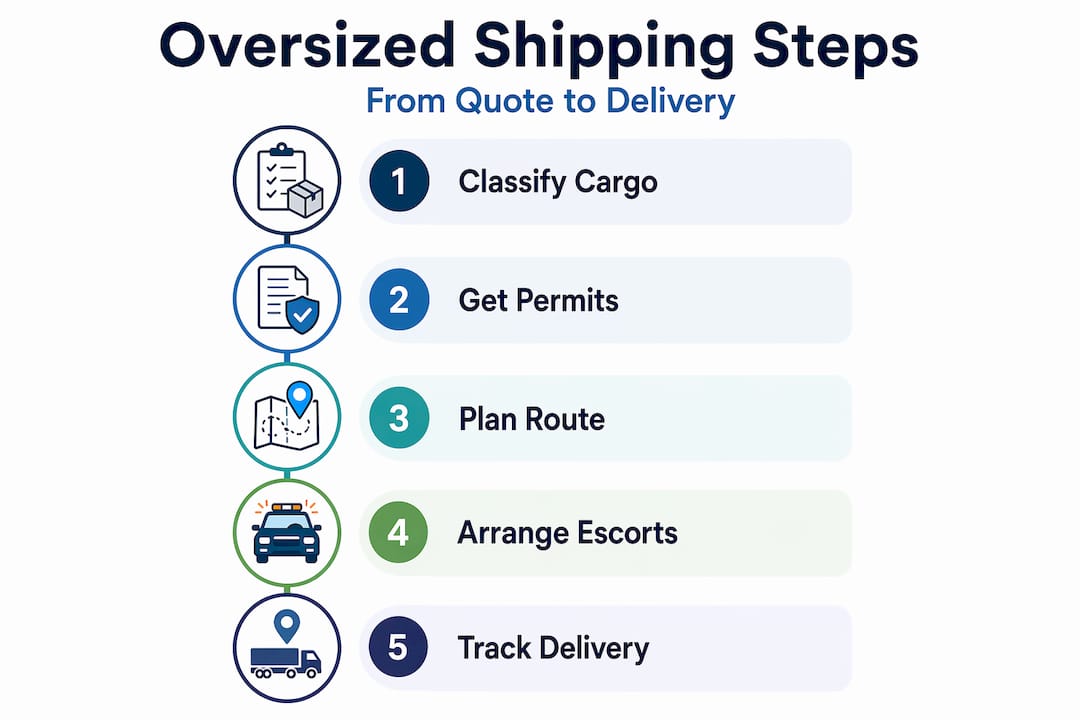
Before a single load hits the road or clears a port, businesses need a firm grasp of what legally defines oversized cargo and what that classification triggers in terms of permitting. Oversized cargo, sometimes called oversize load or wide load freight, refers to any shipment that exceeds the standard legal limits for width, height, length, or gross weight set by the jurisdiction through which it travels. In the United States, the federal baseline sits at 8.5 feet wide, 13.5 to 14 feet tall, 48 to 53 feet long, and 80,000 pounds gross vehicle weight rating (GVWR), though individual states set their own thresholds on top of that.
Missouri offers one of the most detailed compliance frameworks available for reference. Per the MoDOT 2025 legal dimensions, any load exceeding those standard legal maximums requires a special permit before it can move legally on public roads. That means businesses shipping large items like construction cranes, prefabricated building sections, or oil refinery components cannot assume a single national rule applies everywhere. Each state, country, or customs zone may impose different rules.
Key factors that determine whether a shipment is classified as oversized include:
- Width exceeding 8.5 feet
- Height exceeding 13.5 to 14 feet depending on the route
- Length beyond 53 feet for a standard combination vehicle
- Gross weight over 80,000 pounds GVWR
- Axle weight exceeding per-axle legal limits even if total GVWR is within range
Understanding freight quote factors tied to these classifications early on helps businesses anticipate costs before committing to a carrier or transit schedule. For additional context on how carriers interpret oversize thresholds in practice, container haulage insights from experienced haulers can clarify real-world application of these rules.
| Dimension category | Standard legal limit | Permit required above |
|---|---|---|
| Width | 8.5 ft | 8.5 ft |
| Height | 13.5 to 14 ft | Varies by state/route |
| Length | 53 ft (combination) | Varies by state |
| Gross weight | 80,000 lbs | 80,000 lbs |
| Single axle weight | 20,000 lbs | 20,000 lbs |
Planning and securing permits for oversized cargo shipments
With the regulatory framework understood, the next step is converting that knowledge into a permit application that actually gets approved quickly. Delays in permit processing are almost always caused by incomplete submissions, not slow government agencies. The MoDOT permit application process makes clear that precise load and vehicle data, along with documented route and insurance information, are the core inputs that reduce processing friction.
A well-prepared permit dossier typically requires the following steps:
- Gather vehicle specifications including VIN numbers, axle configuration, axle spacing, and individual axle weights.
- Document load dimensions precisely: total height including load, total width at widest point, total length from front bumper to rear of load, and overhang measurements.
- Plan the route using mapping tools that account for bridge weight ratings, overhead clearance restrictions, and road surface limitations.
- Confirm insurance coverage at or above minimum requirements. Missouri, for example, requires $750,000 in liability coverage as a condition of permit issuance.
- Submit the application through the jurisdiction’s official portal well ahead of the planned move date, accounting for processing time.
- Anticipate engineering reviews if the load approaches superload thresholds, which can add days or weeks to approval timelines.
Pro Tip: If your load is close to superload thresholds (typically over 16 feet wide or exceeding 250,000 pounds), commission a preliminary route feasibility study before submitting your permit application. This prevents the embarrassing and expensive scenario of receiving a permit denial because a critical bridge cannot support the load’s weight.
For businesses transporting oversized goods across multiple states or countries, logistics optimization tips covering multi-jurisdiction routing can reduce the number of separate permit applications needed and identify corridor routes pre-cleared for heavy freight.
Insurance documentation is frequently the detail that stalls permit approvals. Keep a current certificate of insurance on file specifically formatted for oversize load operations, because a general commercial auto policy may not satisfy state-specific permit conditions.
Compliance with escort and safety regulations during transport
Securing the permit is half the battle. Moving the load legally and safely requires full compliance with escort vehicle requirements, signage rules, and operational restrictions during transit. These are not suggestions. Violations can result in fines, forced stops, or permit revocation on the spot.
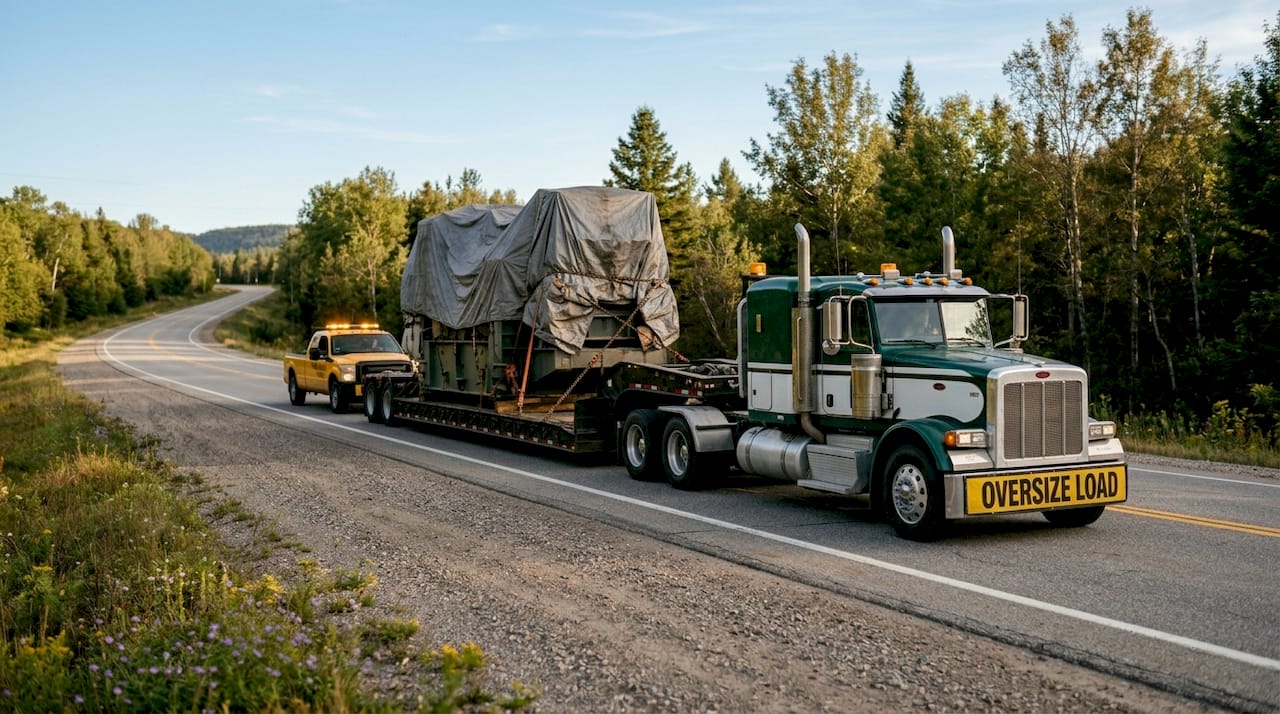
Per MoDOT’s 2025 escort requirements, escort vehicles serve as active traffic warnings and must meet specific equipment and signage standards. The number of escorts required scales with load dimensions and route complexity.
Core compliance elements for escort operations include:
- Oversize Load signs must meet minimum size specifications (typically 18 inches by 7 feet) and be displayed on both escort vehicles and the transport vehicle itself.
- Flags must be at least 18 inches square and fluorescent yellow or orange.
- Escort vehicle lighting must include functioning amber flashing lights visible from 500 feet.
- Pilot car operators must hold valid pilot car certifications where required by state law.
- Front and rear escorts are required for loads exceeding certain width thresholds, typically above 14 feet wide.
“Escort vehicles serve as a warning to traffic and have specific signage and flag requirements; the number of escorts required depends on load size and complexity.” Per MoDOT’s 2025 escort framework, failing to meet these standards exposes carriers and shippers to enforcement actions that can stop a shipment mid-route.
Pro Tip: Build escort staffing and equipment procurement into your transport schedule at the planning stage, not after permits are in hand. Last-minute escort sourcing in rural corridors can delay departure by days, particularly during peak construction season when pilot car operators are heavily booked.
Staying current on broader trucking compliance trends helps businesses anticipate regulatory changes that may affect escort requirements on frequently used corridors.
Choosing the right transport mode and carrier for oversized cargo
Compliance aside, the choice of transport mode shapes the entire economics and timeline of how to handle big freight effectively. Specialized trucking with oversize permits is the most common method for land-based oversized shipments, but it is not always the only viable option.
DHL’s Heavy Weight Express offers fast, reliable air shipping for heavy cargo up to 3,000 kilograms per shipment, with specialized handling and full shipment visibility. For time-critical components, that speed premium can be justified by the cost of a production line sitting idle.
Driveaway services present a cost-effective alternative when the oversized cargo is itself a vehicle or self-propelled equipment. Rather than loading a crane onto a lowboy trailer, a qualified driver operates the crane under escort to its destination, reducing equipment and fuel costs significantly.
| Transport mode | Best for | Typical cost range | Transit speed | Key limitation |
|---|---|---|---|---|
| Specialized trucking | Most land oversized loads | Mid to high | Days to weeks | Permit complexity |
| Air freight (heavy) | Time-critical, under 3,000 kg | Very high | 1 to 3 days | Weight/size cap |
| Ocean freight (breakbulk) | Very large, non-containerized cargo | Low to mid | Weeks | Port access needed |
| Driveaway | Operable oversized vehicles | Low to mid | Variable | Requires operable load |
Key considerations when selecting a carrier for shipping large items internationally include:
- Weight and dimension against each mode’s physical limits
- Time sensitivity and production or installation deadlines
- Total landed cost including permits, escorts, insurance, and mode-specific fees
- Route infrastructure, particularly for ocean or air ports of entry
Review the full spectrum of freight transportation modes before locking in a carrier, because the cheapest per-mile rate often ignores the hidden costs of permit delays or cargo handling damage.
Monitoring shipment progress and ensuring delivery compliance
Transporting oversized goods does not end when the truck leaves the yard. Proactive monitoring from departure to delivery is what separates businesses that consistently close shipments cleanly from those that scramble at the finish line.
As noted by DHL’s shipment monitoring practices, specialized shipments benefit enormously from dedicated visibility tools that surface exceptions early, enabling proactive intervention before delays become critical.
A structured monitoring and delivery compliance process should follow these steps:
- Activate real-time tracking on the transport vehicle and confirm all stakeholders have access to the tracking portal.
- Coordinate daily check-ins with escort teams to verify ongoing permit and safety compliance at each state or jurisdiction boundary crossing.
- Prepare delivery documentation in advance, including permit copies, weight certificates, and cargo condition photos taken at loading.
- Brief the receiving site on arrival logistics, access requirements, and unloading equipment needed for the specific cargo type.
- Conduct a delivery inspection immediately upon arrival, documenting cargo condition against the pre-shipment baseline before signing off.
Additional best practices for the monitoring phase include:
- Assign a single point of contact at your organization for real-time escalation decisions
- Pre-identify alternate routes in case of road closures or emergency detours
- Verify that destination permits and any required inspections are scheduled before the load arrives
Leveraging robust supply chain visibility tools purpose-built for freight forwarding gives businesses the situational awareness to catch compliance gaps before they become enforcement actions.
Why thorough preparation beats last-minute fixes in oversized cargo shipping
There is a pattern that appears repeatedly in oversized cargo shipping: businesses that are new to it underestimate the lead time required for permitting and treat escort planning as an afterthought. The result is predictable. Permits get rejected for missing axle data. Escorts cannot be sourced on a 48-hour notice. Loads sit in staging yards burning detention fees.
Per MoDOT’s superload permit process, loads that qualify as superloads require full engineering reviews before permit approval, a process that can add significant days or even weeks to an already tight project timeline. Businesses that discover this requirement after scheduling a customer delivery date face expensive rescheduling and credibility damage.
The best practices for oversized shipping are not complicated, but they are unforgiving of shortcuts. A complete permit dossier assembled three weeks before a planned move date almost always gets approved faster than an urgent, incomplete submission filed two days before departure. Escort vendors booked in advance offer better pricing and guaranteed availability. Route feasibility studies commissioned early reveal bridge or clearance conflicts that, if discovered mid-transit, require rerouting under time pressure.
The cost to ship heavy cargo is heavily influenced by planning quality. Detention fees, permit rejection resubmissions, emergency escort sourcing premiums, and carrier rebooking charges are all avoidable costs that appear only when preparation is rushed. Experienced shippers treat the permit dossier as a project in itself, not a checkbox before the real work begins.
Exploring special services freight options early in project planning also surfaces specialized carrier expertise that can guide permit preparation, escort coordination, and route selection from day one, rather than leaving those decisions to a trucking dispatcher unfamiliar with the specific load type.
Streamline your oversized cargo shipping with Worldwide Express
Navigating the full process of how to ship oversized cargo, from permit applications and escort compliance to carrier selection and delivery verification, requires deep expertise and reliable logistics partnerships. Worldwide Express brings that expertise directly to businesses involved in international trade, offering tailored logistics planning, permit guidance, comprehensive freight forwarding, and cargo insurance solutions that reduce the risk of costly compliance failures.
Whether you need help structuring an oversized shipment for the first time or want to improve the efficiency of an existing freight program, the resources and specialists at Worldwide Express are built for exactly that. Explore the full freight forwarding guide for a deeper look at international shipping fundamentals, browse expert logistics services tailored for complex freight, and protect your cargo value with purpose-built cargo insurance solutions designed for high-value oversized shipments.
Frequently asked questions
What is considered oversized cargo?
Oversized cargo exceeds standard legal dimensions or weight limits set by jurisdictions, such as widths over 8.5 feet or weights beyond 80,000 pounds GVWR. Per the MoDOT 2025 size chart, Missouri’s legal maximums define the criteria that trigger permit requirements.
How do I apply for oversized load permits?
You gather detailed load and vehicle specifications, plan your route, document insurance coverage, and submit the application through official portals like MoDOT’s online system well before your planned shipment date. The MoDOT permit requirements confirm that technical load data and route information are mandatory inputs for approval.
What escort vehicles are required for oversize shipments?
Escort vehicles must be properly licensed and equipped with “Oversize Load” signage and approved flags; the required number scales with load dimensions, with front and rear escorts mandated for wider loads. The MoDOT escort requirements specify vehicle standards, flag sizing, and escort counts based on specific dimension thresholds.
Can air freight handle oversized cargo?
Yes, specialized air services like DHL’s Heavy Weight Express can ship heavy oversized cargo with express speed and full tracking for loads up to 3,000 kilograms, making it a viable option for time-critical industrial components.
How can I ensure my oversized shipment complies during delivery?
Use real-time tracking, coordinate daily with escort teams at jurisdiction crossings, verify all permit documentation, and inspect cargo condition on arrival before signing off. Proactive shipment monitoring and clear stakeholder communication are the most reliable tools for catching compliance gaps before they escalate into fines or forced stops.
Recommended
- Top Overseas Shipping Companies: How to Choose Wisely – Worldwide Express, Inc.
- International courier vs freight: guide for managers 2026 – Worldwide Express, Inc.
- Shipping logistics explained: streamline your international trade – Worldwide Express, Inc.
- Step-by-step guide to exporting goods: compliance to shipment – Worldwide Express, Inc.