Hire a freight forwarder and customs broker once cross-border volume, regulatory complexity, or landed-cost swings outpace what your team can manage alone. The payoff is immediate: faster clearance at the border, predictable landed cost on every order, and one point of contact instead of six carrier relationships to babysit.
Before requesting quotes, get three things in order:
- Commercial invoices and HS codes for your top SKUs.
- Proof of forwarder licensing (OTI, AEO, or IATA credentials depending on mode).
- A landed-cost estimate that includes duties, freight, and broker fees.
U.S. Customs and Border Protection (CBP) and the Federal Maritime Commission (FMC) govern most of the compliance and licensing checkpoints you’ll encounter. Worldwide Express, Inc. works across freight forwarding and brokerage, which matters once you’re juggling both.
Pro Tip: Request a sample landed-cost breakdown from any provider before signing anything. If they can’t itemize duties, surcharges, and fees line by line, keep looking.
Key Takeaways
International shipping succeeds when merchants pair accurate documentation with a licensed forwarder and broker who can quote landed cost transparently before the shipment moves.
| Point | Details |
|---|---|
| Hire when complexity outpaces capacity | Recurring volume, new regulated markets, or unpredictable landed cost all signal it’s time. |
| Roles aren’t interchangeable | Forwarders move freight, brokers file entries, 3PLs handle fulfillment after clearance. |
| Documentation errors cause most delays | Mismatched invoices, wrong consignee data, and missing permits top the list. |
| Incoterms shift real risk | DDP suits smoother checkout experiences; DAP protects merchant cash flow. |
| Worldwide Express bundles the process | Freight forwarding, U.S. customs brokerage, insurance, and tracking under one provider. |
Table of Contents
- Who Handles What in International Shipping Shopify Operations?
- When Should You Outsource Freight Forwarding and Customs?
- Which Shipping Method Fits Your Delivery Promise?
- What Documents Does Customs Clearance Actually Require?
- How Is Landed Cost Calculated on International Orders?
- What Should You Ask Before Hiring a Forwarder or Broker?
- What Happens After You Sign With a Forwarder?
- What Actually Trips Up Shopify Merchants Going International
- How Worldwide Express Supports Shopify Merchants Shipping Internationally
- Frequently Asked Questions
- Sources
Who Handles What in International Shipping Shopify Operations?
A freight forwarder organizes the physical move: booking carriers, consolidating cargo, and coordinating the paperwork that gets a shipment from origin to destination port. A customs broker files the import or export entry, calculates duties, and submits declarations to the relevant customs authority. A 3PL picks up after clearance, handling warehousing, order fulfillment, and returns.
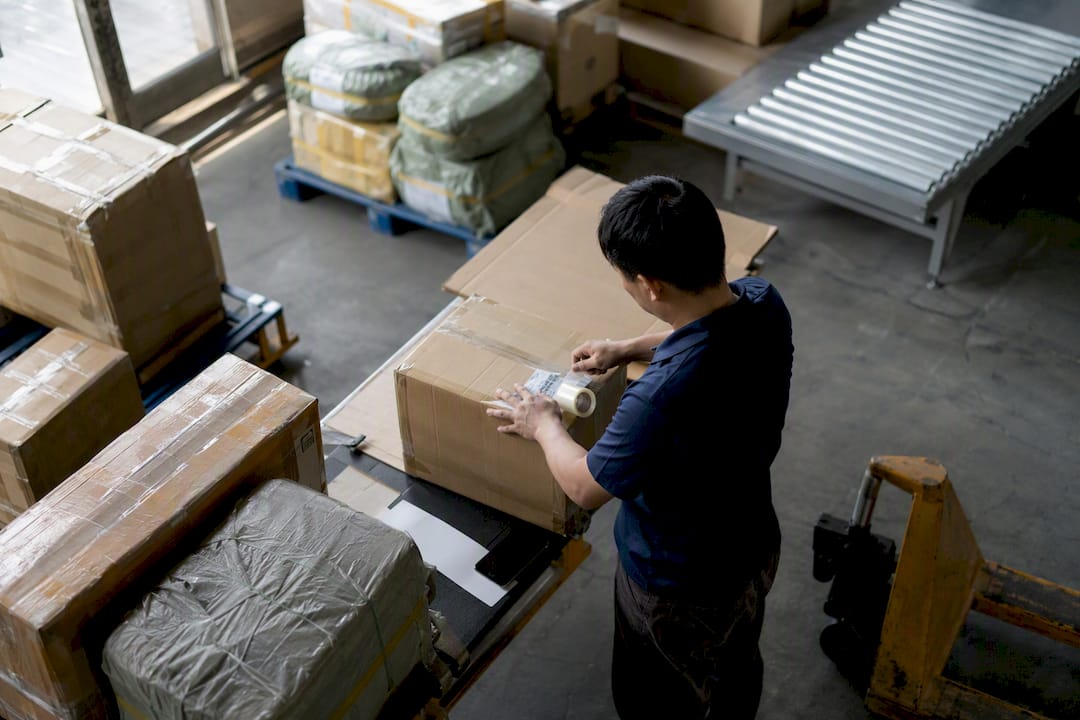
These roles overlap in practice. Many forwarders bundle brokerage services or subcontract clearance work to a licensed partner, and a large share of customs declarations get filed by brokers or forwarders rather than the importer directly.
| Role | Primary job | Typical trigger to hire |
|---|---|---|
| Freight forwarder | Books carriers, consolidates cargo, manages transit documents | First international shipment or multi-carrier routes |
| Customs broker | Files entries, calculates duties, ensures compliance | Any regulated or dutiable import/export |
| 3PL | Warehousing, fulfillment, returns, last-mile | Scaling order volume past manual fulfillment |
- Ask upfront whether your forwarder holds its own brokerage license or outsources clearance.
- Confirm which party is legally responsible if a shipment gets flagged.
Pro Tip: A forwarder that subcontracts brokerage isn’t a dealbreaker, but you want to know who to call when a shipment gets held.
When Should You Outsource Freight Forwarding and Customs?
The decision usually comes down to volume and complexity, not company size alone. Watch for these triggers:
- You’re shipping into a regulated market for the first time (food, electronics, cosmetics all carry extra permits).
- Your SKU count has grown past what one person can classify accurately.
- Landed costs vary enough between orders that you can’t price confidently.
- Monthly import volume has become recurring rather than occasional.
The fixed-cost trade-off matters here. Setting up in-house compliance, licensing, and customs software carries real fixed costs that only make sense once volume justifies them. Research on customs brokers as trade intermediaries shows they reduce those fixed costs for smaller traders, effectively letting them access markets that would otherwise require building an internal trade team first.
For a Shopify-based merchant, the checklist is simpler: how many purchase orders cross a border monthly, how complex your return flows are, and whether you need a forwarder that plugs into existing order data instead of running parallel spreadsheets.
Which Shipping Method Fits Your Delivery Promise?
Ocean freight is the cheapest option for bulk goods but the slowest, often taking weeks. Air freight cuts transit time dramatically but costs several times more per kilogram. Express services offer door-to-door speed at a premium, and rail or intermodal options work well for specific regional trade lanes, particularly across land borders.
Consolidation strategy shapes both cost and paperwork:
- LCL (less than container load): shares container space with other shippers, lowering cost but adding coordination at the destination port.
- FCL (full container load): dedicated space, simpler documentation, better for high-volume shippers.
- Air consolidation: groups smaller shipments to cut per-unit air freight cost.
- Parcel consolidation: bundles individual D2C orders bound for the same region before the final international leg.
| Mode | Relative cost | Typical transit time | Best fit |
|---|---|---|---|
| Ocean FCL/LCL | Low | several weeks | Bulk inventory, non-urgent restocks |
| Air freight | High | a few days | Time-sensitive or high-value goods |
| Express | Highest | several days | Small parcels, urgent orders |
| Rail/intermodal | Moderate | up to two weeks | Regional land-border trade lanes |
Pro Tip: If your Shopify store promises a delivery window at checkout, build in a buffer for customs dwell time. It’s the variable most merchants underestimate.
For merchants selling direct to consumers across borders, the Stanford GSB review of China to U.S. B2C logistics models makes a point worth repeating: landed-cost predictability often matters more commercially than shaving a few days off transit time. Customers tolerate a longer wait far better than a surprise duty bill.
What Documents Does Customs Clearance Actually Require?
Every international shipment needs a core paperwork set:
- Commercial invoice with accurate item values.
- Packing list matching the invoice line by line.
- Bill of lading (ocean) or airway bill (air).
- Certificate of origin, where trade agreements apply.
- Product-specific permits for regulated goods.
HS code classification determines the duty rate and whether your shipment qualifies for preferential trade treatment. Getting it wrong doesn’t just risk delay. It can mean overpaying duties for years without realizing it. Customs brokers classify products, calculate duties, and file the required declarations as part of their core service, which is why misclassification is far less common when a broker handles it from the start rather than reviewing it after the fact.
Common causes of clearance delay:
- Consignee information that doesn’t match the importer of record.
- Invoice values that don’t reconcile with the packing list.
- Missing permits for regulated categories.
- Packaging declarations that don’t match the physical shipment.
A large share of trade value moves through brokers and forwarders precisely because these errors are so costly to fix after the fact rather than caught before filing.
Pro Tip: Keep an audit-ready folder for every SKU: invoice template, HS code, and any permits, validated with your broker before the first shipment ships, not after it gets held.
How Is Landed Cost Calculated on International Orders?
Landed cost adds up fast, and the components are easy to underestimate:
- Freight charges (the base transport cost).
- Duties and tariffs (set by the destination country’s tariff schedule).
- VAT or GST, where applicable.
- Local handling and terminal fees.
- Carrier surcharges (fuel, peak season, remote area).
- Cargo insurance.
- Customs broker fees.
A simplified formula: Landed cost = product cost + freight + duties/taxes + insurance + broker fees + surcharges. The line merchants miss most often is surcharges, since fuel and peak-season fees can shift monthly without warning.
Incoterms decide who pays what and when:
- EXW (Ex Works): buyer handles everything from the seller’s dock forward, maximum risk for the buyer.
- FOB (Free on Board): seller handles origin costs; buyer takes over once goods are loaded.
- DDP (Delivered Duty Paid): seller covers duties and delivery to the buyer’s door, best customer experience but more risk and cash outlay for the merchant.
DDP tends to fit merchants who want a smoother checkout experience and can absorb duty variability. DAP (Delivered at Place) shifts customs risk to the buyer and suits merchants more focused on protecting cash flow.
| Point | Details |
|---|---|
| Landed cost formula | Product cost plus freight, duties, insurance, broker fees, and surcharges. |
| DDP vs DAP | DDP covers duties for the buyer; DAP shifts customs cost and risk to the buyer. |
| Hidden cost risk | Fuel and peak-season surcharges shift monthly and get missed most often. |
What Should You Ask Before Hiring a Forwarder or Broker?
Start with licensing. A forwarder handling ocean freight should hold an FMC OTI license, air forwarders need IATA/CASS agreements, and anyone filing entries needs an active customs brokerage license. If they issue house bills of lading, confirm their NVOCC bond too.
Beyond licensing, compare providers on:
- Technology access: does their portal or API give you shipment visibility and exception alerts, or do you find out about delays by calling?
- Pricing transparency: ask for a full landed-cost breakdown, the surcharge schedule, and demurrage/detention terms in writing.
- Trade-lane expertise: a provider strong on transpacific routes may be weak on European lanes. Ask directly.
| Vetting area | What to ask | Red flag |
|---|---|---|
| Licensing | Can you provide OTI, IATA, or brokerage license numbers? | Reluctance or vague answers |
| Technology | Do you offer portal or API visibility? | Manual status updates only |
| Pricing | What’s the full landed-cost breakdown? | Opaque or bundled fee lists |
| Local support | Who is my contact at destination? | No named local agent |
Pro Tip: Analysts generally recommend weighing technology adoption, pricing transparency, and modal flexibility more heavily than sheer network size when comparing forwarders. A huge global network doesn’t help if their portal can’t tell you where your container sits today.
What Happens After You Sign With a Forwarder?
Onboarding typically covers company documentation, importer-of-record setup, payment terms, and carrier preferences. A typical door-to-door ocean shipment moves through export pickup, main haul, destination entry, and last-mile delivery, often coordinating four to seven carriers and multiple customs filings along the way.
Your responsibilities stay fairly narrow:
- Accurate invoices and product data.
- Timely ASN or PO information.
- Fast turnaround on any customs queries.
The forwarder handles carrier coordination, filings, and tracking updates.
- Negotiate clearance timelines into your SLA.
- Include penalty clauses for missed milestones.
- Set clear exception response times, ideally under 24 hours.
Pro Tip: Ask what happens contractually if a shipment misses its clearance window. If there’s no answer, that’s your answer.
What Actually Trips Up Shopify Merchants Going International
Most onboarding problems trace back to one thing: merchants send incomplete product data and expect the broker to fill the gaps. Pre-validating HS codes before the first shipment, and automating invoice handoffs instead of emailing PDFs back and forth, fixes the majority of delays before they start.
Worldwide Express, Inc. is built to support exactly that kind of fix, with brokerage and forwarding capability under one roof rather than split across vendors.
How Worldwide Express Supports Shopify Merchants Shipping Internationally
If you’re weighing whether to patch together a forwarder, a separate broker, and a warehouse provider, there’s a simpler route. Worldwide Express, Inc. combines freight forwarding, U.S. customs brokerage, cargo insurance, tracking, and warehouse options under a single engagement, so you’re not reconciling three vendors’ paperwork every time a shipment moves.
For merchants running international orders through Shopify, that usually means one landed-cost quote instead of five, licensing already validated on your behalf, and documentation workflows built around how ecommerce orders actually flow. If you’re ready to see what that looks like for your shipment volume, request a landed-cost quote and get a real breakdown before your next shipment ships.
Frequently Asked Questions
Do I need both a freight forwarder and a customs broker for international shipping Shopify orders?
Not always separately. Many forwarders bundle brokerage services or work closely with a licensed partner, so ask whether they hold their own brokerage license before hiring a second vendor.
How much does customs brokerage typically add to landed cost?
It varies by shipment complexity and value, but broker fees are one line among several, alongside freight, duties, VAT/GST, and surcharges. Request an itemized breakdown before comparing providers.
What’s the fastest way to avoid customs delays?
Pre-validate your HS codes with your broker before the first shipment, and keep invoice values consistent with your packing list every time.
Should a small Shopify merchant self-file customs entries?
Usually not. Fixed setup costs for in-house compliance rarely make sense until import volume becomes consistent and recurring.
Sources
- Customs brokers as intermediaries in international trade (Review of World Economics)
- Exploring logistics strategy for China–U.S. B2C cross‑border e‑commerce (Stanford GSB)
- How customs brokers help exporters manage compliance (EDC)
- The Ultimate Guide to Freight Forwarders 2026: Roles, Services, and How Modern Forwarders Operate (GoFreight)
Recommended
- BigCommerce International Shipping: 2026 Merchant Guide – Worldwide Express, Inc.
- Master Ecommerce International Shipping in 5 Steps – Worldwide Express, Inc.
- Express Shipping for E-Commerce: A 2026 Business Guide – Worldwide Express, Inc.
- Cheap International Shipping: A 2026 Guide for Businesses – Worldwide Express, Inc.