TL;DR:
- Trucking and drayage are vital components of the U.S. intermodal freight network, with drayage serving as the short-haul link for containers between ports, rail ramps, and warehouses. Understanding their operational differences, regulatory requirements, and cost drivers is essential for effective logistics management and cost control. Proactive measures like customs pre-clearance, UIIA compliance, and detailed inspections significantly improve efficiency and reduce unexpected delays and expenses.
Trucking is defined as the movement of goods by motor vehicle across varying distances and cargo types, while drayage is the specialized short-haul transport of shipping containers between ports, rail terminals, and nearby warehouses. Together, these two functions form the operational backbone of intermodal freight in the United States. Drayage, in particular, serves as the first and last-mile link connecting ocean vessels and rail cars to distribution centers. Understanding trucking and drayage basics is not optional for logistics professionals. It is the foundation for managing costs, compliance, and carrier relationships effectively.
What is drayage service and how does it fit within trucking logistics fundamentals?
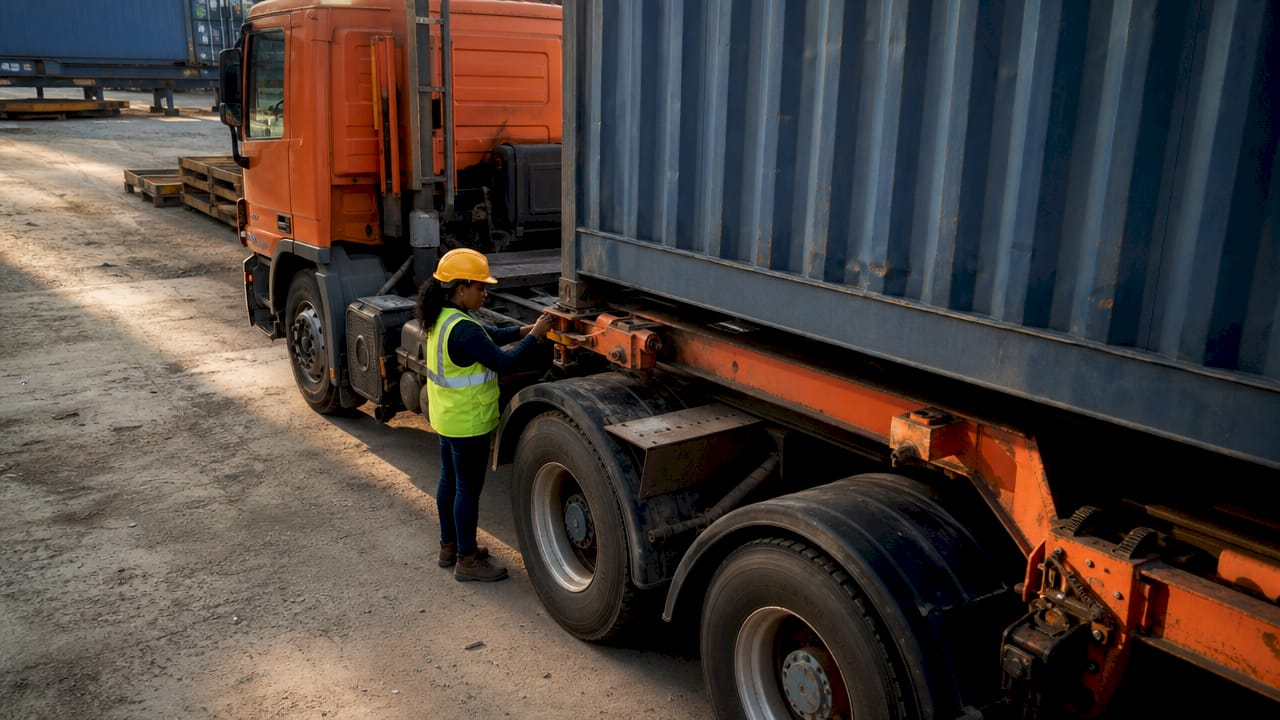
Drayage is short-distance container trucking that moves shipping containers between major intermodal nodes such as ports, rail ramps, and warehouses. The distances are typically under 100 miles, and the cargo almost always travels in an ISO container rather than a standard dry van trailer. This distinction matters because the equipment, liability framework, and paperwork requirements differ significantly from conventional trucking.
Two primary categories define drayage transportation explained in practice:
- Marine drayage covers container moves directly from ocean ports to nearby facilities, including container freight stations, bonded warehouses, and distribution centers. This is the most common form and the one most affected by customs holds and terminal gate management.
- Domestic drayage handles container moves between inland rail ramps and warehouses or manufacturing plants, functioning as the ground leg of intermodal rail shipments.
Both types serve the same structural purpose: they complete the freight chain where long-haul modes cannot reach. A container arriving at the Port of Los Angeles, for example, cannot sit at the terminal indefinitely. A drayage carrier picks it up, moves it to a nearby warehouse or transloading facility, and the goods continue their journey by over-the-road truck or rail. This short move is what keeps intermodal supply chains fluid.
Chassis availability is one of the most underappreciated constraints in drayage execution. Carriers must secure a compatible chassis to move a container, and chassis pools at major ports are often tight. If a chassis is unavailable or mismatched, the move stalls regardless of driver availability.
Pro Tip: Before booking a drayage move, confirm chassis availability with your carrier and clarify whether the chassis is pool-provided or carrier-owned. Chassis shortages at ports like the Port of New York and New Jersey can add 24 to 48 hours to a pickup window.
How do trucking and drayage differ in operations, equipment, and regulation?
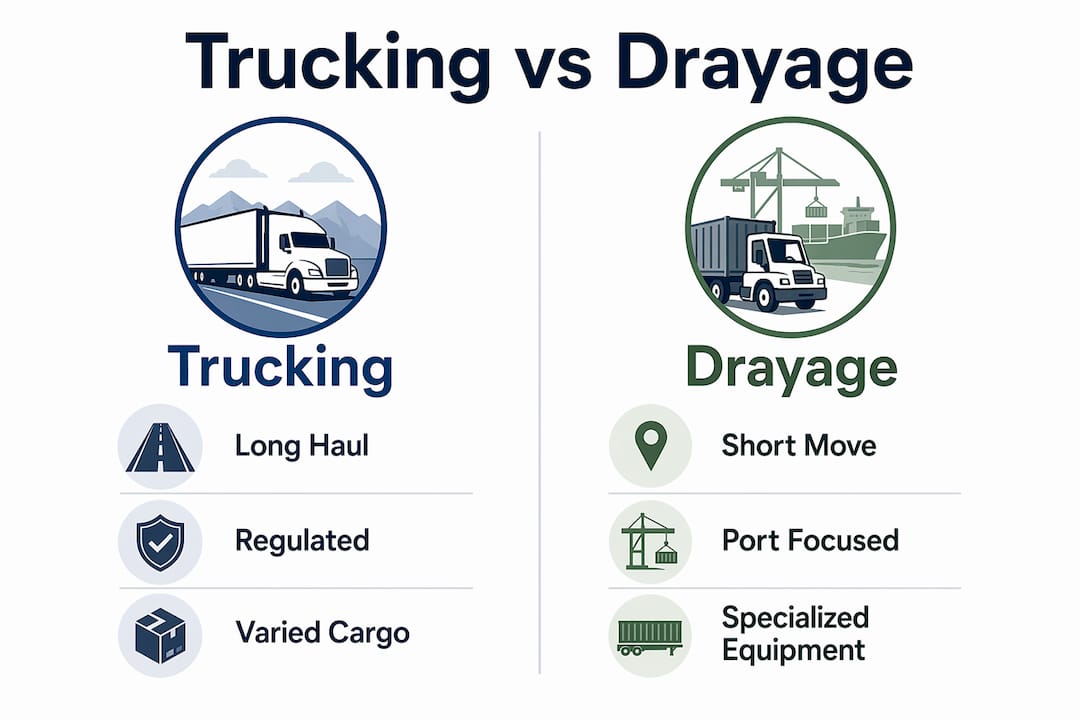
The operational differences between trucking and drayage go well beyond trip distance. Understanding these distinctions helps logistics managers assign the right carrier type, anticipate the right costs, and apply the correct compliance framework.
| Criteria | Over-the-Road Trucking | Drayage |
|---|---|---|
| Typical distance | 100 to 2,000+ miles | Under 100 miles |
| Primary equipment | Dry van, flatbed, reefer trailers | Container chassis with ISO containers |
| Cargo type | Palletized goods, bulk, specialized freight | Containerized imports and exports |
| Regulatory body | FMCSA Hours of Service, ELD mandate | FMCSA plus UIIA interchange requirements |
| Key cost drivers | Fuel, driver wages, tolls | Chassis fees, demurrage, terminal fees |
The Federal Motor Carrier Safety Administration (FMCSA) governs both trucking and drayage, but drayage carriers face an additional layer of contractual regulation through the Uniform Intermodal Interchange and Facilities Access Agreement, known as the UIIA. The UIIA standardizes the paperwork and liability transfer at interchange between motor carriers and equipment providers such as chassis leasing companies and ocean carriers. Carriers operating without UIIA enrollment cannot legally interchange equipment at most major terminals.
Hours of Service (HOS) rules from the FMCSA apply to both sectors, though drayage drivers often operate on shorter daily cycles. The ELD mandate, which took full effect on December 16, 2019, requires most commercial motor vehicle drivers to use FMCSA-registered Electronic Logging Devices. These devices connect to the engine diagnostic port and automatically log driving time, replacing paper logbooks that were prone to falsification.
Pro Tip: Drayage carriers making multiple short moves per day can exhaust their HOS allowance faster than long-haul drivers. Verify that your drayage partner tracks HOS accurately with a compliant ELD, especially during peak import seasons when terminal wait times are long.
What are common challenges and operational nuances in drayage transportation?
Drayage looks simple on paper: pick up a container, deliver it nearby. In practice, the process involves multiple parties, regulatory checkpoints, and time-sensitive handoffs that create real exposure for shippers and carriers alike.
Customs and manifest holds frequently delay container releases at terminals, impacting drayage pickup scheduling and increasing costs. When a manifest contains discrepancies, such as incorrect cargo descriptions, weight mismatches, or missing shipper information, the terminal will not release the container until corrections are filed and reviewed. This process can add multiple days to a release timeline, triggering demurrage charges that accumulate daily. Shippers who understand why customs delays happen can take proactive steps to prevent them before cargo arrives.
Key operational challenges in drayage include:
- Terminal gate management: Terminals operate within specific gate hours, and appointment systems at major ports like the Port of Long Beach mean missed windows result in rescheduling delays.
- Customs holds: Containers under a U.S. Customs and Border Protection hold cannot be moved until the hold is lifted, regardless of carrier readiness or shipper urgency.
- Interchange paperwork: The UIIA’s street interchange application validates carrier status and starts or stops the liability clock. Errors in this process shift financial responsibility in ways carriers may not anticipate.
- Equipment damage liability: UIIA equipment damage liability begins at interchange and ends at equipment return. If a carrier fails to document pre-existing damage before accepting a chassis or container, that carrier bears financial responsibility for repairs and potential downtime fees.
Proper inspection and documentation at every interchange point is not a formality. It is the primary defense against unexpected repair bills and usage fees that can erode margins on what appears to be a straightforward short move. Carriers and logistics managers who treat the pre-move inspection as a critical operational step consistently report fewer disputes and lower total drayage costs.
Pro Tip: Require photo documentation of all container and chassis conditions at pickup and delivery. Time-stamped photos submitted through a digital platform create an audit trail that resolves UIIA damage disputes faster and with less financial exposure.
What compliance and technology tools drive trucking and drayage efficiency?
Regulatory compliance and operational technology are no longer separate concerns in trucking and drayage. The tools that satisfy FMCSA requirements also generate the data that improves scheduling, reduces liability, and supports cost control.
-
ELD systems: ELDs automatically record driving time and engine data, replacing paper logbooks and preventing Hours of Service violations. For drayage carriers making multiple short moves, ELDs provide an accurate record of on-duty time that protects both the driver and the carrier in audits or disputes.
-
UIIA street interchange applications: The UIIA’s digital street interchange portal validates a carrier’s interchange status in real time and records the exact time a move begins and ends. This timestamp is the legal record for liability transfer. Carriers using the portal correctly avoid the gray areas that lead to contested damage claims.
-
Transportation management systems (TMS): Platforms like Oracle Transportation Management and MercuryGate allow logistics managers to track drayage moves, manage appointments, and monitor demurrage exposure across multiple terminals and carriers from a single interface.
-
Customs clearance platforms: Digital customs filing tools integrated with CBP’s Automated Broker Interface (ABI) reduce manifest discrepancy rates by validating data before submission. Fewer discrepancies mean fewer holds and faster container releases for drayage pickup.
-
Telematics and GPS tracking: Real-time location data on drayage trucks allows terminal operators and warehouse teams to coordinate receiving appointments accurately, reducing driver wait times and improving asset utilization.
ELDs improve safety outcomes by preventing HOS violations, not just recording them after the fact. This distinction matters for carriers building a safety rating with the FMCSA, as violations accumulate in the Safety Measurement System and affect carrier scores visible to shippers.
Pro Tip: For small drayage fleets of five trucks or fewer, cloud-based ELD solutions like KeepTruckin (now Motive) or Samsara offer lower upfront costs and faster deployment than enterprise TMS platforms. Scale your technology investment to your fleet size and move volume.
How to apply trucking and drayage knowledge to logistics management
Foundational knowledge of trucking and drayage translates directly into cost control and service reliability when applied systematically. Logistics managers who understand the mechanics of drayage can negotiate better rates, avoid preventable fees, and build more resilient freight programs.
Practical best practices for integrating drayage into your logistics strategy:
- Monitor demurrage and detention exposure actively. Containers left at terminals beyond free time accrue demurrage charges that compound daily. Knowing your free time windows at each terminal and scheduling drayage pickups before those windows close is the single most effective cost control measure in drayage management.
- Pre-clear customs before vessel arrival. Filing entry documents in advance through a licensed customs broker reduces the risk of holds that delay drayage pickup. Worldwideexpress offers customs brokerage services that integrate directly with import freight workflows to accelerate clearance.
- Qualify your drayage carriers on UIIA enrollment and ELD compliance. Carriers without current UIIA enrollment cannot operate at most major terminals. Carriers without compliant ELDs expose your freight program to HOS violations and potential service disruptions.
- Build chassis cost into your freight budget. Chassis fees are often quoted separately from drayage line haul rates. At ports with split chassis pools, fees from multiple providers can stack, adding $50 to $150 per move depending on the terminal and chassis type.
- Use last-mile delivery data to optimize drayage routing. Understanding last-mile delivery dynamics helps logistics teams align drayage drop points with warehouse receiving capacity, reducing congestion and improving turn times.
The goal is not simply to move containers. It is to move them on schedule, within budget, and without triggering the cascade of fees that erode freight margins when drayage is managed reactively rather than proactively.
Key takeaways
Drayage is the operational linchpin of intermodal freight, and mastering its compliance requirements, liability frameworks, and cost drivers is the foundation of effective logistics management.
| Point | Details |
|---|---|
| Drayage defined | Short-haul container transport between ports, rail ramps, and warehouses under 100 miles. |
| UIIA liability | Equipment damage liability transfers at interchange; thorough inspection documentation is the primary financial defense. |
| ELD compliance | FMCSA-registered ELDs are mandatory for most commercial drivers and prevent HOS violations automatically. |
| Customs holds | Manifest discrepancies delay container releases and trigger demurrage; pre-clearance reduces this risk significantly. |
| Cost control | Demurrage, chassis fees, and interchange errors are the top avoidable cost drivers in drayage operations. |
Why drayage deserves more strategic attention than it gets
Most logistics professionals treat drayage as a commodity: a short move, a small line item, a detail handled by the freight forwarder. That framing is expensive. In my experience working across international freight programs, drayage is where supply chain plans most often break down in practice.
The container arrives. The manifest has a discrepancy. The customs hold adds three days. Demurrage starts accumulating. The chassis pool is tight. The carrier’s ELD shows the driver is out of hours. What looked like a 48-hour move from port to warehouse becomes a week-long ordeal with fees that dwarf the original drayage quote.
The professionals who avoid this pattern share one trait: they treat drayage as a compliance and documentation exercise, not just a transportation task. They pre-clear customs, qualify carriers on UIIA enrollment, require photo inspections, and track demurrage exposure daily. They invest in technology early, even at small fleet sizes, because the cost of a single contested damage claim or a week of demurrage exceeds months of ELD subscription fees.
The trucking industry basics are not complicated. But they reward the professionals who take them seriously before the container hits the water, not after it arrives at the terminal.
— Ian
Manage your freight from port to warehouse with Worldwideexpress
Drayage does not operate in isolation. It connects directly to customs clearance, ocean freight, and warehousing decisions that determine whether your supply chain runs on schedule or accumulates fees at every node.
Worldwideexpress provides freight forwarding solutions that integrate customs brokerage, import documentation, and carrier coordination into a single managed workflow. For businesses moving containerized cargo through U.S. ports, that integration means fewer manifest holds, faster container releases, and drayage pickups that happen on schedule. Explore how Worldwideexpress connects the full freight chain, from origin documentation to final delivery, by speaking with a logistics specialist today.
FAQ
What is drayage in trucking?
Drayage is the short-distance truck transport of shipping containers between intermodal nodes such as ocean ports, rail ramps, and warehouses. It functions as the first or last-mile leg of a longer intermodal shipment.
What is the UIIA and why does it matter for drayage?
The Uniform Intermodal Interchange and Facilities Access Agreement (UIIA) standardizes equipment interchange paperwork and liability transfer between motor carriers and equipment providers. Carriers must be UIIA-enrolled to operate at most major U.S. terminals, and the agreement governs financial responsibility for equipment damage.
Are ELDs required for drayage drivers?
Most commercial motor vehicle drivers, including drayage operators, must use FMCSA-registered ELDs to record Hours of Service automatically. Exemptions exist for short-haul drivers meeting specific criteria, but most drayage carriers operating at major ports fall under the mandate.
What causes customs holds to delay drayage pickups?
Customs holds occur when manifest data contains discrepancies such as incorrect cargo descriptions or weight mismatches. The terminal will not release the container until corrections are filed and reviewed, which can add multiple days to the pickup timeline and trigger demurrage charges.
What are the main cost drivers in drayage operations?
The primary drayage cost drivers are demurrage fees for containers held beyond free time at terminals, chassis rental fees, terminal gate charges, and interchange-related damage claims. Proactive customs pre-clearance and accurate UIIA documentation reduce the most common sources of unexpected cost.