Tracking international parcels through post offices remains a persistent challenge for businesses engaged in global trade. Shipment visibility gaps and customs compliance requirements create operational headaches that can delay deliveries and increase costs. This guide walks you through the practical steps to track post office parcels effectively in 2026, ensuring you maintain visibility while meeting regulatory obligations. You’ll learn how to leverage modern tracking standards, navigate API transitions, and use tracking data to streamline customs clearance for your international shipments.
Table of Contents
- Understanding The Key Requirements For Tracking Post Office Parcels
- Step-By-Step Process To Track Your Post Office Parcel Internationally
- Troubleshooting Common Issues And Avoiding Mistakes In Parcel Tracking
- Leveraging Tracking Data For Customs Compliance And Shipment Visibility
- Improve Your International Parcel Tracking With Worldwide Express
- Frequently Asked Questions
Key takeaways
| Point | Details |
|---|---|
| S10 tracking standard | The Universal Postal Union S10 format) provides a globally recognized tracking number structure essential for customs compliance. |
| DDP simplifies customs | Delivered Duty Paid solutions accelerate clearance by handling duties and taxes at purchase, reducing customs delays. |
| API migration required | USPS legacy Web Tools retire January 25, 2026; businesses must migrate to new APIs immediately. |
| Automated carrier detection | Modern tracking APIs automatically identify carriers from tracking numbers, eliminating manual lookup errors. |
| Data quality matters | Proper tracking number formatting and accurate customs data prevent shipment delays and compliance issues. |
Understanding the key requirements for tracking post office parcels
Before you can effectively track international parcels, you need to understand the fundamental components that make tracking possible. The Universal Postal Union (UPU) S10 standard defines the format for international mail tracking numbers, crucial for customs compliance and shipment visibility. This standardized format ensures postal services worldwide can exchange tracking information seamlessly.
The S10 tracking number follows a specific structure: two letters identifying the service type, eight digits as the unique identifier, two check digits, and two letters indicating the origin country. For example, RR123456789US represents a registered item from the United States. Recognition of this format helps you validate tracking numbers before entering them into systems.
Customs clearance adds another layer of complexity to international parcel tracking. US regulations require a US qualified party (QP) for declarations and financial settlement with CBP. This qualified party acts as the importer of record, handling customs documentation and ensuring compliance with import regulations. Without proper QP designation, your shipments face delays at customs checkpoints.
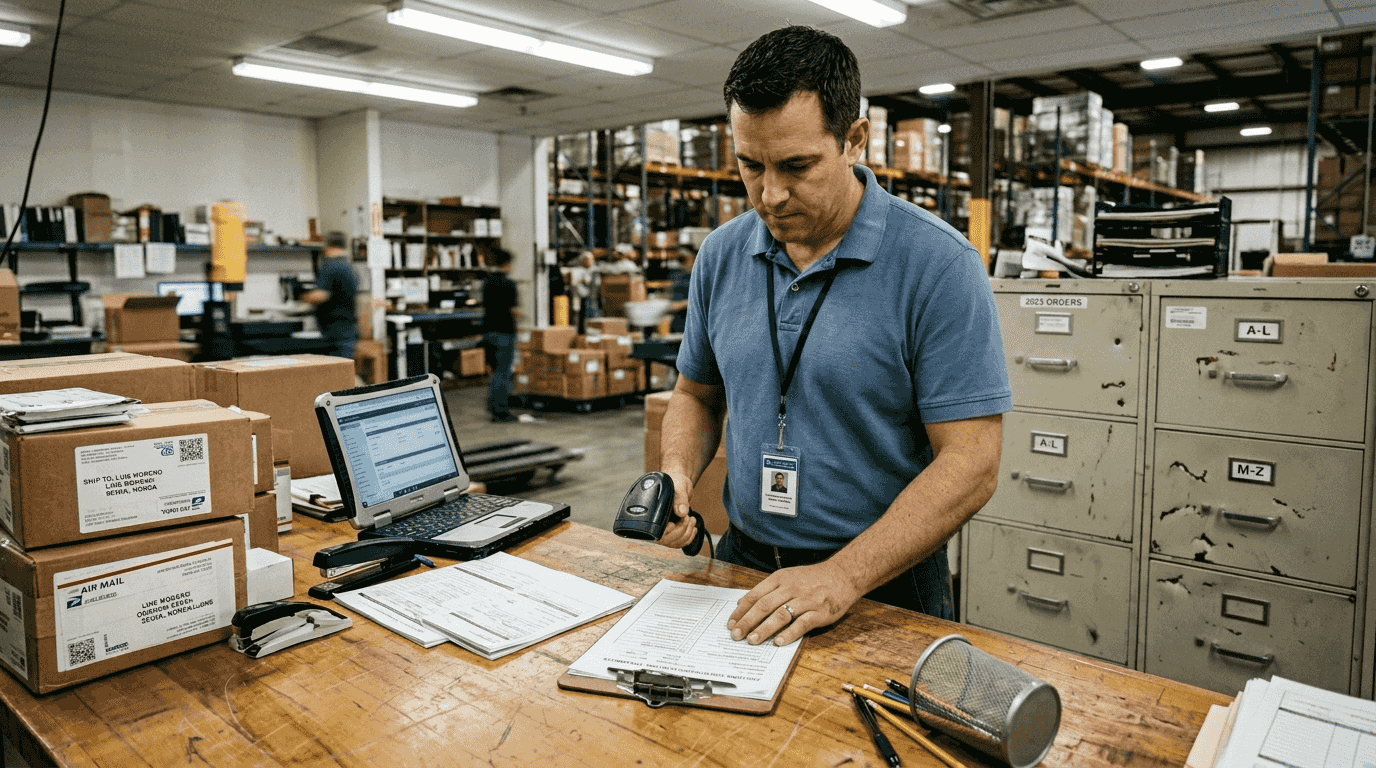
The Customs Declaration System (CDS) and POST*Net work together to process electronic customs data for postal items. These systems allow postal operators to submit advance customs information electronically, speeding up clearance times. Your tracking data flows through these systems, providing visibility into customs processing stages.
For Delivered Duty Paid (DDP) shipments, proper data and financial flows become critical. Key requirements include:
- Accurate product descriptions and harmonized tariff codes for duty calculation
- Verified buyer and seller information for customs declarations
- Payment mechanisms for duties and taxes at point of purchase
- Electronic advance data submission before physical arrival
Understanding USPS international shipping compliance requirements helps you avoid common pitfalls. Your tracking effectiveness depends on getting these foundational elements right from the start.
Step-by-step process to track your post office parcel internationally
Once you understand the requirements, implementing an effective tracking process becomes straightforward. Follow these steps to maintain visibility on your international post office parcels:
-
Normalize your tracking number. Remove all whitespace, dashes, and special characters from the tracking number. Convert all letters to uppercase. This prevents common input errors that cause tracking systems to reject valid numbers.
-
Verify the S10 format. Check that your tracking number matches the S10 structure with proper letter positioning and digit count. Invalid formats indicate data entry problems that need correction before proceeding.
-
Enter the tracking number into the postal system. Use the origin country’s postal service website as your primary tracking source. The UPU Delivered Duty Paid (DDP) solution integrates within the Customs Declaration System (CDS) for efficient handling of postal items, providing real-time status updates.
-
Leverage API tools for automation. Modern tracking APIs eliminate manual carrier identification. Using APIs for carrier auto-detection simplifies tracking and improves efficiency for businesses involved in international trade. These tools analyze tracking number formats and route queries to the correct postal service automatically.
-
Monitor status updates regularly. Check tracking information daily for shipments in transit. Status changes indicating customs processing require particular attention, as these stages often involve additional documentation or payment requirements.
-
Migrate to new USPS APIs. If you’re using USPS tracking, transition from legacy Web Tools to the new API platform before the January 25, 2026 retirement date. The new APIs provide enhanced functionality and more reliable service.
-
Implement tracking webhooks. Configure your systems to receive automatic notifications when shipment status changes. This proactive approach beats manual checking and helps you track any order shipping updates efficiently.
-
Cross-reference with destination tracking. Once your parcel enters the destination country, check that country’s postal service for more detailed local tracking information. International handoffs sometimes create temporary tracking gaps.
Pro Tip: Set up automated alerts for customs clearance events. These notifications let you proactively address documentation requests or duty payments before they cause delays. Most modern tracking platforms offer webhook integrations that push real-time updates directly to your systems.
For comprehensive tracking across multiple carriers and countries, explore how to use global order tracking and track and trace worldwide solutions. These platforms aggregate data from numerous postal services, giving you a single view of all your international shipments.
Troubleshooting common issues and avoiding mistakes in parcel tracking
Even with proper processes, tracking problems inevitably arise. Recognizing and resolving these issues quickly prevents minor hiccups from becoming major disruptions.
Invalid tracking number errors typically stem from formatting problems. Common culprits include:
- Whitespace or dashes embedded in the tracking number
- Lowercase letters that need uppercase conversion
- Transposed digits from manual data entry
- Country code mismatches where the format doesn’t align with the origin
USPS Web Tools API platform will be retired on January 25, 2026; migrate to new USPS APIs to avoid disruptions. Continuing to use deprecated endpoints after this date will result in complete tracking failures. Update your integration immediately if you haven’t already.
Carrier detection failures plague businesses using multi-carrier tracking systems. Manual carrier selection introduces errors when operators misidentify the postal service. API-based auto-detection solves this by analyzing tracking number patterns and routing queries correctly. This automation eliminates human error from the equation.
Poor data quality cascades through your entire tracking and customs process. Incomplete product descriptions trigger customs holds for additional information. Incorrect harmonized codes lead to duty miscalculations and potential penalties. Businesses should normalize tracking numbers to avoid errors in tracking systems, but data quality extends beyond tracking numbers alone.
When tracking updates stop arriving, take these actions:
- Verify the parcel hasn’t been delivered to an alternate address or reception point
- Check the destination country’s postal service directly for local updates
- Contact the origin postal service to investigate tracking gaps
- Review customs status, as clearance delays often pause tracking updates
- Confirm your API integrations remain functional and properly authenticated
Pro Tip: Build redundancy into your tracking systems by querying multiple data sources. Primary tracking through the origin postal service, secondary checks with the destination country, and tertiary validation through third-party tracking aggregators create a safety net that catches issues faster.
Understanding how to avoid customs delays and how to avoid customs penalties helps you address root causes rather than just symptoms. Proactive compliance prevents most tracking and delivery problems before they occur.
Leveraging tracking data for customs compliance and shipment visibility
Tracking data serves purposes beyond simple shipment location. When properly utilized, it becomes a powerful tool for regulatory compliance and risk management.
Electronic Advance Data (EAD) submission represents a major shift in how customs authorities process international mail. The WCO-UPU Guidelines provide a framework for exchanging Electronic Advance Data (EAD) to improve safety, security, and risk management. This advance information allows customs to assess risk before physical arrival, speeding clearance for compliant shipments.
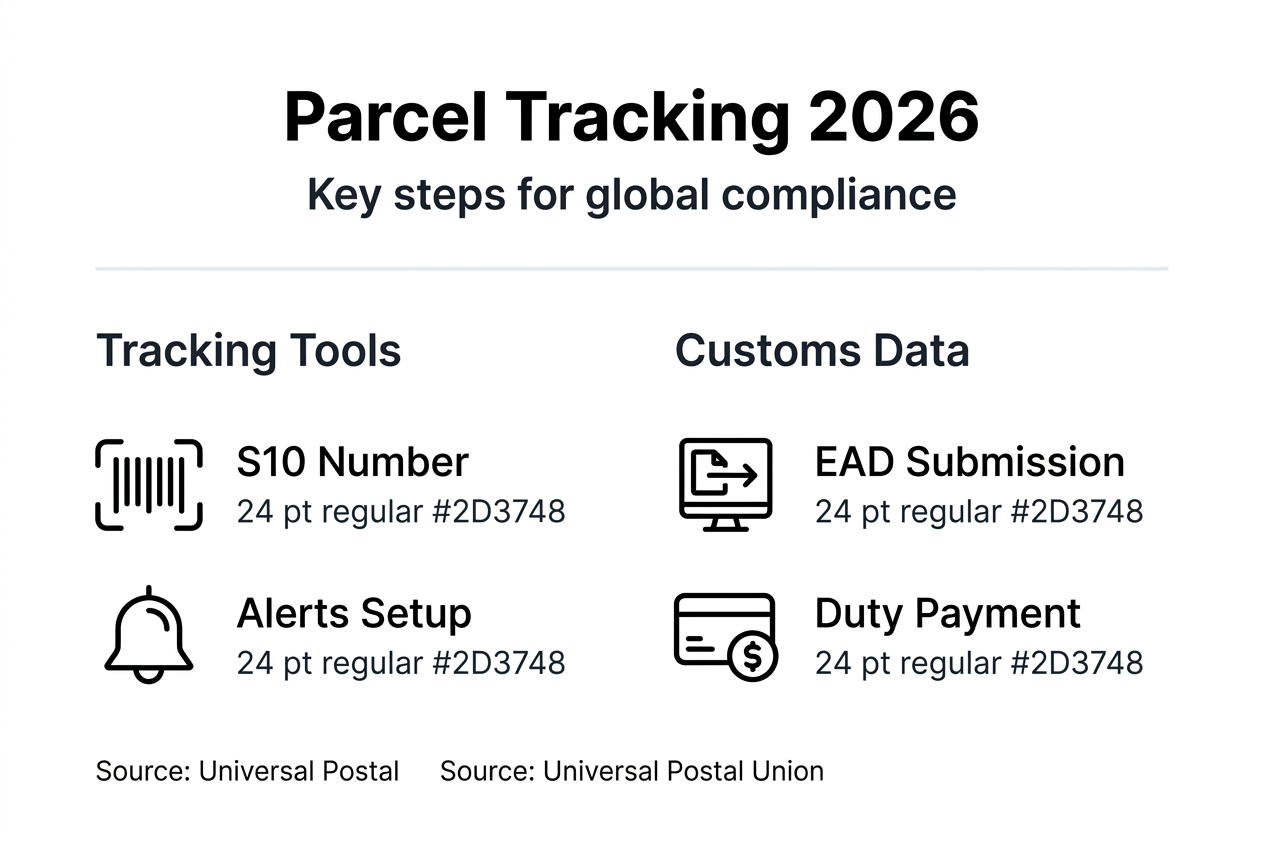
The flow of tracking and customs data through integrated systems creates efficiency gains for everyone involved:
| System Component | Function | Business Benefit |
|---|---|---|
| Customs Declaration System | Processes electronic customs forms and EAD | Faster clearance with fewer manual interventions |
| POST*Net | Exchanges tracking events between postal operators | Real-time visibility across international handoffs |
| DDP Payment Gateway | Handles duties and taxes at purchase | Eliminates surprise charges and customs holds |
| Risk Management Module | Screens shipments for compliance issues | Reduces inspection rates for trusted shippers |
Delivered Duty Paid (DDP) arrangements transform the customs experience for both businesses and customers. DDP accelerates customs clearance and provides full shipping cost transparency at the time of purchase. Instead of recipients facing unexpected duty bills and payment delays, all charges are calculated and paid upfront.
For businesses, DDP offers several strategic advantages. Customs processing happens automatically without customer involvement. Delivery success rates improve because recipients aren’t surprised by additional charges. Your brand reputation strengthens when customers receive predictable, hassle-free international deliveries.
Customs authorities benefit from improved data quality and advance risk assessment. The combination of accurate electronic declarations and prepaid duties reduces processing time per shipment. Resources can focus on high-risk items rather than routine commercial parcels.
Integrating your tracking data with customs compliance workflows creates a unified view of shipment status. You can see when parcels clear customs, identify patterns in clearance times by country, and spot emerging compliance issues before they escalate. This visibility enables proactive management rather than reactive problem solving.
For comprehensive support with customs processes, explore how to pay customs duties and maintain customs compliance with USPS. Proper duty payment and documentation directly impact your tracking and delivery success.
Improve your international parcel tracking with Worldwide Express
Managing international parcel tracking and customs compliance demands expertise, technology, and constant attention to regulatory changes. Worldwide Express brings all three to your business.
Our logistics services include comprehensive tracking solutions that provide real-time visibility across all your international shipments. We handle the technical complexities of multi-carrier tracking, API integrations, and customs data management so you can focus on growing your business. Our US customs brokerage services ensure smooth clearance by managing documentation, duty calculations, and compliance requirements on your behalf.
With decades of experience in international freight, we understand the unique challenges businesses face when shipping globally. Our team stays current with evolving regulations, tracking technologies, and postal service changes. When you partner with Worldwide Express, you gain access to international freight shipping expertise that transforms complex logistics into competitive advantages. Let us help you achieve the shipment visibility and customs compliance your international trade operations demand.
Frequently asked questions
What is the S10 tracking number and why is it important?
The S10 tracking number is the Universal Postal Union’s standardized format for international mail tracking, consisting of 13 characters that identify the service type, unique shipment identifier, and origin country. It enables postal services worldwide to exchange tracking information seamlessly and supports customs compliance by providing a consistent tracking reference. Without proper S10 formatting, your parcels may face tracking gaps or customs processing delays.
How do I track a post office parcel that’s already overseas?
Once your parcel enters the destination country, switch to that country’s postal service website for detailed local tracking updates. International tracking often shows handoff events but may lack granular destination-country details until you check the local postal operator’s system. Most postal services accept S10 tracking numbers directly, making the transition straightforward.
Why must I migrate from USPS Web Tools API by January 2026?
USPS is retiring the legacy Web Tools API platform on January 25, 2026, and will no longer support these endpoints after that date. Continuing to use deprecated APIs will cause complete tracking failures and disrupt your operations. The new USPS APIs offer improved functionality, better reliability, and enhanced data, making migration essential for maintaining USPS shipping compliance.
What role does a qualified party play in US customs clearance?
A qualified party (QP) serves as the importer of record for customs purposes, handling declarations, duty payments, and compliance with CBP regulations. US law requires a US-based QP for international postal items entering the country. Without proper QP designation, your shipments cannot clear customs and will face significant delays or returns.
How does tracking data improve customs compliance?
Tracking data integrates with Electronic Advance Data (EAD) systems to provide customs authorities with shipment information before physical arrival. This advance notice enables risk assessment, speeds clearance for compliant shipments, and helps identify potential issues early. Accurate tracking combined with proper customs declarations creates a smoother, faster clearance process that benefits both businesses and regulatory agencies.
Recommended
- How to Use Global Order Tracking and Track and Trace Worldwide
- How to Track Any Order for Reliable Shipping Updates – Worldwide Express, Inc.
- USPS International Shipping: Compliance Essentials for 2026 – Worldwide Express, Inc.
- 5 Best global freight tracking tools – Expert Comparison 2025 – Worldwide Express, Inc.
- Fly First Class to Global Destinations | Grand Globetrotting Deals