Global merchandise trade surged by 4.9% in early 2025, yet many businesses still struggle to navigate the complexities of international shipping. Freight forwarding remains one of the most misunderstood aspects of global commerce, despite being essential for moving goods across borders efficiently. This guide cuts through the confusion, explaining how freight forwarding works, what market trends are shaping the industry in 2026, and how to choose the right approach for your business. Whether you’re an importer managing supply chains or an exporter seeking reliable logistics partners, understanding freight forwarding empowers you to reduce costs, ensure compliance, and deliver on time.
Table of Contents
- What Is Freight Forwarding And Why It Matters
- Market Trends Shaping Freight Forwarding In 2026
- Digital Vs. Traditional Freight Forwarding: Choosing The Right Approach
- How Freight Forwarding Enhances Customs Compliance And Cost Efficiency
- Explore Expert Freight Forwarding Solutions With Worldwide Express
- Frequently Asked Questions
Key takeaways
| Point | Details |
|---|---|
| Core function | Freight forwarding manages booking, customs clearance, documentation, and multimodal logistics coordination for international shipments. |
| Market growth | The global freight forwarding market is projected to reach $536.51 billion by 2034, driven by e-commerce and digitalization. |
| Digital evolution | Digital freight forwarding offers 24/7 tracking and automation, while hybrid models combine technology with expert human support. |
| Compliance advantage | Experienced forwarders navigate customs regulations, reducing delays and avoiding costly penalties through proper documentation. |
| Strategic selection | Choosing forwarders with trade lane expertise and digital capabilities ensures cost efficiency and reliable delivery. |
What is freight forwarding and why it matters
Freight forwarding acts as the orchestrator of international shipping, coordinating every step from origin to destination. At its core, freight forwarding involves transportation booking, customs clearance, documentation, consolidation, warehousing, risk management, and ensuring timely, cost-efficient, and compliant deliveries across various modes of transportation. Understanding the role of a freight forwarder helps businesses leverage specialized expertise they lack in-house.
Freight forwarders handle critical logistics activities that keep global trade flowing smoothly:
- Booking cargo space with airlines, ocean carriers, and trucking companies to secure competitive rates
- Managing customs documentation and clearance procedures to meet regulatory requirements
- Consolidating smaller shipments into full container loads to reduce per-unit shipping costs
- Arranging warehousing and distribution services at strategic locations along trade routes
- Providing cargo insurance and risk management to protect against loss or damage
Multimodal transport presents coordination challenges that freight forwarders solve daily. A single shipment might travel by truck to a port, cross the ocean by container ship, clear customs at the destination, and complete final delivery via rail or road. Forwarders synchronize these handoffs, track shipments in real time, and resolve issues before they cascade into costly delays.
The importance of freight forwarding extends beyond logistics. Forwarders ensure cost efficiency by negotiating bulk rates, selecting optimal routes, and consolidating shipments. They guarantee reliability through established carrier relationships and backup plans for disruptions. Most critically, they maintain compliance with complex international trade regulations that vary by country, product type, and trade agreement.
Pro Tip: Selecting a forwarder with expertise in your specific trade lanes can prevent costly delays and compliance issues. Regional specialists understand local regulations, customs procedures, and infrastructure limitations that generalists might overlook.
Market trends shaping freight forwarding in 2026
The freight forwarding landscape is experiencing unprecedented growth and transformation. The global freight forwarding market size was valued at $325.18 billion in 2025 and is projected to grow to $536.51 billion by 2034, exhibiting a CAGR of 6.0% during the forecast period. This expansion reflects rising international trade volumes and increasing complexity in global supply chains.
Regional dynamics significantly influence freight forwarding strategies. Asia Pacific dominated the market, accounting for 42.17% of the market share in 2025, driven by manufacturing hubs in China, India, and Southeast Asia. Businesses shipping to or from this region must work with forwarders who understand Asian port infrastructure, customs procedures, and carrier networks. Exploring logistics market trends reveals how e-commerce and digitalization are reshaping regional trade patterns.
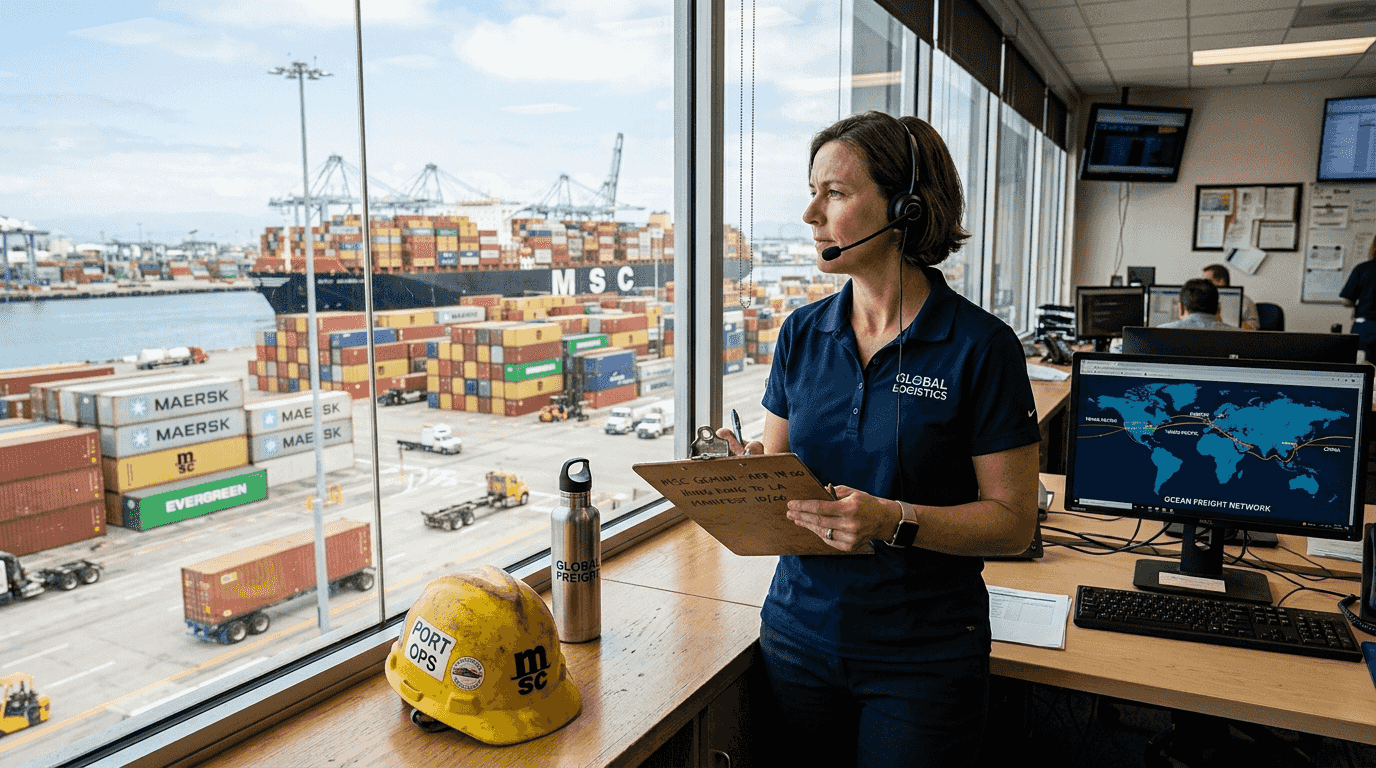
Recent trade data underscores the momentum behind freight forwarding demand. World merchandise trade volume rose 4.9% year-on-year in the first half of 2025, creating pressure on logistics networks to handle increased cargo flows efficiently. This growth spans multiple sectors, from consumer electronics to industrial machinery, requiring diverse freight forwarding capabilities.
| Market Metric | 2025 Value | 2034 Projection | Growth Rate |
|---|---|---|---|
| Global market size | $325.18B | $536.51B | 6.0% CAGR |
| Asia Pacific share | 42.17% | Growing | Leading region |
| Trade volume growth | 4.9% YoY | Accelerating | H1 2025 data |
Several key drivers are influencing how businesses select and work with freight forwarders in 2026:
- E-commerce expansion demanding faster, more flexible shipping options for cross-border retail
- Supply chain digitalization enabling real-time visibility and predictive analytics for shipment planning
- Multimodal transport requirements as businesses optimize routes combining air, ocean, rail, and road
- Infrastructure improvements in emerging markets opening new trade corridors and reducing transit times
- Sustainability pressures pushing forwarders to offer carbon-neutral shipping alternatives
These trends create both opportunities and challenges. Businesses that align with forward-thinking freight forwarders gain competitive advantages through faster delivery, lower costs, and better customer experiences. Those relying on outdated logistics approaches risk falling behind as markets evolve.
Digital vs. traditional freight forwarding: choosing the right approach
The freight forwarding industry is splitting into distinct operational models, each suited to different business needs. Digital freight forwarders leverage technology platforms for online booking, automated documentation, and 24/7 shipment tracking. Traditional forwarders rely on established relationships, human expertise, and personalized service to handle complex logistics challenges. Understanding these differences helps businesses match their shipping requirements to the right provider.
Digital freight forwarding is experiencing explosive growth. Digital freight segment is projected to reach $101.3B by 2030, representing a ~19.6% CAGR, highlighting the rapid adoption of technology-driven solutions. These platforms excel at standardized shipments where speed and transparency matter most. Businesses shipping regular container loads on established routes benefit from instant quotes, automated customs documentation, and real-time GPS tracking through mobile apps.
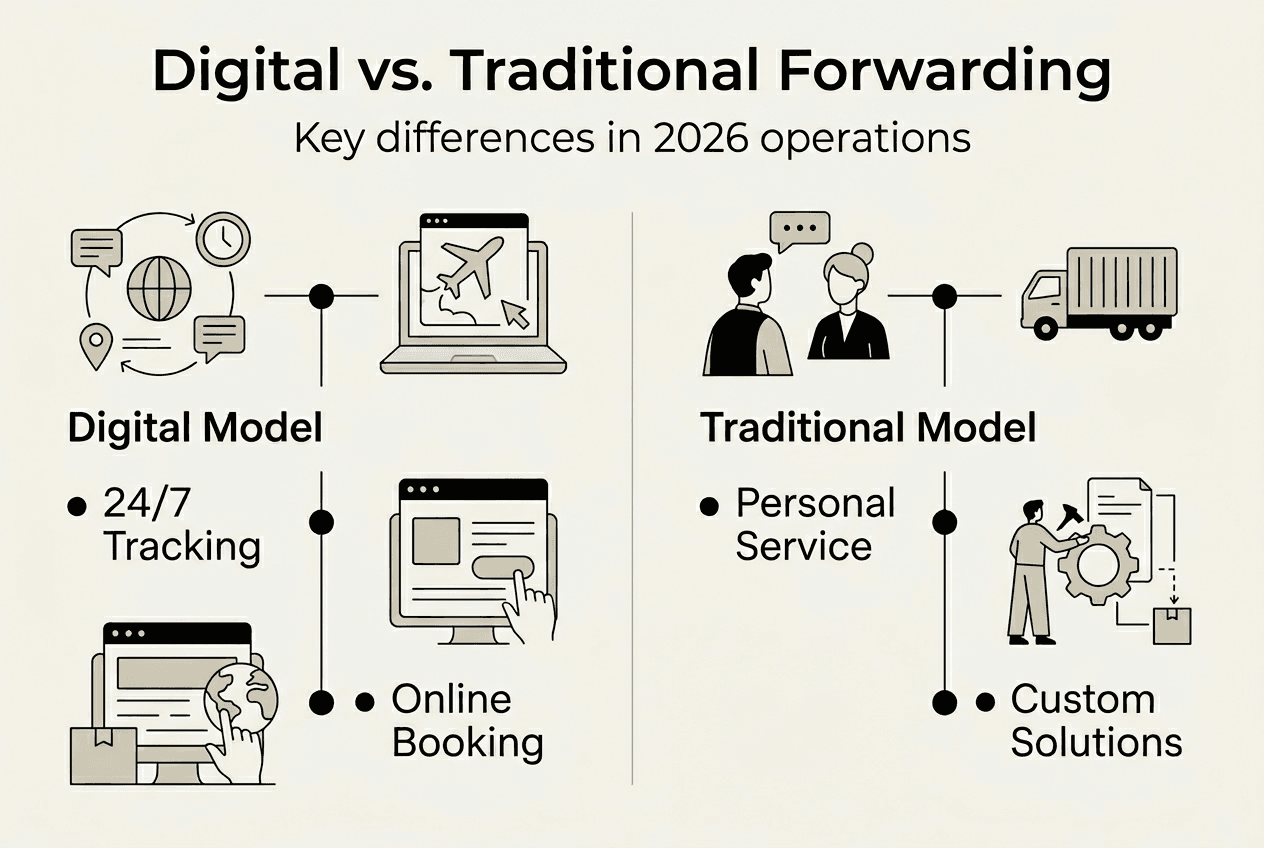
The efficiency gains can be substantial. MSC’s “WAVE” e-BL system in India saved $138,000 in demurrage across 230 containers, demonstrating how digital solutions reduce costs through faster processing and fewer errors. Digital forwarders eliminate manual paperwork bottlenecks, provide instant shipment status updates, and enable self-service booking at any hour.
Traditional forwarders maintain advantages in scenarios requiring human judgment and specialized knowledge. Complex cargo like oversized machinery, hazardous materials, or temperature-sensitive pharmaceuticals demands expert handling that automated systems cannot replicate. Traditional forwarders navigate unusual customs situations, resolve carrier disputes, and arrange specialized equipment through personal relationships built over decades.
The future belongs to hybrid approaches. The hybrid model, combining digital speed and visibility with human expertise, is emerging as the best practice for shippers in 2026. These providers offer online platforms for routine tasks while maintaining experienced staff for complex situations. Businesses get digital convenience for standard shipments and expert support when challenges arise. Learning about digital freight forwarding impact helps evaluate which features matter most for your operations.
| Model | Key Features | Best For | Limitations |
|---|---|---|---|
| Digital | 24/7 booking, automated tracking, instant quotes, self-service portals | Standard containers, established routes, tech-savvy shippers | Limited support for complex cargo, less flexibility for exceptions |
| Traditional | Personal relationships, expert problem-solving, specialized handling | Oversized cargo, hazardous materials, new trade lanes | Higher costs, slower documentation, limited digital visibility |
| Hybrid | Digital tools plus human expertise, flexible service levels | Businesses with mixed shipment types, growing trade volumes | May cost more than pure digital for simple shipments |
Pro Tip: For complex or urgent shipments, opt for providers offering personalized human support along with digital tools. Technology handles routine tasks efficiently, but experienced professionals prevent disasters when unexpected issues arise.
Consider these factors when choosing your freight forwarding approach:
- Shipment complexity and whether cargo requires specialized handling or standard container transport
- Trade lane maturity and whether you’re shipping on established routes or exploring new markets
- Internal capabilities and whether your team can manage digital platforms or needs hands-on support
- Volume consistency and whether you ship regularly or have sporadic, unpredictable logistics needs
- Budget constraints and whether cost savings from digital efficiency outweigh benefits of personalized service
How freight forwarding enhances customs compliance and cost efficiency
Customs clearance represents one of the most critical and complex aspects of international shipping. Freight forwarders serve as your first line of defense against regulatory penalties, shipment delays, and unexpected costs. They manage the intricate web of documentation, tariff classifications, and compliance requirements that vary across countries and product categories.
Freight forwarders handle customs through systematic processes that reduce risk and accelerate clearance. Understanding U.S. customs brokerage services and the role of a US customs broker clarifies how specialized expertise prevents costly mistakes. The customs clearance process typically follows these steps:
- Classify products using Harmonized System codes to determine applicable duties and restrictions
- Prepare commercial invoices, packing lists, certificates of origin, and regulatory permits
- Submit entry documentation to customs authorities electronically before cargo arrival
- Pay duties, taxes, and fees based on declared values and tariff schedules
- Coordinate physical inspections if customs selects the shipment for examination
- Resolve discrepancies or provide additional documentation if authorities request clarification
- Arrange cargo release and final delivery once customs grants clearance
Risk management extends beyond customs to protect your entire supply chain investment. Forwarders arrange cargo insurance covering loss, damage, or theft during transit. They provide shipment visibility through tracking systems that alert you to delays or route deviations. This transparency enables proactive problem-solving before issues escalate into customer complaints or financial losses.
The cost impact of shipping disruptions cannot be overstated. Shipping issues can be very damaging, costing businesses money, frustrating customers, and damaging brand loyalty. Compliance-focused freight forwarding mitigates these risks through:
- Accurate documentation that prevents customs holds and penalty assessments
- Proactive communication about regulatory changes affecting your products or destinations
- Established relationships with customs officials that facilitate faster issue resolution
- Backup routing options and carrier alternatives when disruptions threaten delivery schedules
- Insurance coverage that protects against financial losses from unforeseen events
Selecting forwarders with strong customs expertise delivers measurable cost savings. Experienced brokers identify duty drawback opportunities, advise on free trade agreement benefits, and recommend optimal tariff classifications that legally minimize import costs. They prevent expensive mistakes like incorrect valuations, missing permits, or prohibited item shipments that trigger fines and cargo seizures.
Explore expert freight forwarding solutions with Worldwide Express
Navigating international logistics requires partners who combine deep expertise with modern technology. Worldwide Express specializes in comprehensive freight forwarding and customs brokerage services designed to simplify global trade for businesses of all sizes. Our team handles everything from initial shipment booking through final delivery, ensuring your cargo moves efficiently across borders while maintaining full regulatory compliance.
We understand that every business faces unique logistics challenges. Whether you’re managing complex supply chains across multiple continents or shipping your first international order, our solutions adapt to your specific needs. Our customs brokerage expertise prevents delays and reduces costs through accurate documentation and strategic tariff planning. Compare your options through our detailed freight forwarding services comparison to see how different approaches align with your business goals.
Pro Tip: Partnering with experienced providers like Worldwide Express can streamline logistics and avoid costly disruptions. Our hybrid approach combines digital tracking tools with personalized support from logistics professionals who know your industry and trade lanes. Learn how to choose a freight forwarder that matches your operational requirements and growth plans. Explore our US customs brokerage services to discover how specialized expertise protects your shipments and bottom line.
Frequently asked questions
What is the difference between a freight forwarder and a customs broker?
Freight forwarders coordinate the physical movement of goods across international borders, arranging transportation, warehousing, and logistics services. Customs brokers specialize in regulatory compliance, preparing documentation and managing clearance procedures with government authorities. Many full-service providers offer both capabilities, but understanding the distinction helps you evaluate whether a provider has the specific expertise your shipments require. Review the detailed freight forwarding vs broker comparison to see which services your business needs most.
How does digital freight forwarding improve shipment tracking?
Digital forwarders provide 24/7 online tracking through web portals and mobile apps that show real-time cargo location and status updates. Automated alerts notify you immediately when shipments depart, arrive, clear customs, or encounter delays, eliminating the need to call or email for updates. This transparency enables proactive decision-making and keeps customers informed throughout the delivery process. Explore digital freight tracking benefits to see how technology transforms supply chain visibility.
What factors should I consider when choosing a freight forwarder?
Evaluate shipment complexity and whether your cargo requires specialized handling or fits standard container specifications. Consider the forwarder’s experience in your specific trade lanes and their relationships with carriers serving those routes. Assess their customs expertise, particularly if you ship regulated products or use free trade agreements. Review their digital capabilities for tracking and documentation, and test their customer service responsiveness before committing to a partnership. Read our guide on choosing a freight forwarder for a complete evaluation framework.
How much do freight forwarding services typically cost?
Freight forwarding costs vary widely based on shipment size, route, service level, and cargo type. Forwarders typically charge fees for documentation, customs clearance, and coordination services in addition to carrier transportation costs. Digital forwarders often offer lower fees for standard shipments, while traditional forwarders charge premium rates for specialized handling and personalized service. Request detailed quotes from multiple providers and compare total landed costs, not just forwarding fees, to identify the best value for your specific shipping needs.
Recommended
- Global Shipping 2026: 72% Face Tariff Volatility – Worldwide Express, Inc.
- Air Freight vs Sea Freight: Complete Guide for 2025 – Worldwide Express, Inc.
- Freight transportation modes: optimize shipping in 2026 – Worldwide Express, Inc.
- Understanding the Role of a Freight Forwarder – Worldwide Express, Inc.