Navigating international trade means wrestling with complex customs regulations, ever-changing tariff codes, and regulatory agencies that demand precision. A single misstep in documentation or classification can trigger costly delays, penalties, or even shipment seizures. Customs brokers specialize in managing these challenges, ensuring your goods clear borders quickly while maintaining full compliance. They handle intricate paperwork, optimize duty payments, and communicate directly with customs authorities so you can focus on growing your business. This guide reveals exactly how customs brokers transform international shipping from a compliance minefield into a streamlined, cost-effective operation.
Table of Contents
- Understanding The Role Of Customs Brokers In Trade Compliance
- How Customs Brokers Speed Up Clearance And Optimize Costs
- Managing Risks And Special Cases With Customs Brokers
- Step-By-Step Process: Working With A Customs Broker For Your Shipments
- Streamline Your Global Shipping With Expert Customs Brokerage Services
- FAQ
Key takeaways
| Point | Details |
|---|---|
| Compliance expertise | Brokers manage documentation and regulatory requirements to prevent penalties and legal issues |
| Faster clearance | Proper classification and proactive customs communication reduce delays and holds |
| Cost optimization | Accurate tariff codes and trade agreement utilization lower duty payments |
| Risk mitigation | Brokers handle audits, regulated products, and evolving enforcement to protect your business |
| Operational efficiency | Expert support reduces administrative burden and streamlines end-to-end shipping processes |
Understanding the role of customs brokers in trade compliance
Customs brokers serve as your licensed intermediaries with U.S. Customs and Border Protection, handling the technical and legal complexities that surround every international shipment. Their primary responsibility involves preparing and submitting all required customs documentation, ensuring every form meets CBP standards before goods arrive at the border. This includes commercial invoices, packing lists, certificates of origin, and specialized permits depending on your product category.
One of their most critical functions is assigning the correct Harmonized System or Harmonized Tariff Schedule codes to your goods. These codes determine the exact duty rate, applicable taxes, and regulatory requirements for each product. A single digit error in classification can mean the difference between a 2% duty rate and a 25% rate, or worse, trigger an audit that uncovers systemic compliance failures across your entire import history.
Beyond basic customs clearance, brokers ensure compliance with multiple regulatory agencies that govern specific product categories. The role of US customs brokers extends to coordinating with the FDA for food and pharmaceuticals, the EPA for chemicals, the USDA for agricultural products, and other agencies depending on what you ship. This multi-agency coordination prevents the common scenario where goods clear customs but get held by another regulatory body, creating expensive storage fees and delivery delays.
Their expertise directly translates to avoiding the two most damaging outcomes in international trade: customs delays that disrupt your supply chain and legal penalties that damage your financial health and business reputation. Customs brokers prepare and submit customs documentation, classify goods using HS/HTS codes, calculate and pay duties/taxes, and ensure compliance with regulations including other agencies like FDA and EPA.
Key compliance functions customs brokers perform:
- Verify and validate all shipping documents for accuracy and completeness before submission
- Assign precise tariff classifications based on product composition, use, and origin
- Calculate duties, taxes, and fees according to current trade agreements and regulations
- Coordinate with multiple government agencies for product-specific clearances and permits
- Maintain detailed records for the required retention period to support future audits
- Monitor regulatory changes and update procedures to keep your operations compliant
How customs brokers speed up clearance and optimize costs
Speed and cost efficiency represent the two most tangible benefits customs brokers deliver to your bottom line. When customs places a hold on your shipment for examination or additional documentation, brokers immediately engage with CBP officers to understand requirements, provide necessary information, and schedule physical exams if needed. This proactive communication often resolves issues within hours rather than days, preventing the cascade of costs associated with delayed shipments.
Proper tariff classification becomes your most powerful cost optimization tool. Brokers leverage their knowledge of trade agreements like USMCA, various free trade agreements, and preferential duty programs to minimize what you pay at the border. They identify opportunities to claim duty reductions or exemptions you might not know exist, ensuring you never overpay due to incorrect classification or missed preferential treatment.
Brokers facilitate faster clearance, optimize duty payments via correct classification and trade agreements, maintain records for audits, and resolve holds and exams efficiently. Their systematic approach to documentation means your shipments arrive at customs with everything needed for immediate processing, eliminating the back-and-forth requests for additional paperwork that plague self-managed imports.
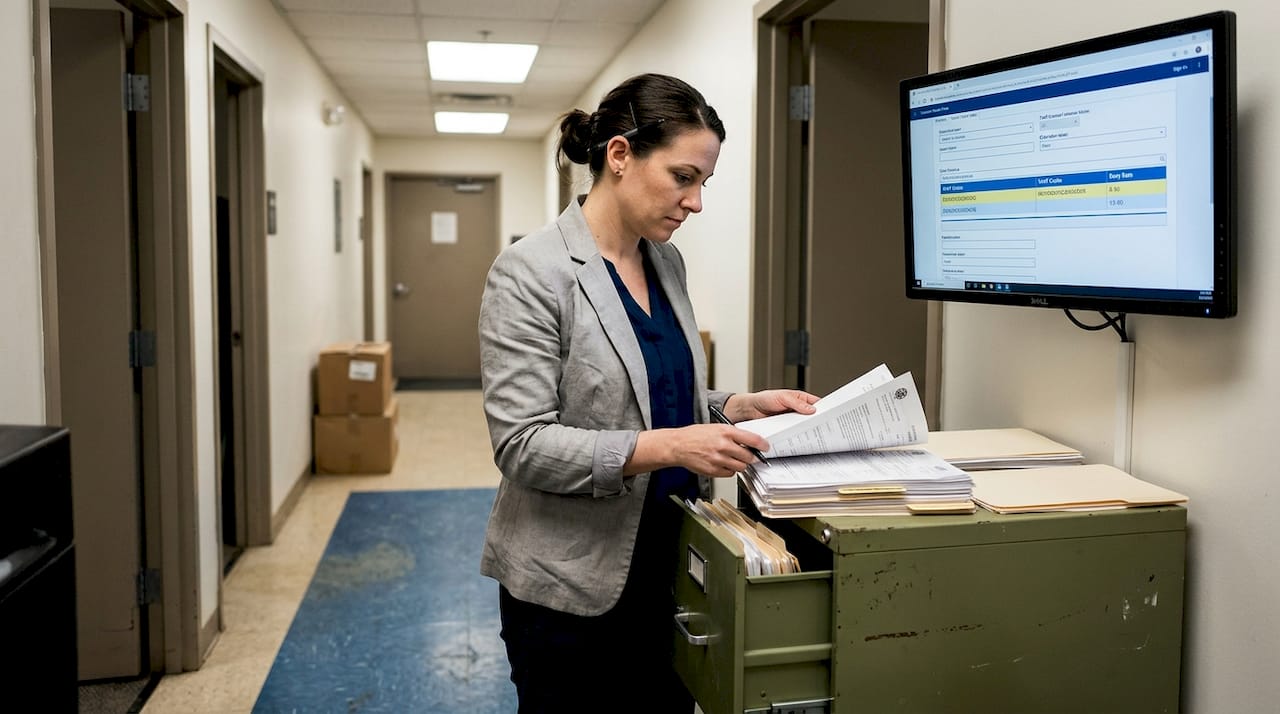
The audit protection brokers provide saves substantial money over time. They maintain complete, organized records of every transaction, classification decision, and payment made on your behalf. If CBP selects your company for audit, these records demonstrate due diligence and support your compliance position. Brokers also guide voluntary disclosures when errors are discovered, a process that significantly reduces penalties compared to CBP finding issues first.
Pro Tip: Establish a pre-clearance review process with your broker where they examine shipment details 48 hours before arrival, catching potential issues before goods reach the border and avoiding costly last-minute scrambles.
Cost and time savings customs brokers deliver:
- Reduce clearance time from days to hours through proper preparation and customs relationships
- Lower duty payments by identifying applicable trade agreements and preferential programs
- Eliminate storage and demurrage fees caused by documentation delays or holds
- Prevent penalty assessments through accurate classification and regulatory compliance
- Decrease administrative overhead by handling all customs-related tasks and communications
- Provide predictable costs through transparent fee structures and duty calculations
You can cut costs with customs brokers while simultaneously improving clearance speed, creating a dual benefit that directly impacts your competitiveness in global markets.
Managing risks and special cases with customs brokers
Risk management becomes exponentially more complex when you import regulated products or operate in industries facing heightened customs scrutiny. Customs brokers navigate these high-stakes scenarios by understanding the specific requirements for products like food, pharmaceuticals, medical devices, chemicals, and textiles. Each category involves distinct regulatory frameworks, testing requirements, labeling standards, and import permits that must align perfectly before customs releases your goods.
The penalty landscape for customs violations has grown increasingly severe. Negligent violations can result in penalties up to 2x duties for negligence, with fraud charges carrying even higher financial consequences plus potential criminal liability. Brokers help you avoid these outcomes by implementing rigorous internal controls, conducting periodic compliance reviews, and maintaining the documentation standards that demonstrate good faith efforts to comply.
When audits occur or errors are discovered, brokers guide the voluntary disclosure process. This proactive approach to addressing compliance issues before CBP discovers them typically results in reduced penalties and demonstrates your commitment to regulatory adherence. Brokers prepare the detailed submissions required for voluntary disclosures, including complete transaction histories, root cause analyses, and corrective action plans.
The 2026 trade environment presents unique challenges with AI-powered enforcement tools, increased whistleblower incentives, and volatile tariff policies creating uncertainty. Brokers stay current on these trade uncertainty factors and adjust their strategies to protect your interests. They monitor regulatory changes, interpret new enforcement priorities, and update classification and valuation approaches as trade policies evolve.
Pro Tip: Schedule quarterly compliance reviews with your broker to identify potential vulnerabilities before they become audit triggers, especially if you import regulated products or operate in industries targeted for enforcement.
Risk mitigation strategies brokers employ:
- Conduct product-specific research to identify all applicable regulations and permits before first import
- Establish classification and valuation methodologies with documented rationale to support audit defense
- Implement transaction monitoring to flag unusual patterns that might trigger customs scrutiny
- Coordinate with legal counsel when voluntary disclosures or complex compliance issues arise
- Maintain relationships with customs officials to understand current enforcement priorities and concerns
- Develop contingency plans for supply chain disruptions caused by regulatory changes or trade disputes
“The customs broker’s role extends far beyond paperwork. They serve as your early warning system for compliance risks and your advocate when issues arise, making them essential partners in managing the legal and financial exposures inherent in international trade.”
Understanding customs broker explanations helps you appreciate how their expertise translates into tangible risk reduction across your import operations.
Step-by-step process: working with a customs broker for your shipments
Successfully partnering with a customs broker requires understanding your responsibilities and how to prepare information for efficient processing. The collaboration begins before you even place an international order, as early engagement allows brokers to identify potential compliance issues and optimize your shipping strategy.
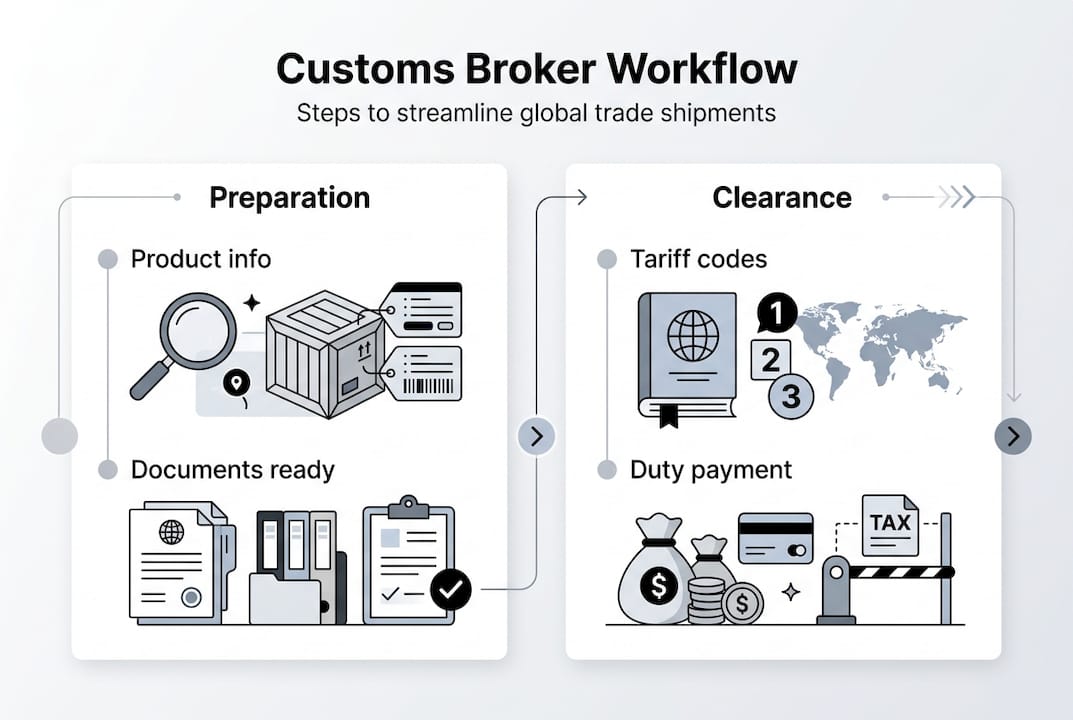
Start by gathering complete product information including detailed descriptions, materials, manufacturing processes, and intended uses. Your broker needs this information to assign accurate tariff classifications. Next, compile supplier details, purchase orders, and pricing information to establish proper customs valuation. Any special certifications, testing results, or regulatory approvals should be organized and readily available.
Once your shipment is en route, provide your broker with all shipping documents immediately. This includes the commercial invoice, packing list, bill of lading or airway bill, and any certificates of origin or preferential trade agreement documentation. The faster your broker receives these documents, the sooner they can prepare and submit your customs entry.
Your broker then takes over the technical process, classifying goods, calculating duties and fees, preparing the customs entry, and submitting everything electronically to CBP. They monitor the entry status, respond to any customs queries, arrange payment of duties and fees, and coordinate the physical release of your goods to your designated carrier or warehouse.
After clearance, verify that goods match the entry documentation and retain all records according to the five-year requirement for customs documents. Your broker maintains copies as well, but having your own complete file protects you during audits and supports future import decisions.
| Step | Responsible Party | Typical Timeline |
|---|---|---|
| Gather product and supplier information | Importer | Before shipment |
| Provide shipping documents | Importer | Upon shipment |
| Classify goods and prepare entry | Customs Broker | 24-48 hours before arrival |
| Submit entry to CBP | Customs Broker | Before or upon arrival |
| Review and release shipment | CBP | Hours to 1-2 days |
| Arrange delivery to final destination | Importer/Broker | After customs release |
| Maintain records for compliance | Both | 5 years minimum |
Pro Tip: Create a standardized information package for each product you import regularly, including photos, detailed descriptions, and material breakdowns, so your broker can process repeat shipments faster with consistent classification.
Establish clear communication protocols with your broker, including primary contacts, escalation procedures for urgent issues, and regular check-ins to review performance and address concerns. The strongest broker relationships involve transparency, prompt information sharing, and mutual accountability for compliance outcomes.
Understanding customs import brokers and their processes helps you prepare the right information at the right time, maximizing efficiency and minimizing clearance delays.
Key preparation steps for working effectively with brokers:
- Document all product specifications, materials, and manufacturing details before first import
- Establish clear internal processes for collecting and transmitting shipping documents promptly
- Designate a single point of contact within your organization for customs-related communications
- Review entry summaries and duty calculations to understand costs and verify accuracy
- Report any post-clearance issues or discrepancies immediately to your broker
- Schedule periodic reviews to assess broker performance and identify process improvements
Streamline your global shipping with expert customs brokerage services
Navigating the complexities of international trade requires more than just understanding customs regulations. It demands a partner with deep expertise, proven systems, and the resources to handle your shipments efficiently from origin to final destination. Worldwide Express combines professional customs brokerage with comprehensive freight forwarding to deliver seamless cross-border shipping solutions.
Our US customs brokerage services ensure fast, compliant clearance for every shipment while our integrated logistics network provides end-to-end visibility and control. Whether you need air freight, ocean shipping, or ground transportation, our team coordinates every detail to keep your supply chain moving. Advanced tracking technology and dedicated support staff mean you always know where your shipments are and can quickly resolve any issues that arise.
Explore our complete freight forwarding guide to understand how integrated logistics services reduce complexity and costs. Compare providers using our freight forwarding services comparison to see how Worldwide Express delivers superior value through expertise, technology, and personalized service. Partner with us to reduce delays, minimize costs, and eliminate compliance risks in 2026.
FAQ
What is a customs broker and why is one necessary?
A customs broker is a licensed professional who manages customs compliance, prepares required documentation, and facilitates efficient clearance of international shipments. They are essential because customs regulations are complex and constantly changing, making it nearly impossible for most businesses to maintain current knowledge while managing their core operations. Brokers prevent costly delays, penalties, and legal issues that result from documentation errors or regulatory non-compliance.
How do customs brokers reduce import and export costs?
Customs brokers optimize tariff classification to ensure you pay the lowest legal duty rate for each product category. They leverage free trade agreements, preferential duty programs, and special classifications that reduce or eliminate duties you might otherwise pay. By preventing penalties, reducing storage fees through faster clearance, and minimizing administrative overhead, brokers deliver cost savings that typically exceed their service fees multiple times over.
What risks can customs brokers help mitigate during trade?
Customs brokers help you avoid penalties ranging from monetary fines to shipment seizures by ensuring full regulatory compliance across all agencies. They manage audit processes, guide voluntary disclosures when errors occur, and maintain the documentation standards that demonstrate good faith compliance efforts. For high-risk transactions involving regulated goods, brokers coordinate the specialized permits, testing, and certifications required to import legally. Their expertise in customs broker risk management protects both your financial health and business reputation.
How quickly can a customs broker clear my shipments?
With proper preparation and documentation, customs brokers can achieve clearance within hours of your shipment’s arrival at the border. The exact timeline depends on factors like product type, completeness of documentation, and whether CBP selects your shipment for physical examination. Brokers expedite the process by submitting entries before arrival, maintaining strong relationships with customs officials, and immediately addressing any holds or requests for additional information. Most routine shipments clear within 24 hours when handled by experienced brokers.
Do I need a customs broker for every international shipment?
While technically you can clear your own shipments, the complexity and risk make brokers essential for virtually all commercial imports. The licensing requirements, technical knowledge, and time commitment needed to handle customs properly exceed what most businesses can manage internally. Even companies with in-house customs expertise often use brokers for efficiency and to maintain separation between commercial operations and regulatory compliance. The small investment in broker services provides enormous value through faster clearance, lower costs, and reduced legal exposure.
Recommended
- Why use a customs broker: cut costs by 15% in 2026 – Worldwide Express, Inc.
- Role of a US customs broker: streamline trade compliance – Worldwide Express, Inc.
- Efficient US Customs Brokerage Services for Smooth Imports
- Best Customs Brokerage Providers – Expert Comparison 2025 – Worldwide Express, Inc.