TL;DR:
- Incomplete paperwork is responsible for 87% of customs delays, often caused by incorrect or placeholder data. Accurate, detailed shipping documents like the commercial invoice, packing list, and bill of lading are essential for smooth customs clearance and avoiding inspections or fines. Proper coordination, timely filing, and clear consignee marks significantly enhance shipment efficiency and regulatory compliance.
Incomplete paperwork kills shipments. A 2023 WCO study found that 87% of customs delays stem from incorrect or incomplete cargo declarations. Knowing how to prepare shipping documents accurately is the difference between cargo that clears customs in hours and cargo that sits at a port for days while storage fees pile up. This guide covers every document you need, how to fill each one correctly, and the specific mistakes that trigger inspections, fines, and rejected filings.
Table of Contents
- Key Takeaways
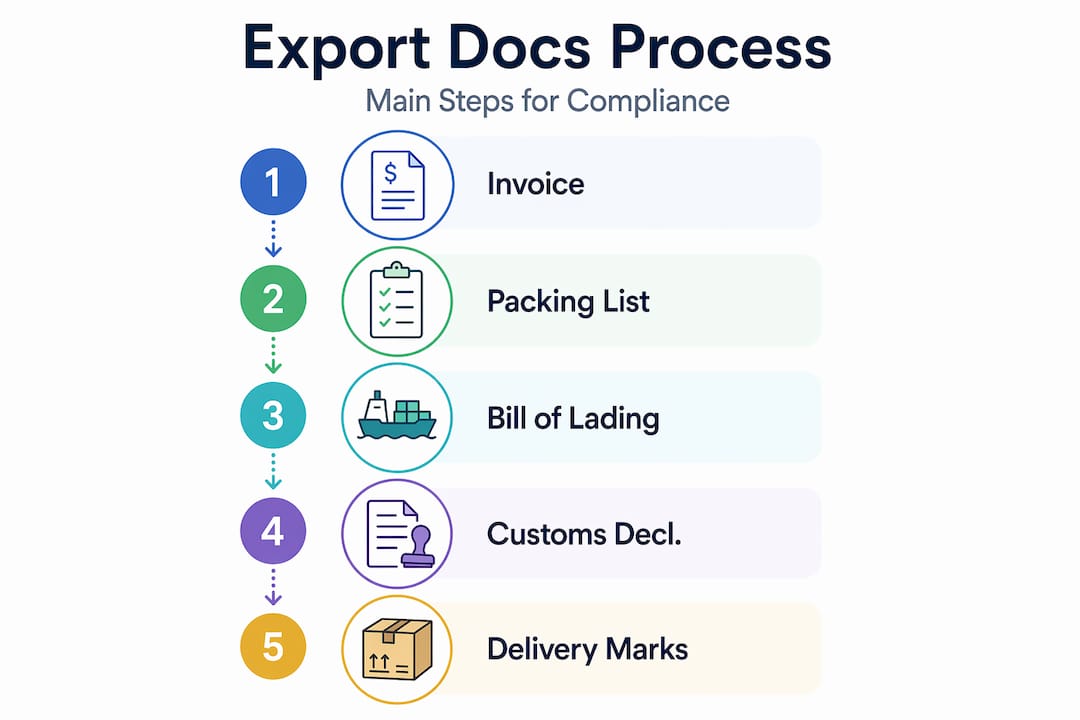
- How to prepare shipping documents: the core set
- Step-by-step document preparation for exports
- Common errors and how to fix them
- Delivery instructions and consignee marks
- My take on documentation as a competitive skill
- How Worldwideexpress makes documentation manageable
- FAQ
Key Takeaways
| Point | Details |
|---|---|
| Document accuracy prevents delays | Even minor data mismatches in export shipping documentation cause customs holds and costly inspections. |
| ISF must be filed early | The Importer Security Filing must reach U.S. CBP at least 24 hours before vessel loading or face fines. |
| Consignee marks matter | Packages must be marked on at least two sides to prevent misrouting in LCL and break-bulk shipments. |
| Delivery instructions need specifics | Include contact details, timing windows, and customs broker information to prevent delivery disruptions. |
| Placeholder data backfires | Filing ISF with placeholder information to meet deadlines often triggers permanent customs flags and inspections. |
How to prepare shipping documents: the core set
Before you can file anything, you need to understand what export shipping documentation actually consists of. The documents are not interchangeable. Each one serves a specific legal and logistical purpose, and customs officials treat missing or mismatched entries as red flags.
Commercial invoice
The commercial invoice is the foundation of every shipment. It declares the transaction between buyer and seller and tells customs officials what the goods are, what they are worth, and where they are going. Every entry needs to be precise. Vague product descriptions trigger automatic inspections because customs officers cannot assess duties without knowing exactly what they are clearing.
Your commercial invoice must include:
- Full legal names and addresses of both exporter and importer
- Harmonized Tariff Schedule (HTS) codes for every line item
- Country of origin for each product
- Unit price, total value, and currency
- Incoterms (e.g., FOB, CIF) that define delivery responsibilities
Packing list
The packing list is the physical companion to the commercial invoice. While the invoice covers the financial transaction, the packing list describes the physical cargo: number of packages, dimensions, gross and net weights, and how items are packaged. Customs inspectors compare the packing list to the actual cargo. Any discrepancy stops clearance cold.
Bill of lading
The bill of lading is both a transport contract and a document of title. It identifies the carrier, the shipper, the consignee, and the cargo. In ocean freight, a negotiable bill of lading transfers ownership of the goods. Errors in the bill of lading number are among the most common causes of cargo misrouting and customs holds.

Export and import customs declarations
These are the official filings submitted to customs authorities in both the origin and destination countries. In the United States, exporters file Electronic Export Information (EEI) through the Automated Export System (AES). Importers file entry documentation upon arrival. Both must align with the commercial invoice and packing list exactly.
Special documents
Depending on the commodity and destination, you may also need:
- Certificate of origin: Proves where goods were manufactured, often required for preferential tariff treatment under trade agreements
- Insurance certificate: Documents cargo coverage and is required by many buyers and banks under letters of credit
- Importer Security Filing (ISF): Required for all ocean shipments to the U.S.; must be submitted 24 hours before loading at the foreign port
| Document | Primary purpose | Who prepares it |
|---|---|---|
| Commercial invoice | Declares goods and value for customs | Exporter |
| Packing list | Describes physical cargo contents | Exporter or freight forwarder |
| Bill of lading | Transport contract and cargo title | Carrier or freight forwarder |
| ISF (10+2) | Pre-arrival security filing for U.S. imports | Importer or customs broker |
| Certificate of origin | Confirms manufacturing country | Exporter or trade authority |
| Insurance certificate | Documents cargo insurance coverage | Insurer or freight forwarder |
Step-by-step document preparation for exports
Getting shipment documents for export right requires discipline from the moment an order is confirmed. Waiting until the last minute to gather data is where most errors originate.
-
Collect verified data from all parties. Request full legal names, addresses, tax ID numbers, and detailed product specifications from your supplier and buyer before you start filling out any form. Confirm that the HTS codes your supplier provides match the codes your customs broker has classified. Discrepancies at this stage are far easier to fix than after filing.
-
Complete the commercial invoice with technical precision. Generic descriptions like “machine parts” or “textile goods” do not satisfy customs requirements. Most exporters underestimate how specific product descriptions need to be. Write the material composition, intended use, model number, and manufacturing method where applicable.
-
Prepare the packing list to match cargo exactly. Count every package, weigh every pallet, and confirm dimensions before you record them. The packing list must mirror the physical shipment. A single additional box that does not appear on the list can trigger a full cargo inspection.
-
File the ISF ‘10+2’ with verified data, not placeholders. The ISF requires 10 data elements from the importer and 2 from the carrier. File it with confirmed information. Using placeholder data to meet the 24-hour deadline often results in corrections that flag the shipment for manual review, defeating the entire purpose of filing early.
-
Coordinate document alignment with your freight forwarder and customs broker. Every document in the set must reference the same shipment with consistent data: same consignee name, same container number, same cargo description. Your freight forwarder should conduct a cross-check before submitting anything to authorities.
-
Submit through validated electronic systems. The ACE portal used by U.S. CBP instantly validates cargo declarations and rejects filings with incomplete or incorrectly formatted data. Use the system’s real-time feedback before the deadline, not after.
-
Retain copies of all submitted documents. Proof of export documentation is required for tax purposes, insurance claims, and any dispute with carriers or customs authorities. Keep organized digital and physical records for every shipment.
Pro Tip: Build a shipping document checklist specific to your commodity type and destination country. Requirements differ by trade lane. A checklist reviewed by your customs broker once per quarter will catch regulatory changes before they affect your shipments.
Common errors and how to fix them
Even experienced shippers make documentation mistakes. The difference between a minor correction and a costly delay often comes down to catching errors before submission.
Vague or mismatched product descriptions
Writing “electronics” instead of “lithium-ion battery packs, 3.7V, for consumer devices” is the most cited reason customs holds shipments. Customs officials cannot determine the correct duty rate or check export controls without a precise description. Vague product descriptions on commercial invoices create automatic clearance holds.
Incorrect HTS codes
Using the wrong HTS code can either underpay duties (creating a liability) or overpay them (costing money unnecessarily). Cross-check every code against the official HTS database and confirm with your customs broker before filing. Codes change periodically, so a code that was correct last year may be outdated now.
Placeholder ISF data
This one deserves special attention. Filing an ISF with placeholder information under the assumption that corrections will be made before arrival is a trap. Corrections to placeholder ISF data regularly trigger inspections and penalties even when the exporter had good intentions. Verify your data before the deadline, not after.
Common documentation errors include:
- Consignee name on the invoice differs from the name on the bill of lading
- Container numbers listed on the cargo declaration do not match the bill of lading
- Missing marks or numbers on packages that correspond to the packing list
- Delivery instructions that omit the customs broker contact or unloading requirements
- Currency not specified on the commercial invoice
Pro Tip: Before submitting any document set, run a “four-corner check”: compare the consignee name, cargo description, HTS codes, and container number across the commercial invoice, packing list, bill of lading, and customs declaration simultaneously. If all four match, you have eliminated the most common causes of customs delays. You can also review Worldwideexpress’s guidance on avoiding customs penalties for a deeper look at the compliance pitfalls that catch shippers off guard.
Late or rejected filings
The ACE system does not wait. Incomplete filings get rejected automatically. Build a filing calendar with hard deadlines set at least 48 hours before the required submission time. That buffer gives you room to address data verification issues without missing the regulatory deadline.
Delivery instructions and consignee marks
Two elements of shipping export documents get overlooked more often than almost anything else: delivery instructions and consignee marks. Together, they are what connect your paperwork to your physical cargo once it reaches the destination.
What delivery instructions must include
According to a 2026 logistics report, 23% of international shipment delays come from misunderstood or incomplete delivery instructions. That number is avoidable. Effective delivery instructions should specify:
- Full recipient contact name, phone number, and email address
- Accepted delivery windows and dock appointment procedures
- Any special handling needs, such as temperature control or fragile labeling
- Name and contact details of the customs broker at the destination
- Instructions for what to do if delivery cannot be completed
Complete delivery instructions that include contact names, special procedures, and customs clearance requirements reduce delivery disruptions significantly.
Consignee marks and why they matter
Consignee marks are the identification codes placed on the outside of packages. They link the physical box to its corresponding entry in the packing list and bill of lading. In LCL (less than container load) and break-bulk shipments, where multiple shippers share space, unmarked cargo gets misrouted with alarming regularity.
Consignee marks must appear on at least two sides of each package to meet international visibility standards. The marks must be durable enough to survive handling and weather exposure. Stenciled marks or permanently printed labels outperform adhesive stickers for long voyages.
| Marking element | Requirement |
|---|---|
| Placement | Minimum two sides of each package |
| Content | Consignee name, destination port, package number |
| Durability | Permanent ink, stencil, or stamped label |
| Readability | Minimum 50mm text height recommended |
| Compliance | Must match packing list and bill of lading exactly |
Poor marking practices lead to misrouting and delays that shippers often attribute incorrectly to customs clearance issues. The cargo was not held at customs. It was delivered to the wrong warehouse because no one could read the label.
My take on documentation as a competitive skill
I have watched exporters treat shipping paperwork as a compliance nuisance, something to get through rather than get right. That mindset is expensive. In my experience, the companies that consistently clear customs without delays are not the ones with bigger budgets. They are the ones with better habits.
The ISF filing discipline stands out most. I have seen companies file placeholder data to hit the deadline and tell themselves they will correct it later. They almost never escape that decision without a penalty or an inspection. Verified data filed on time is worth waiting an extra few hours to gather. That is not caution. That is strategy.
What I have also found is that communication between the exporter, the freight forwarder, and the customs broker is where document errors most often originate. Each party works from their own version of the cargo data, and no one reconciles them until something goes wrong. Building a single shared document template that all three parties populate together eliminates most of the four-corner mismatches I described above.
The exporters I respect most treat their export shipping documentation process as a competitive advantage. Clean, accurate filings clear faster. Faster clearance means predictable delivery windows. Predictable delivery windows mean happier buyers and fewer claims. Documentation done well is not bureaucracy. It is reputation management at the border.
— Ian
How Worldwideexpress makes documentation manageable
Preparing accurate shipping documents for export is demanding work, and a single filing error can cost more than the entire logistics budget for a shipment. Worldwideexpress brings together freight forwarding expertise and licensed customs brokerage under one roof, which means your document set gets reviewed by people who do this every day across dozens of trade lanes.
From ISF filing and HTS code verification to commercial invoice review and certificate of origin coordination, Worldwideexpress handles the detail work that causes delays when it goes wrong. Their customs brokerage services are built specifically to keep shipments moving and keep exporters compliant. For businesses new to international trade or scaling into new markets, their freight forwarding guide is a strong starting point for understanding how documentation fits into the larger logistics picture.
FAQ
What documents are required for international export shipments?
The core shipping documents for export include a commercial invoice, packing list, bill of lading, and customs declaration. Depending on the destination and commodity, you may also need a certificate of origin, insurance certificate, or Importer Security Filing.
How early does the ISF need to be filed for U.S. imports?
U.S. CBP requires the ISF ‘10+2’ to be received at least 24 hours before the cargo is loaded aboard a vessel at the foreign port of departure. Late or incomplete filings result in fines and potential cargo inspections.
What is a proof of export document?
A proof of export document confirms that goods have physically left the exporting country. It typically includes the customs export declaration, bill of lading, and commercial invoice, and is required for tax exemption claims and trade compliance records.
Why do vague product descriptions cause customs delays?
Customs authorities need precise product descriptions to determine the correct duty rate and check export control restrictions. Vague descriptions trigger automatic holds because officials cannot assess duties without knowing exactly what is being imported.
How many sides of a package need consignee marks?
International marking standards require consignee marks on at least two sides of each package. This visibility requirement reduces misrouting in LCL and break-bulk shipments where multiple consignees share cargo space.
Recommended
- Master Export Shipping Documentation for Success – Worldwide Express, Inc.
- Master the Export Documentation Process in 2025 – Worldwide Express, Inc.
- Step-by-step guide to exporting goods: compliance to shipment – Worldwide Express, Inc.
- Efficient packing goods for export: a comprehensive guide – Worldwide Express, Inc.