TL;DR:
- Choosing the right FedEx international service depends on shipment urgency, value, and volume, with automation improving consistency. International First is ideal for time-sensitive, high-value freight, while Priority balances speed and reliability for most global trade; Economy offers a cost-effective option for less urgent shipments. Connect Plus caters to scalable e-commerce deliveries by reducing residential surcharges and streamlining customs processes, ensuring efficient cross-border shipping.
Selecting the right FedEx international services is one of the highest-stakes decisions a logistics manager makes on a repeating basis. Pick the wrong tier and you either overpay on freight that could have moved economically, or you under-serve a customer whose order needed to arrive in three days, not five. FedEx operates one of the most expansive global delivery networks in the world, but the breadth of its cross-border shipping services creates its own complexity. This guide breaks down each major service tier, the criteria that distinguish them, and how to match both to your specific business needs.
Table of Contents
- Key Takeaways
- 1. FedEx international services: the evaluation framework
- 2. FedEx International First: when every hour counts
- 3. FedEx International Priority: the workhorse of global trade
- 4. FedEx International Economy: the cost-conscious option
- 5. FedEx International Connect Plus: built for e-commerce at scale
- 6. Comparing the tiers and choosing the right fit
- My take on getting FedEx international shipping right
- How Worldwideexpress supports your international shipping strategy
- FAQ
Key Takeaways
| Point | Details |
|---|---|
| Match tier to shipment urgency | Each FedEx service tier targets a distinct speed and cost profile; selecting by urgency prevents overspending. |
| Customs brokerage strategy matters | Choosing between broker-inclusive service and International Broker Select directly affects clearance speed and reliability. |
| Connect Plus suits e-commerce scale | International Connect Plus waives residential surcharges and integrates customs clearance at label creation for direct-to-consumer shippers. |
| Duties and taxes are always separate | Landed cost variability is a destination-imposed factor; fast shipping tiers do not reduce it. |
| Automation creates consistency | Routing rules that match order profiles to service tiers reduce costs and protect customer satisfaction at scale. |
1. FedEx international services: the evaluation framework
Before comparing tiers, businesses need a clear set of criteria. Applying these consistently will prevent service selection from becoming a guessing game.
- Delivery timeline. How many business days can your customer or downstream process absorb? Time-sensitive pharmaceutical samples and routine catalog replenishment operate in completely different windows.
- Total landed cost. Shipping charges are only one element. Duties and taxes are always destination-imposed and separate from FedEx charges, so a premium service tier does not reduce landed-cost exposure.
- Shipment characteristics. Weight, dimensions, and commodity type shape both eligibility and surcharge exposure. Parcels with high dimensional weight relative to actual weight are especially affected.
- Customs brokerage preference. FedEx includes brokerage in most international services, but businesses with preferred brokers can use International Broker Select by specifying broker details on the air waybill.
- Tracking expectations. End-to-end FedEx tracking international shipments is available across tiers, but the granularity and proactive notification features vary.
- Volume and scalability. High-volume shippers benefit from automated shipping rules that route orders to the appropriate tier without manual intervention, reducing errors and controlling cost.
Pro Tip: Before you commit to a single service tier, map your last 90 days of international orders by value and transit urgency. That data will reveal the natural segmentation points for your routing rules.
2. FedEx International First: when every hour counts
International First sits at the top of the FedEx speed hierarchy. It targets next-business-day delivery to select destinations, making it the right call for shipments where delay has measurable financial or operational consequences.
Typical use cases include:
- Urgent legal documents with filing deadlines in a foreign jurisdiction
- Critical spare parts needed to restart manufacturing equipment
- High-value samples for time-bound regulatory review
- Medical or diagnostic specimens with stability requirements
The cost premium is real. Treat it as insurance rather than a standard freight spend. If the cost of a delayed shipment exceeds the price difference between International First and the next tier, the math favors First every time.
FedEx includes customs documentation support within the service, and its service tier structure is designed so that International First shipments receive priority processing through customs lanes where available.
Pro Tip: Use International First selectively and document the business cases that triggered it. After six months, you will have a defensible policy that justifies the spend and prevents casual overuse by shipping team members.
3. FedEx International Priority: the workhorse of global trade
For most businesses engaged in international trade, International Priority is the default premium service. It delivers in 1 to 3 business days to most major global markets, balancing speed and reliability at a cost that is justifiable for high-value or time-sensitive freight.

The core value proposition here is risk reduction. When you ship a $40,000 consignment of electronics or a medical device awaiting patient use, the shipping cost becomes a relatively small variable in the total risk equation. Priority service is built for exactly that logic.
Key features worth understanding:
- Broker-inclusive customs clearance is standard, meaning FedEx handles the clearance process end to end without additional setup
- The International Broker Select option is available if your compliance team has a preferred broker relationship
- Coverage spans major global markets with consistent transit time windows, making delivery promise management to customers more predictable
- FedEx tracking provides full shipment visibility from pickup through final delivery
Pricing scales with billable weight, origin-destination lane, and applicable surcharges. For high-value shipments, the per-unit shipping cost as a percentage of cargo value is typically low enough that Priority is a straightforward choice.
Pro Tip: If your orders carry declared values above a threshold you set internally, automate the routing to Priority rather than leaving it to individual discretion. This protects the business from both delivery failures and liability exposure.
4. FedEx International Economy: the cost-conscious option
International Economy is where businesses shift when delivery urgency drops and price sensitivity rises. Transit times run approximately 2 to 5 business days depending on the lane, with pricing driven by billable weight, zone, and applicable surcharges.
This service works well for:
- Restocking shipments with comfortable lead times built into the supply chain
- Non-urgent B2B deliveries where the buyer is flexible on exact arrival date
- Promotional or marketing materials being sent ahead of an event
- Product samples that are not time-critical
One misconception to correct immediately: Economy does not simplify your landed cost picture. Duties and taxes remain destination-imposed and are handled separately from FedEx charges. The service includes broker-inclusive customs clearance by default, with International Broker Select available when your own broker is preferred.
| Factor | International Priority | International Economy |
|---|---|---|
| Transit time | 1 to 3 business days | 2 to 5 business days |
| Cost relative to Priority | Higher | Lower |
| Customs brokerage | Broker-inclusive or own broker | Broker-inclusive or own broker |
| Duties and taxes | Destination-set, separate | Destination-set, separate |
| Best use case | High-value, time-sensitive | Non-urgent, cost-sensitive |
Pro Tip: Always confirm billable weight versus actual weight before finalizing Economy shipments. Lightweight parcels with large dimensions can produce surprising freight charges that erode the cost savings Economy was chosen to deliver.
5. FedEx International Connect Plus: built for e-commerce at scale
International Connect Plus represents FedEx’s direct answer to the demands of direct-to-consumer e-commerce. It serves 190-plus countries with typical transit times of 2 to 5 business days, and it bundles several features that would otherwise require separate arrangement.
What sets Connect Plus apart from Economy for e-commerce operations:
- Customs clearance is integrated at the label creation stage, reducing manual processing and error risk
- Residential delivery surcharges are waived, which is a meaningful cost saving for direct-to-consumer shippers sending thousands of parcels monthly
- End-to-end FedEx tracking is included, giving both the merchant and the end customer full shipment visibility
- Flexible final-mile delivery options accommodate varied destination-country carrier networks
The package weight and size guidelines for Connect Plus align well with standard e-commerce parcel profiles. Businesses shipping apparel, accessories, consumer electronics, or home goods across borders will find the service parameters fit the majority of their catalog.
For growing international e-commerce businesses, the scalability of Connect Plus is a practical advantage. As order volume increases, the absence of residential surcharges and the automated customs clearance process create a cost structure that does not degrade as you grow.
Pro Tip: Compare your current residential surcharge spend on other services against what Connect Plus eliminates. For businesses sending 500 or more international parcels monthly to residential addresses, the surcharge elimination alone often justifies the switch.
6. Comparing the tiers and choosing the right fit
With four distinct service levels available, the decision framework comes down to three variables: speed requirement, shipment value, and volume profile. The FedEx service tier structure makes these variables map cleanly onto service choices when applied with discipline.
Here is how the tiers align with common business shipping profiles:
- Time-critical, high-value freight: International First or Priority, depending on whether next-day or 1 to 3 day delivery meets the requirement
- Standard business-to-business international freight: International Priority when value justifies it; Economy when lead time allows
- High-volume direct-to-consumer e-commerce parcels: Connect Plus, particularly when residential delivery is the dominant destination type
A key insight from shipment automation research is that businesses using automated routing rules consistently outperform those making service selections manually on a per-shipment basis. Automation prevents the creeping overuse of premium services on low-value orders and the underservice of high-value freight routed to Economy by oversight.
“Choosing the wrong FedEx service tier is the biggest business risk, not choosing FedEx itself; each tier targets different shipping objectives.” — per ShipStation research
For businesses with significant European trade volumes, it is worth noting that FedEx’s infrastructure investment in its Duiven road hub, a €46 million expansion that increases palletized freight capacity by over 50%, directly strengthens network reliability on European lanes. Service tier promises are only as good as the infrastructure behind them.
Integrating FedEx with shipping platforms that automate label creation, customs documentation, and tracking significantly reduces manual input errors and improves operational efficiency across all tiers.
My take on getting FedEx international shipping right
I have watched businesses of all sizes misuse FedEx’s international service portfolio, and the pattern is almost always the same. They pick a single service tier because it feels safe, apply it universally, and then wonder why their international shipping costs are either out of control or their customers are complaining about slow delivery.
The fix is not complicated, but it does require some discipline. In my experience, the businesses that get the most out of cross-border shipping services are the ones that treat service selection as a policy decision rather than an individual judgment call. They define clear rules: high-value orders over a set threshold go Priority, standard e-commerce parcels go Connect Plus, and International First is reserved for documented emergency situations.
What most people underestimate is the customs brokerage dimension. Clearance timing varies significantly by destination, commodity, and inspection probability. Businesses that engage customs brokerage expertise early in the process, rather than treating it as a downstream administrative task, consistently see fewer delays and more predictable landed costs.
The FedEx European hub expansion at Duiven is also worth paying attention to. Infrastructure capacity is not glamorous, but it is what separates advertised transit times from actual transit times during peak periods. That €46 million investment means the network has real capacity to back up the service promises.
Finally, I would encourage any business shipping internationally at meaningful volume to consider a multi-carrier approach. FedEx is exceptional across most international lanes, but no single carrier is optimal for every origin-destination pair. The goal is a coherent system, not carrier loyalty for its own sake.
— Ian
How Worldwideexpress supports your international shipping strategy
Worldwideexpress brings deep expertise to international shipping solutions across every FedEx service tier. Whether you are sending time-critical freight via International Priority or scaling direct-to-consumer e-commerce shipments through Connect Plus, Worldwideexpress helps businesses handle customs documentation, compliance requirements, and end-to-end FedEx tracking international shipments with consistency.
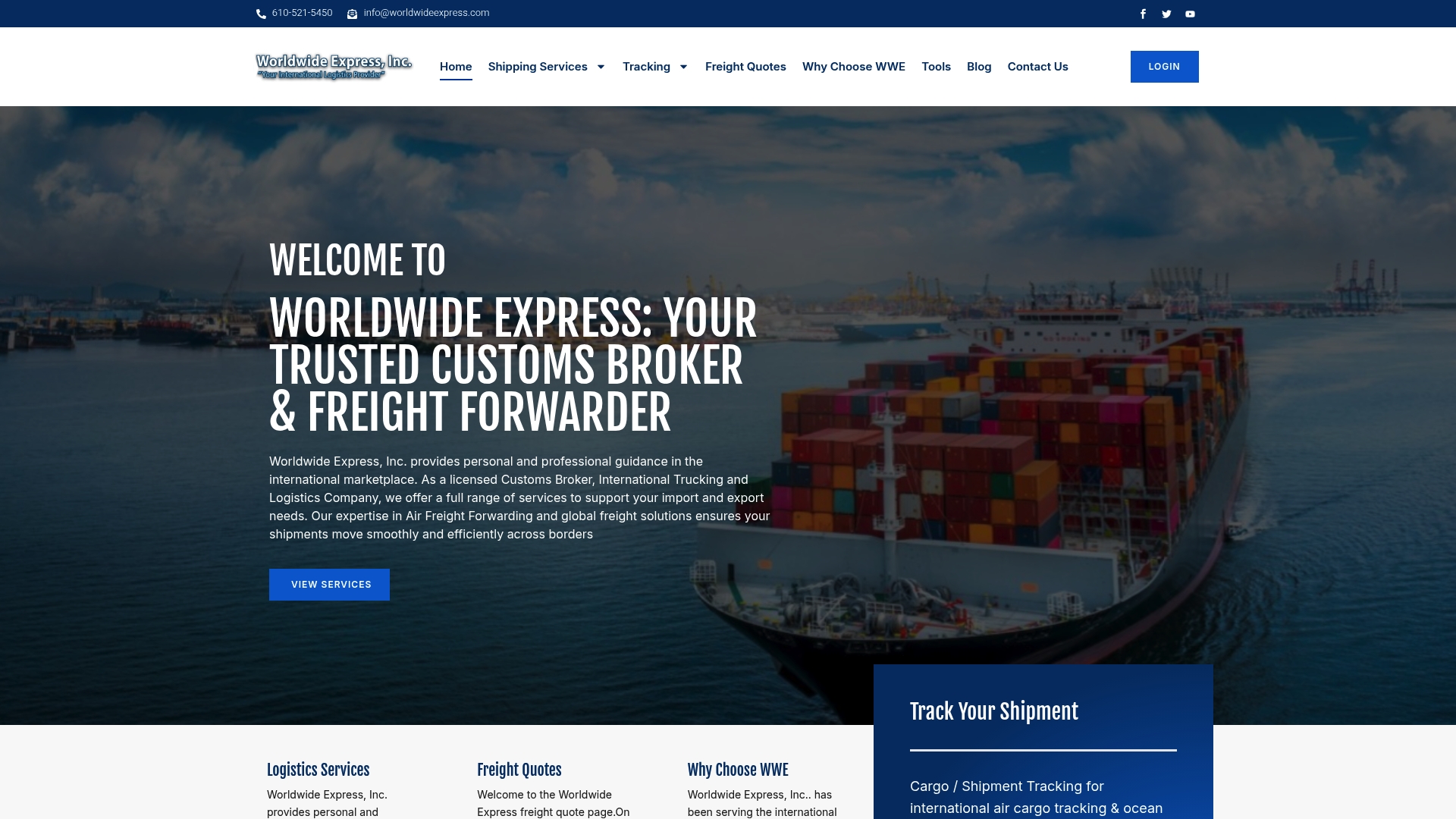
The Worldwideexpress platform integrates with FedEx to support label creation, customs paperwork, and shipment tracking in one place, reducing the manual work that creates errors and delays. From logistics services that span air and ocean freight to customs brokerage and supply chain tools, Worldwideexpress tailors solutions to the specific demands of your trade lanes and order profiles. Reach out to Worldwideexpress to build a shipping strategy that aligns cost, speed, and service reliability across your international operations.
FAQ
What are the main FedEx international service tiers?
FedEx offers four primary tiers: International First, International Priority, International Economy, and International Connect Plus. Each targets a different balance of speed, cost, and shipment profile.
How long does FedEx International Economy take?
International Economy typically delivers in 2 to 5 business days depending on the origin-destination lane, with customs brokerage included but duties and taxes billed separately by the destination country.
Can I use my own customs broker with FedEx?
Yes. FedEx offers International Broker Select on eligible services, allowing businesses to specify their preferred broker on the air waybill rather than using FedEx’s default brokerage.
What makes Connect Plus different from International Economy?
Connect Plus is designed specifically for e-commerce parcels, waiving residential delivery surcharges and integrating customs clearance at label creation, features that International Economy does not include by default.
How do I decide which FedEx international service to use?
Match shipment value and delivery urgency to the appropriate tier. Use automation rules to route high-value or time-critical orders to Priority and standard parcels to Economy or Connect Plus, preventing costly manual errors at scale.
Recommended
- 7 Essential Tips for FedEx International Shipping Success – Worldwide Express, Inc.
- International courier vs freight: guide for managers 2026 – Worldwide Express, Inc.
- Local vs international freight: making the right choice – Worldwide Express, Inc.
- Explore Special Services Freight: Options and Expert Solutions – Worldwide Express, Inc.