TL;DR:
- International car shipping companies handle vehicle transport across borders using methods like RoRo, container, and air freight. Proper documentation, understanding customs duties, and choosing providers experienced in destination regulations are essential to prevent delays and unexpected costs. Selecting the right method, obtaining transparent quotes, and ensuring compliance support a smooth, cost-effective shipment process.
International car shipping companies are specialized logistics providers that manage the transport of vehicles across international borders, handling everything from customs compliance to final delivery. The industry relies on three core methods: Roll-on/Roll-off (RoRo), container shipping, and air freight, each suited to different vehicle types and budgets. AES filing and an Internal Transaction Number are mandatory for every US vehicle export, regardless of value. Destination taxes and customs duties can reach 27% of a vehicle’s value, often exceeding the ocean freight cost itself. Choosing the right provider means understanding these variables before you request a single quote.
1. What types of international car shipping companies are available?
The market for overseas vehicle transport divides into six distinct provider types. Each serves a different need, and picking the wrong category costs you time and money.
- Full-service freight forwarders manage the entire shipment, from pickup to customs clearance and final delivery. They coordinate carriers, documentation, and insurance under one contract. Worldwideexpress operates in this category, offering customs brokerage, ocean and air transport, and warehousing as a unified service.
- RoRo carriers specialize in roll-on/roll-off shipping, where operable vehicles drive onto a vessel and off at the destination port. This is the most cost-effective method for running cars on established trade lanes.
- Container shipping companies load vehicles into 20-foot or 40-foot containers, either as a sole-use booking or shared with other cargo. This option suits luxury, classic, or non-running vehicles that need more physical protection.
- Air freight specialists handle very high-value or time-sensitive vehicles. Costs are significantly higher, but transit times drop from weeks to days.
- Brokerage firms connect shippers with carriers but do not own vessels or trucks. They work well on common routes but can lack control on complex or thin-lane shipments.
- Niche providers focus on specific routes, vehicle types, or markets. Classic car exporters to Europe and dealers shipping to West Africa often use these specialists for their regional expertise.
Vehicle operability and value strongly determine which provider type fits your shipment. A running sedan bound for Germany suits a RoRo carrier, while a restored 1960s muscle car going to Japan belongs in a sole-use container.
2. How international car shipping companies calculate costs
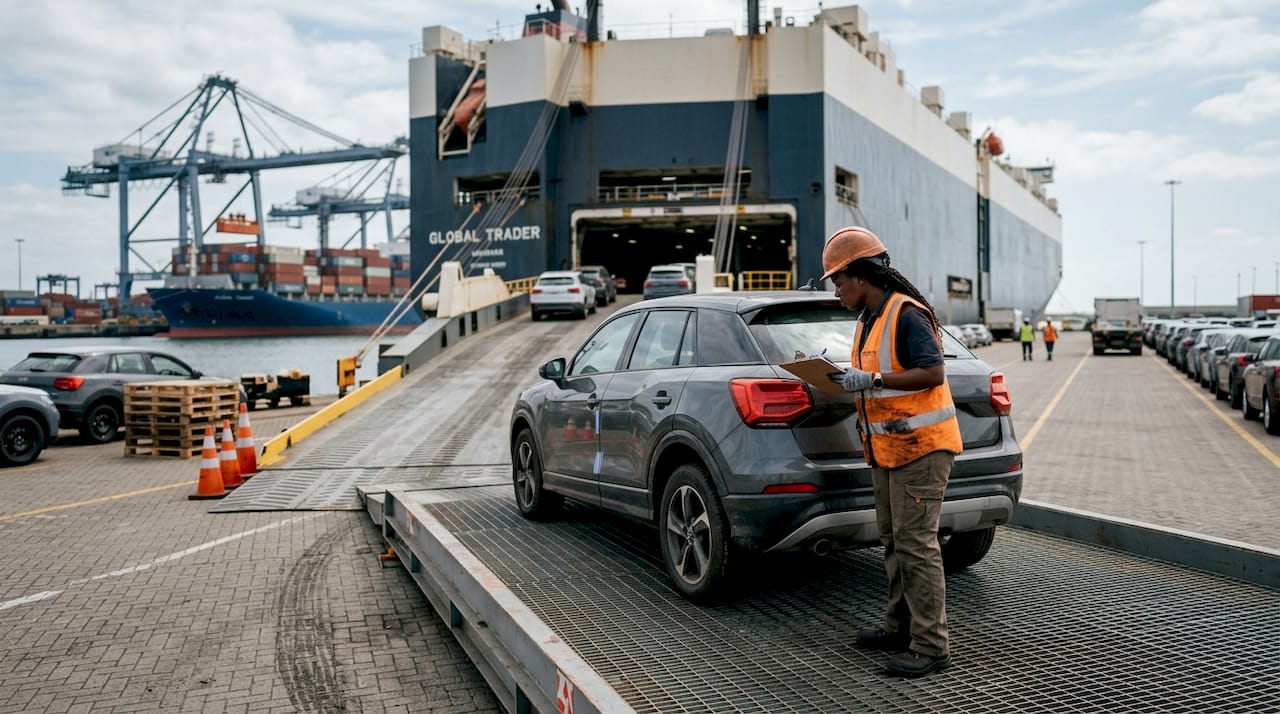
Freight charges are only one part of the total bill. The full landed cost includes inland transport, port handling, customs duties, VAT, insurance, and documentation fees.
| Shipping Method | Typical Cost Range | Best For |
|---|---|---|
| RoRo | $900–$2,000 | Operable vehicles on major routes |
| Shared container | $1,200–$2,200 | Budget-conscious shippers needing more protection |
| Sole-use container | $1,800–$3,500 | Luxury, classic, or non-running vehicles |
| Air freight | $5,000 and up | High-value or urgent shipments |
Customs duties and VAT at the destination can reach 27% of vehicle value, a figure that regularly shocks customers who budgeted only for freight. That tax burden often exceeds the ocean freight cost entirely. Understanding your total landed cost before booking prevents serious budget overruns.
Insurance adds another layer. Most reputable auto transport companies charge a percentage of the declared vehicle value for cargo coverage. Skipping insurance to save money is a false economy when a single claim on a $40,000 vehicle dwarfs years of premium savings.
Pro Tip: Get an itemized quote that separates freight, port fees, customs duties, and insurance. A single bundled number makes it impossible to compare providers accurately.
AES filing fees and customs broker charges also appear on the final invoice. AES filing and the ITN are mandatory for all US vehicle exports, and vehicles do not qualify for the $2,500 de minimis exemption that applies to general goods. Budget for these costs from the start.
3. Essential services reputable auto transport companies must offer
Price is not the only variable worth evaluating. The best car shipping options come from providers whose service infrastructure reduces risk at every stage of the shipment.
- Documentation support. A qualified provider handles AES filing, the Bill of Lading, the vehicle title, and customs clearance paperwork. Missing or incorrect documents can hold a vehicle at port indefinitely.
- Real-time tracking. You should receive shipment status updates from origin pickup through port loading and final delivery. Providers without tracking systems leave you guessing for weeks.
- Port-adjacent staging facilities. Staging warehouses near the port allow staff to verify VINs, photograph vehicles, and resolve discrepancies before the final customs inspection. This step catches problems while they are still fixable.
- Flexible delivery options. Door-to-door service costs more but eliminates the need for you to arrange pickup at a foreign port. Port-to-port works for experienced importers who have local contacts.
- Cargo insurance and claims support. The provider should offer cargo insurance coverage and a clear claims process. Ask specifically who handles the claim and how long resolution typically takes.
- Accessible customer service. Bilingual support matters when your vehicle clears customs in a country where English is not the primary language. Delays caused by communication gaps are avoidable.
Pro Tip: Ask any provider whether they own or lease their staging warehouse. Providers with direct control over port-adjacent storage respond faster when problems arise.
4. How to select the best international car shipping company
Choosing a provider requires matching your specific vehicle, destination, and timeline to the right service profile. A structured approach prevents costly mistakes.
- Match the shipping method to your vehicle. Operable vehicles on high-volume routes suit RoRo for cost efficiency. Non-running or high-value cars belong in a container. Air freight is justified only when time or vehicle value makes the premium worthwhile.
- Demand transparent, itemized pricing. Any provider unwilling to break out freight, port fees, customs estimates, and insurance separately is hiding something. Use freight quote factors as a checklist when comparing bids.
- Verify destination expertise. US vehicle exports flow primarily to West Africa, Latin America, the Middle East, Europe, and Asia, and each region carries distinct customs rules and documentation requirements. A provider experienced in your target region reduces compliance risk significantly.
- Evaluate insurance and claims handling. Ask for the claims process in writing before you sign. A provider with strong insurance and a documented claims procedure signals operational maturity.
- Check customer feedback on responsiveness. Shipping delays happen. What separates good providers from poor ones is how quickly they communicate problems and offer solutions. Look for reviews that specifically mention communication during delays, not just smooth deliveries.
- Plan your timing carefully. Experienced shippers arrive at port-adjacent facilities 3–5 days before vessel sailing to complete inspections and compliance checks. Work backward from the vessel cutoff date when building your schedule.
5. Situational recommendations and alternative shipping options
Some shipments do not fit neatly into the standard RoRo or container categories. Knowing your alternatives prevents you from overpaying or missing a better route.
- Shared container shipping offers a middle ground between RoRo’s low cost and sole-use container protection. Two or three vehicles share a 40-foot container, splitting the cost while gaining more physical security than open-deck RoRo.
- Regional short-sea ferries within Europe move vehicles faster and cheaper than ocean freight for intra-European routes. If your vehicle is already in Europe, this option often beats a full container booking.
- Seasonal scheduling matters. Port congestion peaks around major holidays and at the end of fiscal quarters. Booking 6–8 weeks out on busy lanes like US to West Africa or US to the Middle East reduces the risk of rolled bookings. Worldwideexpress publishes US port congestion updates that help shippers time their bookings.
- Broker vs. direct carrier. On thin or unusual lanes, a broker with strong carrier relationships often secures better rates than going direct. On high-volume lanes like US to Europe, direct carrier bookings frequently cost less.
- Never skip documentation steps. Filing Electronic Export Information and providing correct documents are mandatory. Non-compliance causes legal issues and vehicles stuck at ports, sometimes for months.
- Plan backward from the vessel cutoff. Identify the sailing date, subtract 3–5 days for staging, then subtract inland transit time. That final date is when your vehicle must leave your hands.
Key Takeaways
The most effective approach to international vehicle shipping combines the right transport method, full documentation compliance, and a provider with verified destination expertise.
| Point | Details |
|---|---|
| AES filing is non-negotiable | Every US vehicle export requires an ITN; carriers cannot legally load without it. |
| Landed cost exceeds freight | Customs duties and VAT can reach 27% of vehicle value, often more than the freight charge. |
| Method matches vehicle type | RoRo suits operable cars; containers protect luxury or non-running vehicles. |
| Stage early at the port | Arriving 3–5 days before sailing allows VIN checks, photos, and compliance review. |
| Destination expertise matters | Each major export region carries distinct customs rules that require specialized knowledge. |
What I’ve learned after years of watching vehicle shipments go wrong
The single most common mistake I see is treating international car shipping as a freight-only transaction. Shippers compare RoRo quotes, pick the lowest number, and then discover at the destination port that customs duties and VAT add thousands of dollars they never budgeted for. That surprise is entirely avoidable with a 10-minute conversation about landed cost before booking.
The second pattern I notice is undervaluing the staging warehouse step. Shippers who drop a vehicle at the port gate on the day of sailing have no buffer for a VIN discrepancy, a missing title endorsement, or a last-minute customs query. The 3-to-5-day window before sailing is not padding. It is the time when problems get solved without missing the vessel.
Documentation compliance deserves the same attention as freight cost. I have seen vehicles sit at foreign ports for weeks because the AES filing was incomplete or the ITN was not communicated to the carrier in time. The role of a customs broker in catching these gaps before loading is genuinely underappreciated. Paying a qualified broker is far cheaper than a port storage bill in Lagos or Rotterdam.
My honest recommendation is to prioritize providers who can demonstrate experience in your specific destination region, not just general international capability. A forwarder who ships 500 vehicles a year to the Middle East knows the local customs nuances that a generalist simply does not. That knowledge is worth more than a $200 freight discount.
— Ian
Worldwideexpress and your international vehicle shipment
Shipping a vehicle overseas involves more moving parts than most shippers expect. Worldwideexpress brings together customs brokerage, ocean and air freight coordination, port-adjacent warehousing, and cargo insurance under one logistics framework, so you are not assembling those services from separate vendors.
The team at Worldwideexpress handles AES filing, ITN coordination, and customs clearance documentation as standard parts of the service, not add-ons. For shippers who want a clear picture of the full process before committing, the freight forwarding guide covers every stage from origin pickup to foreign port delivery. If you are ready to compare service structures, the freight forwarding services comparison provides a practical starting point for evaluating your options.
FAQ
What is AES filing and why does it matter for vehicle exports?
AES filing is the Electronic Export Information submission required by US Customs for all vehicle exports. The Internal Transaction Number it generates is mandatory before any carrier can legally load your vehicle onto a vessel.
How much does it cost to ship a car internationally?
RoRo shipping typically runs $900–$2,000, sole-use container shipping $1,800–$3,500, and air freight starts around $5,000. Customs duties and VAT at the destination can add up to 27% of the vehicle’s declared value on top of freight costs.
What is the difference between RoRo and container shipping for vehicles?
RoRo is the most affordable option for operable vehicles on major trade lanes, where cars drive directly onto the vessel. Container shipping provides more physical protection and suits luxury, classic, or non-running vehicles, at a higher cost.
How far in advance should I book international vehicle shipping?
Booking 6–8 weeks ahead is advisable on busy lanes. Vehicles should arrive at port-adjacent staging facilities 3–5 days before the vessel sailing date to allow time for inspections, VIN verification, and compliance checks.
Do I need a customs broker for international car shipping?
A licensed customs broker is not legally required in every case, but using one significantly reduces the risk of documentation errors, port delays, and compliance penalties. Brokers handle AES filing, customs clearance, and communication with foreign customs authorities on your behalf.
Recommended
- International Shipping Companies Near Me: 2026 Guide – Worldwide Express, Inc.
- International Logistics: A 2026 Strategy Guide for Businesses – Worldwide Express, Inc.
- Carrier vs Freight Forwarder: Cut 20% Shipping Costs 2026 – Worldwide Express, Inc.
- Global Shipping 2026: 72% Face Tariff Volatility – Worldwide Express, Inc.