TL;DR:
- Choosing the right broker shipping partner is a critical supply chain decision that ensures efficient freight movement and legal compliance.
- Verifying compliance credentials, assessing insurance coverage, and understanding broker types are essential steps to mitigate operational risks.
Choosing the right broker shipping partner is one of the most consequential supply chain decisions a business can make. Get it wrong and you face cargo claims with no coverage, customs delays from tariff misclassification, and legal exposure that was almost unthinkable just a year ago. Get it right and you gain a strategic partner who moves freight efficiently, keeps you compliant, and shields you from operational risk. This article cuts through the noise with a 2026-ready framework covering selection criteria, broker types, fee transparency, and the legal shifts that now make carrier vetting a non-negotiable.
Table of Contents
- Key takeaways
- 1. What broker shipping actually means for your business
- 2. Key criteria for evaluating any freight broker service
- 3. The five types of brokers you will encounter in shipping logistics
- 4. Comparison of broker types by key selection factors
- 5. How to match a broker to your specific shipping operation
- My honest take on broker shipping in 2026
- How Worldwideexpress supports your broker shipping decisions
- FAQ
Key takeaways
| Point | Details |
|---|---|
| Verify compliance credentials | Confirm FMCSA authority, surety bonds, and carrier vetting practices before signing any contract. |
| Understand insurance gaps | The standard $75,000 surety bond does not cover cargo loss; always request contingent cargo insurance proof. |
| Know your broker type | Customs brokers, freight brokers, and digital platforms serve different operational needs and trade scenarios. |
| Factor in 2026 legal changes | The Supreme Court ruling now exposes brokers to liability for negligent carrier selection, reshaping vetting standards. |
| Match broker to your cargo | High-value, hazardous, or temperature-sensitive freight demands specialized broker experience, not the lowest quote. |
1. What broker shipping actually means for your business
The term “broker shipping” covers a wide spectrum of intermediary services, and confusing them costs businesses real money. A freight broker is a non-asset-based intermediary who coordinates transportation capacity between shippers and carriers. Approximately 28,000 brokers operate in the U.S., collectively moving around one-third of all domestic freight annually, without owning a single truck or warehouse.
A customs broker plays an entirely different role. Licensed customs brokers manage legal entry documentation and tariff classification but do not physically move cargo. They enable goods to clear U.S. Customs legally. Understanding the broker vs. freight forwarder distinction from the start prevents businesses from hiring the wrong type of service for their needs entirely.
2. Key criteria for evaluating any freight broker service
Not all brokers are equal. The criteria below separate the reliable from the risky.
Legal authority and bonding. Every freight broker operating in the U.S. must hold FMCSA operating authority and a surety bond. The required surety bond is $75,000, but this bond protects the broker’s license status, not your cargo. Businesses that assume bond coverage equals cargo protection are routinely surprised when claims go unpaid.
Carrier vetting practices. The 2026 Supreme Court ruling established that brokers owe a duty of reasonable care in carrier selection. Brokers must actively review FMCSA safety ratings and CSA BASIC scores and can now be held liable for negligent hiring if they ignore red flags. Ask any broker candidate to walk you through their vetting checklist before committing.
Insurance coverage beyond the bond. Brokers typically do not carry cargo insurance. Businesses must request proof of contingent cargo insurance that matches their actual product values. This step is skipped more often than it should be.
Technology and visibility tools. Top brokers use digital tools to provide real-time tracking and automated load status updates, directly reducing the risk of costly surprises. A broker who cannot tell you where your freight is at any given moment is not an acceptable partner for time-sensitive or high-value cargo.
Fee transparency. Hidden accessorial charges are a persistent pain point. Destination Delivery Charges can add $150 to $500 per container on top of quoted ocean freight rates. Any broker who cannot produce a written breakdown of all potential charges upfront warrants serious scrutiny.
Reputation and references. Low barriers to entry mean many brokers operate with minimal carrier screening. Request references from businesses in your industry and verify them. A broker serving retail importers may lack the specialized experience needed for industrial chemicals or medical devices.
Pro Tip: Ask every broker candidate specifically how they handle a conditional or unsatisfactory FMCSA safety rating. Their answer tells you more about their actual vetting culture than any sales deck will.
3. The five types of brokers you will encounter in shipping logistics
Understanding broker categories makes the selection process far more precise.
Non-asset-based freight brokers coordinate trucking capacity across a broad carrier network without owning equipment. They excel at domestic full truckload and less-than-truckload moves and typically offer competitive rates through volume relationships. The trade-off is that service consistency depends entirely on the quality of their carrier network and vetting standards.

Licensed customs brokers focus exclusively on documentation, tariff classification, and regulatory compliance for imports and exports. Tariff misclassification is the top mistake in customs brokerage, leading to penalties and delays that far exceed broker fees. Businesses with active import operations need a licensed customs broker, not just a freight coordinator.
International shipping brokers specialize in ocean and air freight, managing carrier relationships across global trade lanes. They handle bill of lading negotiations, freight rate procurement, and port-to-port visibility. They are the right choice for businesses moving regular container volumes across specific corridors.
Hybrid freight forwarders with brokerage capabilities combine documentation handling, carrier coordination, and sometimes warehousing under one roof. They are particularly useful for businesses that want a single point of accountability across a complex international supply chain.
Digital freight brokers use platform technology to match shippers with carriers in near real-time, often with transparent pricing and automated booking. They work well for standard freight lanes but may lack the specialized expertise needed for complex customs scenarios or unusual cargo types.
For a more detailed breakdown of how these roles interact, Worldwideexpress offers a thorough look at customs broker vs. freight forwarder distinctions that clarifies which service type fits which operational scenario.
4. Comparison of broker types by key selection factors
| Broker type | Fee structure | Compliance credentials | Technology | Best for |
|---|---|---|---|---|
| Non-asset freight broker | Margin on carrier rate | FMCSA authority, surety bond | Varies widely | Domestic trucking, FTL/LTL |
| Licensed customs broker | Flat fee or hourly | CBP license, HTS expertise | Entry filing systems | Import/export clearance |
| International shipping broker | Freight markup, handling fees | Trade lane knowledge, NVOCC | Track-and-trace portals | Ocean/air freight procurement |
| Hybrid forwarder/broker | Bundled service fees | FMCSA, CBP, IATA credentials | End-to-end visibility platforms | Complex international supply chains |
| Digital freight broker | Transparent per-load pricing | FMCSA authority | Real-time load matching | Standard domestic lanes |
Fee transparency varies most sharply between traditional brokers and digital platforms. Traditional brokers often embed margin into the carrier rate without itemizing it, while digital platforms display per-load pricing directly. Neither model is inherently better. The right choice depends on cargo complexity and the level of hands-on support the business requires.
5. How to match a broker to your specific shipping operation
Selecting a broker is, at its core, a risk management decision, not a price comparison. The framework below helps businesses move from evaluation to decision.
- Define your cargo profile. Identify whether your freight is standard, high-value, hazardous, or temperature-sensitive. Each category narrows the field of qualified brokers significantly.
- Assess volume and frequency. Small businesses with irregular shipments benefit from digital freight platforms that offer transparent spot pricing. High-volume shippers get more value from relationship-driven brokers who can negotiate dedicated capacity.
- Map your trade lanes. An international shipping broker with deep expertise in Asia-Pacific corridors is not necessarily the right partner for Latin American trade lanes. Specialization in your actual routes matters.
- Verify post-2026 vetting protocols. Following the Supreme Court ruling, brokers must document carrier vetting actively, including checking FMCSA safety ratings and investigating conditional carriers. Ask for documentation of their process.
- Confirm insurance alignment. Verify that contingent cargo insurance limits match your highest-value shipment, not an average load value.
- Evaluate technology fit. If your operations team requires API integration with your ERP or WMS, confirm the broker’s platform can deliver it before negotiating rates.
- Check business stability. A broker who has operated for under two years with a thin carrier network represents a financial and operational risk regardless of their rates.
Pro Tip: Request a sample carrier packet from any broker you are seriously considering. A thorough packet includes FMCSA authority confirmation, certificate of insurance, and safety rating documentation. If they cannot produce it quickly, they likely do not require it from their carriers routinely.
The decision tree should always end at the same question: does this broker reduce your operational and financial risk, or simply reduce your quoted rate? Those are not the same outcome. Worldwideexpress has a practical guide on how to choose a freight forwarder that applies equally well to evaluating broker partners for risk management purposes.
The fragmented state regulation environment emerging from the 2026 ruling is already increasing operational complexity and cost pressure, particularly for small and mid-sized businesses. Choosing a broker with deep compliance infrastructure is no longer a luxury. It is a protection against a regulatory environment that is only going to become more demanding.
My honest take on broker shipping in 2026
I’ve spent years watching businesses make the same mistake: they treat broker selection as a procurement exercise and shop almost entirely on price. Then something goes wrong. A carrier drops a load. A customs filing uses the wrong HTS code. A claim surfaces and the broker’s surety bond covers nothing related to the actual loss.
What I’ve learned is that the brokers worth working with are almost never the cheapest option on the first quote. They are the ones who proactively send you their carrier vetting documentation before you ask for it. They are the ones who call you when a shipment status changes, not after you’ve already sent the third follow-up email.
The 2026 Supreme Court ruling is genuinely significant. It shifts the legal standard in a way that should accelerate accountability across the industry, but it also creates a period of uncertainty as state-level rules diverge. I’ve seen businesses get caught between brokers who updated their compliance programs and those who haven’t yet. The difference in operational risk between those two groups is substantial.
My advice: treat broker vetting with the same rigor you would apply to a major supplier audit. Verify credentials. Check references in your specific industry. Ask uncomfortable questions about what happens when something goes wrong. The brokers who answer those questions confidently and specifically are the ones worth trusting with your freight.
— Ian
How Worldwideexpress supports your broker shipping decisions
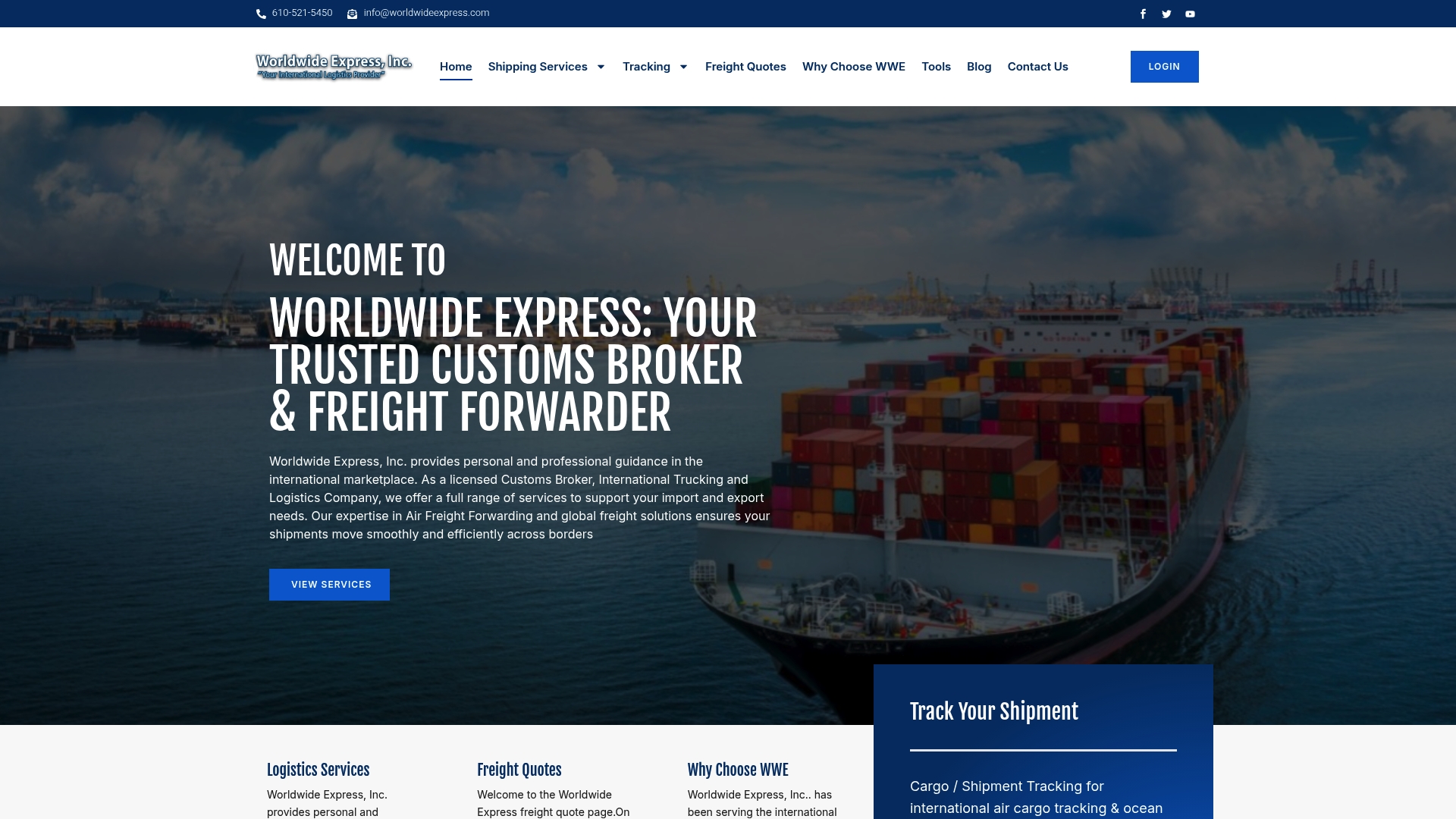
Worldwideexpress brings together freight forwarding, customs brokerage, and supply chain management under one platform built specifically for businesses managing cross-border trade. For companies working through the 2026 regulatory shifts, Worldwideexpress provides licensed customs brokers who handle HTS classification accurately, reducing the risk of penalties that routinely exceed brokerage fees.
The platform’s U.S. customs brokerage services include end-to-end documentation management, compliance monitoring, and real-time shipment visibility across air and ocean freight lanes. For businesses looking to understand how freight forwarding and brokerage work together, the 2026 freight forwarding guide from Worldwideexpress is a practical starting point. Whether you are evaluating your current broker arrangement or building a logistics strategy from the ground up, Worldwideexpress offers the expertise and infrastructure to keep your supply chain moving with confidence.
FAQ
What is broker shipping?
Broker shipping refers to the use of a licensed intermediary to coordinate freight movement between shippers and carriers. Freight brokers do not own transportation assets but manage carrier relationships, documentation, and load coordination on behalf of businesses.
What does a freight broker’s surety bond cover?
The required FMCSA surety bond of $75,000 covers the broker’s operating license, not cargo loss or damage. Businesses should separately verify that brokers carry contingent cargo insurance that matches shipment values.
How do customs brokers differ from freight brokers?
Customs brokers are federally licensed professionals who manage import and export documentation, tariff classification, and regulatory compliance. Freight brokers coordinate the physical movement of goods between carriers and shippers. Many businesses need both services for international shipments.
How has the 2026 Supreme Court ruling changed broker liability?
The ruling established that freight brokers owe a duty of reasonable care in carrier selection and can be held liable for negligent hiring if they use unsafe carriers. Brokers must now actively document their carrier vetting process, including FMCSA safety rating reviews.
What should I look for in shipping broker fees?
Look for complete written disclosure of all charges including accessorial fees, fuel surcharges, and carrier-imposed fees like Destination Delivery Charges, which can add $150 to $500 per container beyond the base quoted rate.
Recommended
- Top Overseas Shipping Companies: How to Choose Wisely – Worldwide Express, Inc.
- Global Shipping 2026: 72% Face Tariff Volatility – Worldwide Express, Inc.
- How to Choose a Freight Forwarder for Smooth Shipping – Worldwide Express, Inc.
- How to choose a customs broker for seamless 2026 trade – Worldwide Express, Inc.