A commercial invoice, often called a customs invoice, is the primary document customs authorities use to assess duties, taxes, and admissibility on most international shipments. Skip it, get a field wrong, or hand a carrier the wrong version, and a shipment sits in a bonded warehouse while you scramble for a corrected copy.
Worldwideexpress hosts downloadable PDF and fillable versions of the standard commercial invoice, along with a sample filled example so you can see exactly how a completed form should look before you build your own. Here’s the fast path:
- Download the fillable PDF or printable template, and open the sample filled example alongside it for reference.
- Fill in every required field (covered field-by-field below), sign, and date it.
- Print multiple copies depending on mode and destination: one travels with the shipment, one goes to your carrier or broker, and at least one stays in your files.
- Attach the invoice to the physical shipment or upload it through your carrier’s online portal, depending on how that carrier handles documentation.
- If you’re shipping by ocean into the United States, check your Importer Security Filing deadline now. It’s due at least 24 hours before vessel loading, not on arrival.
That last point trips up more first-time importers than any other timing rule in this entire process. Get the rest of the invoice right and still miss that window, and you’ve created a problem no amount of paperwork accuracy fixes after the fact.
Key Takeaways
Getting a customs invoice right the first time, matched precisely to your packing list and filed on time, is what actually prevents most customs delays.
| Point | Details |
|---|---|
| Download and save a template | Grab the fillable PDF and printable version, and keep the sample filled example open for comparison. |
| Verify every HS code | Confirm classifications rather than reusing memory, since misclassification drives duty errors and delays. |
| Match invoice to packing list | Line-by-line agreement on quantities and weights prevents the most common cause of inspection holds. |
| Watch ISF timing | For U.S. ocean imports, file the Importer Security Filing at least 24 hours before vessel loading. |
| Consider a broker for complex shipments | Worldwideexpress handles invoice preparation, ISF filing, and customs entry for shippers who’d rather outsource it. |
Table of Contents
- What Is a Customs Invoice Form and When Do You Need One?
- What Fields Belong on a Commercial Invoice?
- What Other Documents Travel With a Customs Invoice?
- How Do You Fill Out and Submit a Customs Invoice?
- Where Can You Download a Fillable Customs Invoice Template?
- Do Different Countries Require Different Invoice Formats?
- What Mistakes Most Often Cause Customs Delays?
- When Should You Bring in a Customs Broker?
- What Actually Speeds Up Your Documentation Process?
- Let Worldwideexpress Handle the Paperwork for You
- Where to Verify Country Rules, HS Codes, and Filing Deadlines
- Sources
What Is a Customs Invoice Form and When Do You Need One?
A commercial invoice is the legal record of a sale between an exporter and an importer, and customs officials in the buyer’s country use it to calculate the duties and taxes owed on that shipment. It’s also the document your bank references for foreign exchange settlement and the one your insurer wants if cargo is damaged or lost in transit. Get the described value wrong, and you’re not just risking a customs hold. You’re potentially misstating what you’d recover on a claim.
The International Trade Administration confirms that a commercial invoice is required for both export and import clearance, and that including accurate HS codes on it speeds the customs review considerably. Leave the classification field blank or vague, and you’re inviting a customs officer to make that call for you, usually to your disadvantage.
Not every shipment needs a full commercial invoice, though. If you’re sending product samples, quotations, or items that aren’t being sold, a pro forma invoice usually does the job instead. It looks nearly identical to a commercial invoice but represents an estimated transaction rather than a completed sale. Once money changes hands and goods actually ship for payment, you need the real thing: a commercial invoice with the true sale price, terms, and shipment specifics. Some destination countries require a specific certified format for high-value or regulated goods, so it is worth confirming this before you assume a generic template will clear without issue.
What Fields Belong on a Commercial Invoice?
Every field on a properly completed customs invoice form exists because a customs officer, a bank, or a freight handler needs that specific piece of information to move your shipment forward. Miss one, and you’ve created a gap someone downstream has to chase down, usually while your cargo sits idle.
Here’s what a complete invoice includes, following the standard laid out by Business:
- Invoice number and date, unique to that shipment for tracking and audit purposes.
- Seller/exporter details, including full legal name, address, and tax ID.
- Buyer and consignee details, noting the consignee separately if it differs from the buyer (common with third-party logistics arrangements).
- Final recipient if different from both buyer and consignee.
- Invoice currency and payment terms, stated clearly to avoid disputes over what was actually agreed.
- Detailed item descriptions, specific enough that a customs officer can identify the goods without guessing. “Electronic components” is too vague; “USB-C charging cables, 1-meter, PVC-coated” works.
- HS (tariff) codes for every line item.
- Quantity and unit of measure, plus unit price and extended value for each line.
- Total invoice value, matching the sum of your line items.
- Country of origin, which determines duty rates and trade agreement eligibility.
- Incoterms (FOB, CIF, DDP, and so on), defining who pays for what and where risk transfers.
- Package marks and numbers, matching what’s physically on the boxes.
- Gross and net weight, plus dimensions, matching your packing list exactly.
- Transport details: mode, carrier, and flight or vessel information.
- Additional charges like freight, insurance, or handling, itemized separately from goods value.
- Certifications or declarations, including any required destination control statement or origin declaration.
Pro Tip: Never guess an HS code from memory. Use a dedicated lookup tool or reference the World Customs Organization’s Harmonized System overview, and when a product could plausibly fall under two headings, document why you chose the one you did. That note saves you an argument with customs six months later when they ask.
A signed declaration at the bottom of the invoice, attesting that the information is accurate, is standard practice and sometimes mandatory. A handful of countries go further and require the invoice be certified by a Chamber of Commerce before it’s accepted, which adds processing time you’ll want to plan around.
What Other Documents Travel With a Customs Invoice?
Two documents are mandatory on essentially every cross-border shipment: the commercial invoice and the packing list. Everything beyond those two depends on your transport mode, destination, and commodity.
The packing list and the commercial invoice look similar but serve different jobs. The invoice establishes value for customs and payment purposes. The packing list describes exactly how goods are physically packed, box by box, so warehouse staff and inspectors can verify contents without opening every carton. Numbers on the two documents need to match precisely; a discrepancy between declared weight on the invoice and actual weight on the packing list is one of the fastest ways to trigger a manual inspection.
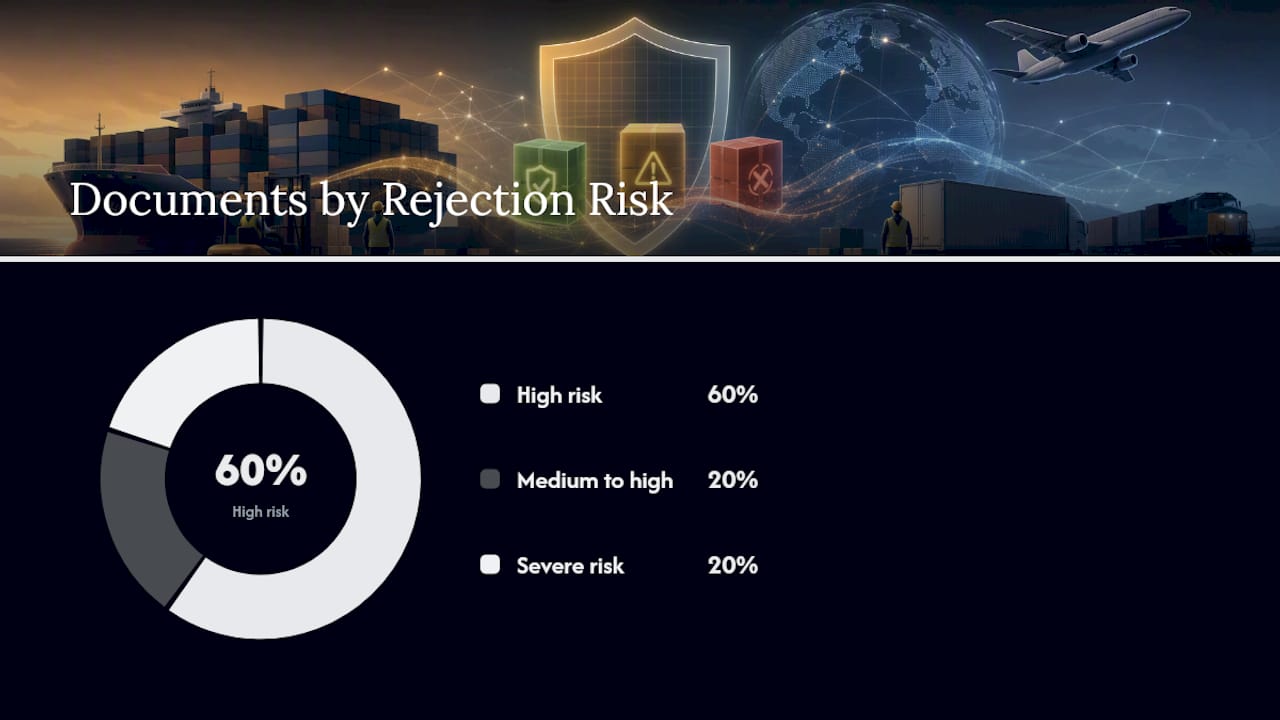
| Document | When it’s needed | Who typically prepares it | Rejection risk if missing or wrong |
|---|---|---|---|
| Packing list | Every shipment, regardless of mode | Exporter or freight forwarder | High: weight/quantity mismatch with invoice triggers holds |
| Bill of lading | Ocean freight shipments | Carrier or forwarder | High: required to release cargo at destination |
| Air waybill | Air freight shipments | Airline or forwarder | High: functions as both contract and receipt |
| Certificate of origin | Claiming trade agreement duty preference | Exporter, sometimes chamber-certified | Medium to high: denies preferential duty rate if absent |
| ISF filing | U.S. ocean imports only | Importer or customs broker | Severe: late filing risks fines and cargo delays |
That ISF filing deserves its own callout because the consequences of missing it are disproportionate to how easy it is to forget. It has to be submitted at least 24 hours before your cargo is loaded onto the vessel, not before it arrives at a U.S. port. Miss that window and you’re looking at fines, holds, or both.
How Do You Fill Out and Submit a Customs Invoice?
Work through these steps in order, and you’ll have a complete, submission-ready invoice without circling back to fix mismatched numbers later:
- Draft from your purchase order. Pull item descriptions, quantities, and prices directly from the PO rather than retyping from memory, which is where transcription errors creep in.
- Match against your packing list line by line. Every quantity, weight, and description needs to agree between the two documents before either one leaves your desk.
- Validate HS codes and unit pricing. Confirm each classification is current and that unit prices reflect the actual transaction value, not a rounded estimate.
- Confirm the agreed Incoterm and payment terms are stated exactly as negotiated with your buyer.
- Sign and date the invoice. An unsigned invoice is one of the more common reasons customs kicks a document back for correction.
- Print the required number of copies, generally two to four depending on mode and destination, distributing them to the shipment, the carrier, and your files.
- Attach it to the physical shipment or upload it through your carrier’s online portal. Ocean and air carriers increasingly prefer digital upload ahead of departure rather than paper stapled to a crate.
- Retain a dated copy for your records, which matters more than most shippers realize until an audit or dispute happens.
Carrier portals vary widely in how they want documents submitted, so check your specific carrier’s upload process before your cutoff time approaches, not after. If you’re working through a freight forwarder or broker instead of uploading directly, hand off documents early enough that they have time to review before filing deadlines hit. That ISF window mentioned earlier applies here too: waiting until the day cargo loads to finalize your invoice is how filings get missed.
Pro Tip: Keep a version-controlled master invoice template rather than rebuilding one from scratch each shipment. Save every completed invoice with a date and shipment reference in the filename, and you’ve built an audit trail without extra effort. Freight platforms that auto-populate invoices from purchase orders and run HTS validation at creation catch most errors before they ever reach a customs officer.
Where Can You Download a Fillable Customs Invoice Template?
Worldwideexpress provides both a fillable PDF and a printable version of the standard commercial invoice, alongside a sample filled example that shows exactly how each field should read once completed. Comparing your draft against that sample before you finalize anything is the single fastest way to catch a formatting mistake before it becomes a customs officer’s problem.
Use the commercial invoice template when goods are being sold and shipped for payment. Switch to the pro forma version instead when you’re sending samples, quotations, or non-sale items. The two templates share nearly identical fields, but the pro forma is explicitly marked as an estimate rather than a final transaction record, which matters if customs cross-references it against your other paperwork.
Once you’ve completed a template, save it two ways: keep an editable master file you can duplicate for future shipments, and export a flattened, dated PDF copy for that specific transaction’s records. That distinction matters more than it sounds. An editable master saves you rebuilding the form from zero every time, while a flattened export prevents anyone from accidentally revising a document after it’s already been submitted to customs. Our guide to preparing export shipping documents walks through the broader documentation package if you’re assembling more than the invoice.
Do Different Countries Require Different Invoice Formats?
Confirm destination-specific requirements before you finalize anything, because some countries expect a prescribed invoice format, Chamber of Commerce certification, or even a translated version, and a generic template won’t satisfy those rules. This is one of the more overlooked steps in the entire process, largely because most shipments to familiar destinations don’t require anything beyond the standard form.
Run through this checklist before shipping to a new country or a regulated commodity destination:
- Check the importer’s own guidance; buyers who regularly receive international shipments usually know their country’s documentation quirks.
- Review your local Chamber of Commerce’s certification rules if the destination requires notarized or chamber-stamped invoices.
- Consult the destination country’s customs authority website directly rather than relying on secondhand summaries.
- Confirm with your consignee or a local agent at the destination if anything about the requirement is unclear from official sources alone.
Certification and legalization, when required, typically add processing time and cost. Chamber of Commerce stamps can take a few business days depending on volume, and embassy legalization for certain regulated goods can stretch that timeline further. Build that lead time into your shipping schedule rather than discovering it the week cargo is supposed to leave.
What Mistakes Most Often Cause Customs Delays?
Most customs delays trace back to a small, repeatable set of errors, and nearly all of them are catchable with a five-minute review before you print or upload anything. Matching your commercial invoice against your packing list and validating HS codes at the point of invoice creation, rather than waiting for customs to flag a problem, prevents the overwhelming majority of these holdups.
Watch for these recurring issues:
- Missing or incorrect HS codes, which can trigger the wrong duty calculation or an automatic inspection.
- Packing list numbers or weights that don’t match the invoice figures.
- The wrong Incoterm listed, creating confusion over who’s responsible for duties and freight costs.
- Currency or price inconsistencies between the invoice and other shipment paperwork.
- Missing country of origin, which affects both duty rate and trade agreement eligibility.
- An unsigned invoice.
- Incorrect consignee or importer-of-record details.
- Late ISF filing for U.S. ocean imports, one of the costliest timing mistakes on this entire list.
Run a quick pre-shipment check against this list before anything leaves your desk: descriptions specific enough to identify goods, HS codes verified rather than assumed, weights matching across every document, and a signature on the invoice itself.
If an error surfaces after you’ve already submitted documents, contact your carrier or customs broker immediately with a corrected invoice and a brief explanation of what changed. Waiting to see if customs notices on its own rarely works out better.
When Should You Bring in a Customs Broker?
Outsourcing to an experienced customs broker or freight forwarder meaningfully reduces the odds of detention, fines, or delay on complex or unfamiliar shipments. A broker isn’t just someone who fills out forms faster than you would; they carry regulatory knowledge specific to commodities, destinations, and filing systems that most in-house teams don’t maintain day to day.
A broker or forwarder typically handles:
- HS classification support for products where the correct heading isn’t obvious.
- ISF and other pre-arrival filings, tracked against their actual deadlines rather than a rough estimate.
- Certificate of origin preparation and Chamber of Commerce certification coordination.
- Customs entry preparation and submission.
- Post-entry audit support if customs questions a shipment after the fact.
Outsourcing tends to pay off most clearly on high-value shipments, regulated commodities, first-time destinations, or any situation where your internal team doesn’t handle international documentation often enough to stay current on the rules. If you’re shipping to the same three countries every month with straightforward goods, you may not need it. If you’re breaking into a new market or moving something regulated, the cost of a broker is usually smaller than the cost of a customs hold. Worldwideexpress’s U.S. customs brokerage services handle exactly this kind of hands-on paperwork support for businesses that would rather not learn destination-specific rules the hard way.
What Actually Speeds Up Your Documentation Process?
The single highest-leverage habit in this entire process is matching your invoice to your packing list line by line before either document leaves your hands. Every other mistake on the common-errors list downstream, mismatched weights, wrong quantities, inconsistent descriptions, traces back to that one check not happening early enough.

Beyond that, a few process changes consistently save hours over a shipping season rather than on any single shipment. Maintain one master invoice template rather than recreating the form each time; version drift between “final” copies is how outdated fields sneak back in. Build a standing HS code lookup habit rather than trusting memory, especially for products that sit near a classification boundary. Keep a digital audit trail of every completed invoice, dated and named consistently, so a dispute six months later doesn’t require reconstructing what happened from scattered email attachments.
Set calendar reminders for anything genuinely time-sensitive, particularly ISF deadlines, rather than relying on remembering a 24-hour window buried inside a busier shipping week. And where volume justifies it, automate what you can: tools that auto-populate invoices directly from sales orders and run HTS validation before a document ever reaches customs close off most of the error surface before it becomes a problem. A resource like Logivo’s guide to U.S. HTS codes is worth bookmarking if classification is the part of this process that eats the most of your time.
Pro Tip: If you’re processing more than a handful of shipments a month, look into HTS validation tools that flag likely misclassifications before submission. Catching a wrong code at the drafting stage costs you five minutes. Catching it after customs flags it costs you days.
Let Worldwideexpress Handle the Paperwork for You
Worldwideexpress can prepare, review, and file your customs invoices and related shipment documentation, so the checklist above becomes someone else’s job instead of another item competing for your afternoon.
For businesses that would rather not become in-house experts on HS classification and country-specific certification rules, Worldwideexpress offers hands-on support across the documents this guide covers: commercial invoice preparation, ISF filing for U.S. ocean imports, certificate of origin assistance, and full customs entry and brokerage services. That’s particularly useful the first time you ship to a new destination, when you’re moving a regulated commodity, or when a missed deadline would cost more than the service itself. Get a freight quote and talk to a logistics specialist about what your specific shipment needs before you finalize a single form.
Where to Verify Country Rules, HS Codes, and Filing Deadlines
Consult your destination country’s customs authority and recognized tariff resources directly whenever you need to confirm country-specific rules or verify an HS code, rather than relying on a generic template’s assumptions.
Keep these sources bookmarked:
- Your destination country’s national customs authority website, for country-specific documentation and certification rules.
- The World Customs Organization’s Harmonized System resources, for the underlying classification standard used worldwide.
- Your local Chamber of Commerce, for certification requirements on invoices bound for countries that require them.
- A dedicated HTS or HS lookup tool, for confirming classification before you finalize any invoice.
When a destination’s format requirements aren’t clear from public sources, defer to your customs broker or your consignee’s local agent rather than guessing. They deal with that country’s specific paperwork regularly, and a five-minute question to them beats a week-long hold at the port.
Sources
- Importer Security Filing (10+2) | U.S. Customs and Border Protection
- Trade
- Business
- Cross Border Freight Documentation Checklist 2026: The Documents Forwarders Cannot Skip | GoFreight
Recommended
- How to Complete the ISF 10 2 Form PDF for Compliance – Worldwide Express, Inc.
- Understanding Customs Invoice Requirements for Trade – Worldwide Express, Inc.
- Common customs forms: your guide to global trade success – Worldwide Express, Inc.
- Complete isf 10 2 form for compliant U.S. imports – Worldwide Express, Inc.