TL;DR:
- Mastering logistics terminology reduces errors, speeds decisions, and protects revenue in supply chains.
- Understanding key terms like Incoterms, shipping documents, and freight classifications improves contract accuracy and cost management.
Logistics terms are the operational language that determines whether a shipment clears customs smoothly or sits in a warehouse generating demurrage fees. Terminology precision underpins every successful forecast, reorder decision, and performance metric in the supply chain. Professionals and students who master supply chain terminology gain a measurable edge: they communicate clearly across departments, reduce costly errors, and make faster decisions under pressure. This glossary covers the freight shipping terms, shipping documents, freight classifications, and operational acronyms that matter most in 2026.
1. What are Incoterms and why do they matter?

Incoterms are the 11 internationally recognized rules that define exactly who pays for what and who bears the risk at each stage of a shipment. The International Chamber of Commerce publishes them, and the current 2020 version remains in force with no ICC update expected until 2030. Every international trade contract should reference a specific Incoterm because ambiguity here translates directly into financial loss.
The 11 terms split into two groups:
- Any transport mode (7 rules): EXW (Ex Works), FCA (Free Carrier), CPT (Carriage Paid To), CIP (Carriage and Insurance Paid To), DAP (Delivered at Place), DPU (Delivered at Place Unloaded), DDP (Delivered Duty Paid)
- Sea and inland waterway only (4 rules): FAS (Free Alongside Ship), FOB (Free On Board), CFR (Cost and Freight), CIF (Cost, Insurance, and Freight)
The distinction between these groups matters because using a sea-only term for a containerized shipment creates a gap in risk coverage. Risk transfer timing also affects payment terms: under DDP, the seller carries risk all the way to the buyer’s door, while EXW shifts risk to the buyer the moment goods leave the seller’s premises. Understanding Incoterms and risk allocation is the first step toward structuring contracts that protect your business.
Pro Tip: For containerized shipments, use FCA instead of FOB. FOB transfers risk before the container is loaded onto the vessel, which means the seller loses control of the cargo at the terminal gate. FCA transfers risk at the named place after loading, giving both parties cleaner accountability.
2. Key shipping documents every logistics professional must know
Shipping documents are the legal backbone of every freight transaction. Missing or inaccurate documents lead to invoice disputes and payment delays that can stretch weeks beyond the original delivery date. Professionals who treat documentation as an afterthought pay for it in chargebacks and strained carrier relationships.
The three documents you must know cold:
- Bill of Lading (BOL): A legally binding contract between the shipper and carrier, and a receipt confirming the carrier has taken possession of the goods. The BOL also serves as a title document for the cargo, meaning whoever holds the original can claim the shipment.
- Commercial Invoice: The primary document customs authorities use to assess duties and taxes. It must accurately state the goods’ description, quantity, unit price, and country of origin. Errors here trigger customs holds.
- Proof of Delivery (POD): A signed confirmation that the consignee received the shipment. The POD triggers the payment cycle in most accounts receivable workflows and is the first document pulled in a freight dispute.
A complete shipping documentation checklist also includes packing lists, certificates of origin, and dangerous goods declarations where applicable. Each document serves a distinct legal or financial function. Treating them as interchangeable is a common and expensive mistake.
3. Understanding freight classifications and shipment modes
Freight classification is the system carriers use to price shipments based on commodity type, density, stowability, handling requirements, and liability. The National Motor Freight Classification (NMFC) system assigns every commodity a class from 50 to 500. Higher classes cost more to ship because they are harder to handle or more prone to damage.
Two shipment modes dominate domestic trucking:
- Full Truckload (FTL): The entire truck is dedicated to one shipper’s cargo. FTL is the right choice when a shipment fills most of the trailer or when the cargo is time-sensitive and cannot tolerate consolidation delays.
- Less-Than-Truckload (LTL): Multiple shippers’ freight shares one trailer. LTL pricing is based on freight class and weight measured in hundredweight (CWT). LTL is cost-effective for smaller to mid-sized loads that do not justify a full trailer.
| Mode | Best for | Pricing basis | Transit time |
|---|---|---|---|
| FTL | Large, time-sensitive loads | Per mile or flat rate | Faster, direct |
| LTL | Smaller, flexible loads | Freight class and CWT | Longer, multi-stop |
Choosing the wrong mode adds unnecessary cost. A shipment that fills 60% of a trailer often ships cheaper as FTL once you factor in LTL accessorial charges. Reviewing freight classification factors before booking saves money on every lane.
4. Essential logistics acronyms and operational terminology
Logistics acronyms are not jargon. They are operational signals that allow finance, operations, and sales teams to coordinate without ambiguity. Misreading one acronym in a purchase order or carrier contract can trigger a chain of errors that costs far more than the original shipment.
The acronyms every logistics professional must know:
- EDI (Electronic Data Interchange): The standardized electronic exchange of business documents between trading partners. EDI replaces paper-based purchase orders, invoices, and advance ship notices. Most major retailers and 3PLs require EDI compliance as a condition of doing business.
- OTIF (On Time In Full): A delivery performance metric that measures whether a shipment arrived at the correct time and with the complete quantity ordered. Retailers like Walmart impose financial penalties for OTIF failures, making this metric a direct revenue concern.
- ROP (Reorder Point): The inventory level that triggers a new purchase order. ROP is calculated using average daily demand multiplied by lead time, plus safety stock.
- Safety Stock: The buffer inventory held above the ROP to absorb demand variability or supplier delays. Confusing ROP with safety stock leads to either stockouts or excess inventory, both of which damage cash flow.
- 3PL (Third-Party Logistics): A company that provides outsourced logistics services, including warehousing, transportation, and fulfillment. Engaging a 3PL gives shippers access to carrier networks and warehouse infrastructure without owning the assets.
- BOL (Bill of Lading): The acronym form of the Bill of Lading, used in EDI transactions and carrier communications. Knowing both the full term and the acronym prevents miscommunication across teams.
Pro Tip: Build a shared internal glossary for your team that maps every acronym to its full definition and the specific process it governs. Communication breakdowns cause supply chain failures, and a one-page reference document eliminates the most common source of those breakdowns.
One more distinction worth locking in: forecast accuracy and forecast bias are not the same thing. A team can achieve accurate aggregate forecasts while still suffering systematic bias that causes chronic over or under-ordering in specific SKUs. Recognizing this difference is what separates analysts who manage inventory well from those who constantly fight fires.
Key takeaways
Mastering logistics terms is the single most direct way to reduce errors, speed up decisions, and protect revenue across every stage of the supply chain.
| Point | Details |
|---|---|
| Incoterms define risk transfer | All 11 Incoterms specify exactly when and where risk shifts from seller to buyer. |
| Documents drive payment cycles | The Bill of Lading, Commercial Invoice, and Proof of Delivery each trigger distinct financial and legal actions. |
| Freight class determines cost | NMFC classification and shipment mode (FTL vs. LTL) directly set the price you pay per lane. |
| Acronyms are operational signals | EDI, OTIF, ROP, and BOL are not shorthand. They are precise terms that coordinate teams and prevent costly errors. |
| Terminology clarity enables forecasting | Unclear definitions hinder logistics management accuracy and lead to systematic inventory errors. |
Why terminology is the skill no one talks about
I have spent years watching logistics professionals with strong operational instincts make avoidable mistakes. Almost every time, the root cause was a term they thought they understood but did not. The most common example is FOB. Professionals use it casually in contracts for containerized shipments, not realizing that FOB transfers risk before the container is loaded. By the time the cargo is damaged at the terminal, both parties are arguing over a contract that was technically wrong from the start.
The second pattern I see constantly is the ROP versus safety stock confusion. Teams set a reorder point and assume that covers them for demand spikes. It does not. Safety stock is a separate calculation, and skipping it means your ROP will fail you every time a supplier runs late or demand jumps unexpectedly. These are not obscure edge cases. They happen in real operations every week.
My honest view is that terminology training should be treated as a compliance requirement, not optional professional development. The cost of a misunderstood term shows up in chargebacks, detention fees, and lost contracts. The investment in learning the correct definition is a few hours. The return is measurable in dollars.
— Ian
Worldwideexpress: your logistics knowledge partner
Worldwideexpress has built its reputation on helping businesses move freight across borders without the friction that comes from documentation errors, misapplied Incoterms, or classification mistakes. Whether you are shipping a full container or a single pallet, getting the terminology right is where every successful shipment starts.
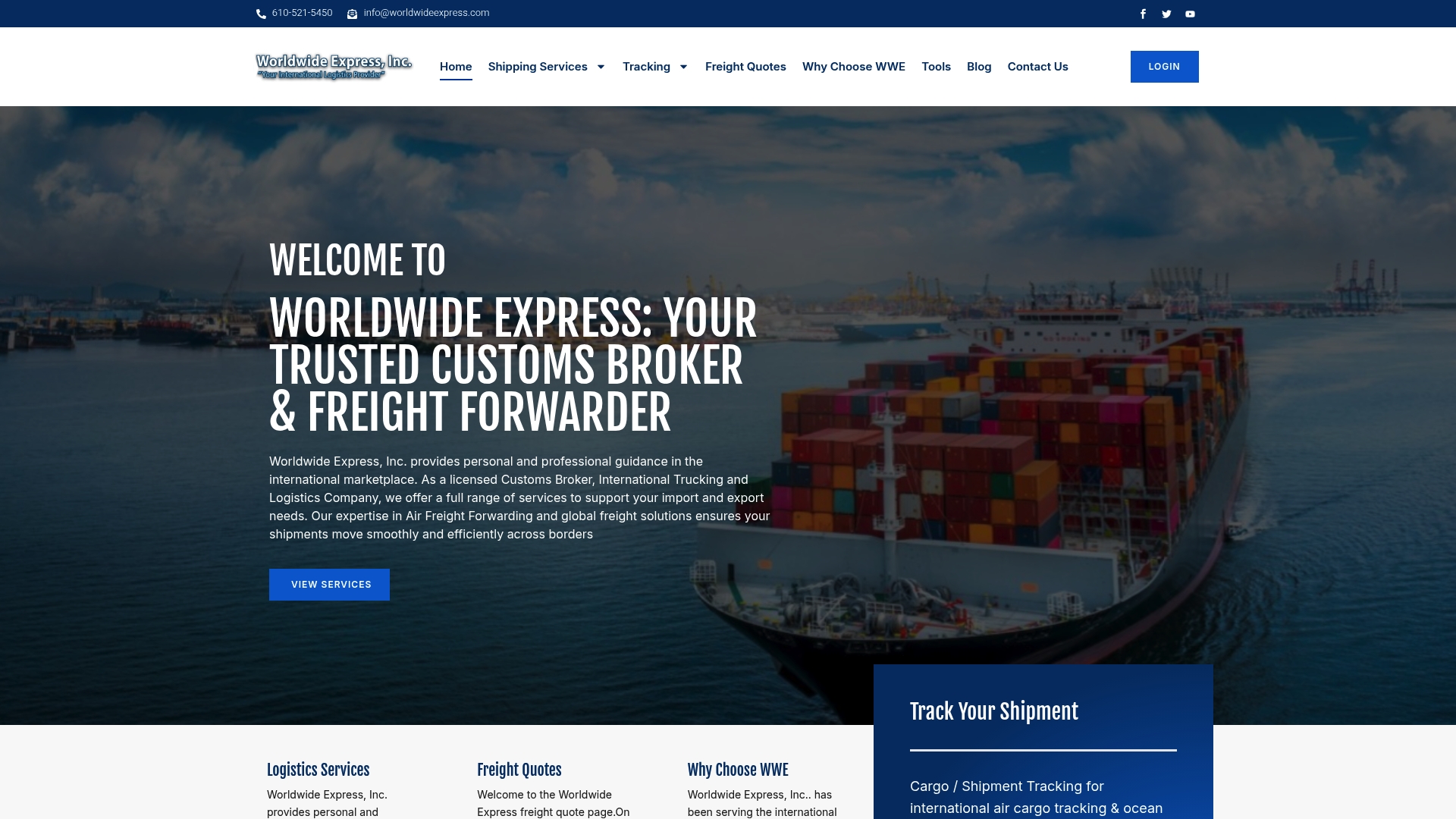
Worldwideexpress offers resources across freight forwarding and U.S. customs brokerage that translate directly into faster clearance times and fewer costly surprises. The team works with importers and exporters across industries to apply the right terms, documents, and classifications to every shipment. If you are ready to move from knowing the terminology to applying it, Worldwideexpress is the place to start.
FAQ
What are Incoterms in simple terms?
Incoterms are 11 internationally recognized rules that define who pays shipping costs and who bears risk at each point in a shipment. The current version is Incoterms 2020, with no update expected until 2030.
What is the difference between FTL and LTL shipping?
FTL dedicates an entire truck to one shipper’s cargo, while LTL consolidates multiple shippers’ freight in one trailer. LTL is priced by freight class and hundredweight, making it cost-effective for smaller loads.
Why does a Bill of Lading matter?
The Bill of Lading is a legally binding contract, a cargo receipt, and a title document. Inaccurate Bills of Lading rank among the most costly errors in logistics, causing invoice disputes and chargebacks long after delivery.
What does OTIF mean in logistics?
OTIF stands for On Time In Full. It measures whether a shipment arrived at the correct time and with the complete quantity ordered. Retailers impose financial penalties for OTIF failures.
What is the difference between Reorder Point and Safety Stock?
The Reorder Point is the inventory level that triggers a new purchase order. Safety Stock is the buffer held above that level to absorb demand spikes or supplier delays. Confusing the two leads to stockouts or excess inventory.
Recommended
- Understanding Logistic Providers: Key Concepts Explained – Worldwide Express, Inc.
- 8 Key Freight Terms Definitions Every Importer Should Know – Worldwide Express, Inc.
- Understanding Sustainability in Logistics: Key Insights – Worldwide Express, Inc.
- Shipping logistics explained: streamline your international trade – Worldwide Express, Inc.