TL;DR:
- Cargo insurance protects goods from financial loss during transit and is essential for international shipping. Coverage types, limits, and exclusions vary, making full policy review vital before shipments. The freight broker insurance gap poses a significant risk, as carrier liability and bonds often do not cover actual cargo damage or loss.
Insurance freight, the industry term for cargo insurance, is the coverage that protects goods from financial loss caused by damage, theft, or loss during transit. For businesses moving goods across borders, a single uninsured incident can erase weeks of revenue. Cargo insurance is not a luxury add-on. It is the financial foundation of any serious international shipping operation. This guide covers coverage types, limits, exclusions, the broker insurance gap, and the practical steps businesses need to take to protect every shipment in 2026.
What is insurance freight and how does it work?
Cargo insurance, often called freight insurance or insurance on freight, is a financial product that compensates the cargo owner when goods are lost, stolen, or damaged during transport. It is distinct from the carrier’s own liability coverage, which protects the carrier, not the shipper. Cargo insurance covers freight damage and loss specifically, separate from broader transportation insurance that covers vehicles or people. That distinction matters enormously when a claim is filed and the carrier’s insurer argues limited liability.
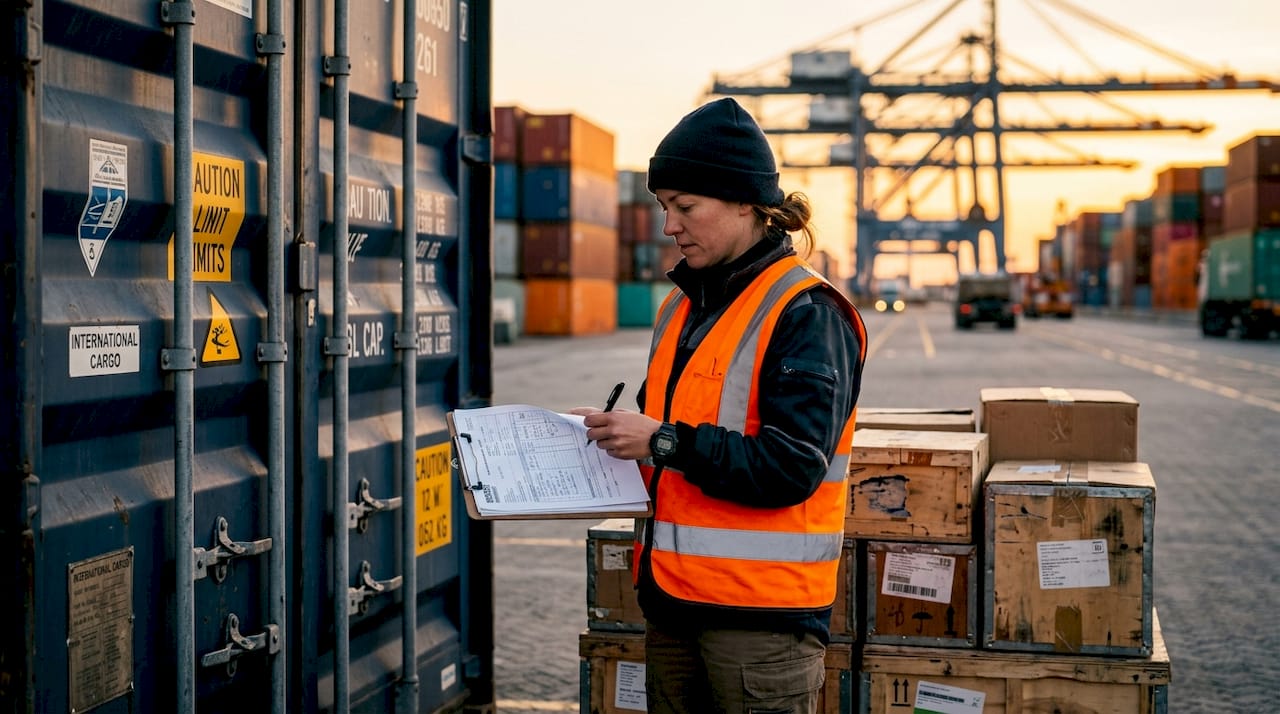
The coverage applies across air, ocean, and road transport. Providers like Progressive Commercial and Northland Insurance offer motor truck cargo policies tailored to trucking operations, while marine cargo insurers cover ocean and air freight. Businesses shipping internationally need to understand which policy type applies to each leg of their supply chain, because a gap between modes can leave a shipment unprotected at a critical moment.
What types of freight insurance coverage are available?
Three primary coverage tiers define the freight insurance market: basic, broad, and all-risk. Each tier covers a progressively wider set of perils, and the price difference between them is often smaller than businesses expect.
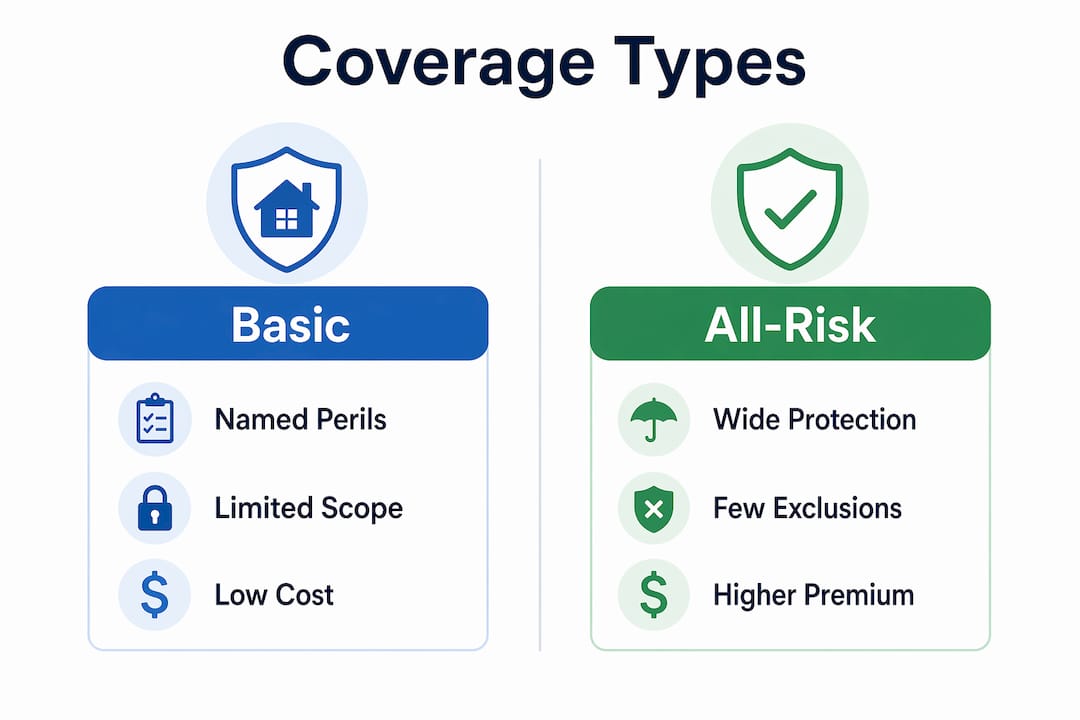
Basic coverage protects against a named list of perils only, such as fire, collision, and vessel sinking. Anything not on the list is excluded by default. Broad coverage expands that list but still operates on a named-peril basis. All-risk coverage covers all causes of loss except those specifically excluded in the policy language. All-risk is the standard choice for high-value international shipments, but the name is misleading. All-risk policies still deny claims when inadequate packing or missing documentation is proven, regardless of what caused the damage.
Common endorsements that expand coverage
Standard motor truck cargo policies exclude several risks that international shippers face regularly. Businesses can add endorsements to fill those gaps:
- Reefer breakdown: Covers temperature-sensitive cargo damaged by refrigeration unit failure.
- Loading and unloading: Extends coverage to damage occurring during cargo handling at origin or destination.
- Theft safeguards: Adds theft coverage, typically conditioned on secure parking and proof of forced entry.
- Consequential loss: Delay and consequential losses are excluded by default and must be added explicitly.
Coverage type comparison
| Coverage type | Perils covered | Typical limit range | Best for |
|---|---|---|---|
| Basic | Named perils only | $100,000 | Low-value general freight |
| Broad | Expanded named perils | $100,000–$500,000 | Mixed commodity shipments |
| All-risk | All perils except exclusions | $500,000–$1,000,000 | High-value, pharmaceutical, electronics |
| Motor truck cargo | Freight in transit by truck | $100,000–$1,000,000 | Domestic and cross-border trucking |
Pro Tip: Request a full policy form, not just the Certificate of Insurance. COIs show per-occurrence limits but omit the exclusions and sublimits that determine whether a claim actually pays out.
How do coverage limits and exclusions affect your business?
Industry standard cargo insurance limits range from $100,000 for general freight up to $1,000,000 for high-value shipments involving electronics or pharmaceuticals. That range sounds wide, but the floor matters as much as the ceiling. Most freight brokers require a minimum of $100,000 motor truck cargo coverage before placing a load, and pharmaceuticals and electronics routinely require $500,000 or more, plus specific endorsements.
Exclusions are where most claims fail. The three most common denial triggers are:
- Improper packing: Insurers reject claims when cargo was not packed to industry standards, even under all-risk policies.
- Unattended vehicle theft: Theft coverage typically requires proof of forced entry and secure parking. Cargo stolen from an unlocked or unattended truck in an unsecured lot is often excluded.
- Temperature damage without endorsement: Loading and unloading damage and temperature fluctuations are excluded from standard motor truck cargo policies unless a reefer or handling endorsement is added.
Sublimits and salvage terms
Sublimits are per-category caps within a larger policy limit. A policy with a $500,000 per-occurrence limit may carry a $50,000 sublimit on electronics or a $25,000 sublimit on theft. Businesses that ship mixed loads often discover sublimits only after a claim is denied or partially paid. Salvage terms determine who owns damaged goods after a claim is settled. If the insurer takes salvage rights, the business loses control of the damaged inventory, which can create compliance problems for regulated goods like pharmaceuticals.
A Certificate of Insurance lists the per-occurrence limit prominently but omits sublimits and exclusions entirely. That gap between what the COI shows and what the policy actually covers is one of the most common sources of financial loss in international shipping. Reading the full policy form before a shipment departs is not optional. It is the only way to know what protection actually exists.
Pro Tip: Ask your insurer or freight forwarder to walk through the exclusions list line by line before binding coverage. A 30-minute review before departure can prevent a six-figure claim denial.
What is the freight broker insurance gap and why does it matter?
The freight broker insurance gap is one of the most underappreciated financial risks in international logistics. U.S. freight brokers must carry a $75,000 surety bond, but that bond covers payment obligations to carriers, not cargo damage or liability claims. A shipper whose goods are destroyed in a catastrophic accident cannot recover losses from the broker’s surety bond.
The carrier liability minimum compounds the problem. The $750,000 carrier liability minimum has not increased since 1980, while median trucking-related jury verdicts now reach $36 million. That gap between the legal minimum and real-world exposure is staggering. A single serious accident can produce a verdict that exceeds carrier coverage by a factor of 48, leaving shippers, brokers, and carriers fighting over a fraction of the actual loss.
“The freight broker insurance gap is now real.” FreightWaves has documented how the combination of a $75,000 bond and a $750,000 carrier minimum creates a structural coverage shortfall that the industry has not addressed through regulation. Shippers relying solely on carrier insurance are exposed to losses that no existing mandatory coverage is designed to absorb.
Businesses shipping internationally need to understand the difference between three distinct instruments:
- Surety bond: Guarantees broker payment to carriers. Does not cover cargo damage or accident liability.
- Carrier liability insurance: Covers the carrier’s legal liability for cargo loss, capped at the policy limit.
- Contingent cargo insurance: A broker-held policy that activates when the carrier’s coverage is insufficient or disputed. This is the layer most businesses never think to verify.
Reviewing freight forwarding vs. broker arrangements before signing a shipping contract can clarify which party holds which insurance obligation and where the gaps fall.
How to select and manage freight insurance for international shipments
Selecting the right freight insurance policy starts with an honest assessment of cargo value and risk profile. Businesses should follow a structured process before every major shipment.
- Calculate the full cargo value. Include the commercial invoice value, freight costs, and a standard 10% uplift for anticipated profit. Underinsuring to save on premiums is a common mistake that produces partial payouts.
- Match coverage type to cargo risk. General freight moving by road may need only broad coverage. Pharmaceuticals, electronics, and perishables require all-risk policies with specific endorsements for temperature, theft, and handling.
- Read the full policy form, not just the COI. Verify sublimits, exclusions, and conditions before binding. Pay particular attention to packing requirements and theft conditions.
- Verify carrier and broker insurance certificates. Confirm that the carrier’s motor truck cargo limit meets or exceeds the shipment value. Check whether the broker carries contingent cargo coverage and at what limit.
- Document everything before departure. Photograph cargo before loading. Retain packing lists, commercial invoices, and bills of lading. Proper documentation and packing are prerequisites for any successful claim under all-risk or broad coverage policies.
- Work with a freight forwarder that integrates insurance guidance. Worldwideexpress provides cargo insurance guidance and claims support as part of its international freight forwarding services, reducing the risk of coverage gaps across multiple transport modes.
Pro Tip: File claims immediately after discovering damage. Most freight insurance policies impose strict notice deadlines, and late filing is treated the same as no filing.
Managing claims efficiently requires the same documentation discipline as selecting coverage. Retain all delivery receipts, inspection reports, and carrier communications. A guide to managing freight claims can help businesses build a claims process before an incident occurs, rather than scrambling after the fact.
Key takeaways
Cargo insurance is the single most effective tool for protecting international shipments from financial loss, but only when businesses understand the limits, exclusions, and gaps that standard policies contain.
| Point | Details |
|---|---|
| Coverage tiers differ significantly | All-risk provides the broadest protection but still excludes improper packing and unendorsed perils. |
| Limits must match cargo value | General freight floors at $100,000; electronics and pharmaceuticals require $500,000 to $1,000,000. |
| The broker gap is real | A $75,000 surety bond does not cover cargo damage; carrier minimums have not changed since 1980. |
| COIs hide critical exclusions | Always request the full policy form to identify sublimits and exclusion conditions before shipping. |
| Documentation enables claims | Proof of proper packing and pre-shipment photos are required to validate claims under most policies. |
The coverage gap that keeps me up at night
The freight broker insurance gap is the issue I find most businesses are completely unprepared for. Shippers spend time comparing cargo insurance rates and negotiating freight costs, then assume the carrier’s certificate of insurance is sufficient protection. It rarely is. A $750,000 carrier liability limit against a $36 million median verdict is not a safety net. It is a formality.
What I have observed over years of watching international shipping operations is that the businesses most exposed are mid-size importers and exporters who move enough volume to feel confident but not enough to have a dedicated risk manager reviewing every policy. They rely on brokers to handle the details, and brokers are not legally required to carry contingent cargo coverage. That is a structural problem the industry has not solved.
The practical answer is to treat insurance selection the same way you treat customs compliance: as a non-negotiable operational step, not an afterthought. Verify every layer of coverage before a shipment moves. Understand what the surety bond covers and what it does not. Confirm that the carrier’s limit matches the shipment value. And if you are moving high-value goods internationally, work with a freight forwarder that can integrate insurance guidance directly into the shipping process. The cost of getting this right is a fraction of the cost of getting it wrong.
— Ian
Worldwideexpress cargo insurance and freight forwarding services
Cargo insurance decisions are most effective when made alongside freight forwarding expertise, not separately from it.
Worldwideexpress integrates cargo insurance guidance directly into its international freight forwarding services, helping businesses identify coverage gaps before shipments depart. From motor truck cargo policies to all-risk ocean freight coverage, the team at Worldwideexpress works with shippers to match policy terms to actual cargo risk. For businesses building or reviewing their freight insurance framework, the 2026 freight forwarding guide at Worldwideexpress covers how insurance integrates with customs, documentation, and global logistics planning. Contact Worldwideexpress to discuss a tailored coverage approach for your shipping operations.
FAQ
What is freight insurance and what does it cover?
Freight insurance, also called cargo insurance, covers financial loss from damage, theft, or loss of goods during transit. It applies across road, air, and ocean transport and is distinct from carrier liability coverage.
What is the difference between all-risk and basic freight insurance?
All-risk coverage protects against all causes of loss except named exclusions, while basic coverage only pays for perils specifically listed in the policy. All-risk is broader but still excludes improper packing and unendorsed risks.
How much freight insurance coverage does a business need?
General freight requires a minimum of $100,000 in motor truck cargo coverage, while high-value electronics and pharmaceuticals typically require $500,000 to $1,000,000 plus endorsements.
Does a freight broker’s surety bond cover cargo damage?
No. The federal $75,000 surety bond covers broker payment obligations to carriers only. Cargo damage and accident liability require separate commercial insurance policies.
Why do freight insurance claims get denied?
Claims are most commonly denied due to inadequate packing, missing documentation, or theft conditions not being met, such as proof of forced entry. Even all-risk policies require proof of proper packing to honor a claim.
Recommended
- FedEx International Shipping Rates: 2026 Business Guide – Worldwide Express, Inc.
- Understanding freight forwarding: a 2026 guide – Worldwide Express, Inc.
- Freight Classification Challenges: 2026 Shipper Guide – Worldwide Express, Inc.
- How to file shipment insurance claims: 2026 guide – Worldwide Express, Inc.