TL;DR:
- Remote logistics involves managing supply chain operations from digital environments using cloud technologies and analytics. The field has seen rapid growth, with remote roles growing 30-40% faster than on-site jobs and offering higher salaries. Effective management relies on structured communication, digital tools, and strong technical skills for success.
Remote logistics is defined as managing and optimizing supply chain and transportation operations from decentralized, often home-based, digital environments, enabled by cloud technologies and advanced analytics. This model has moved well past the experimental phase. Remote logistics jobs grew 30–40% faster than traditional on-site roles between 2021 and 2024. Companies adopting remote hiring for logistics roles reported operational cost reductions of 15–25% through digitized supply chains and cloud-based management. For logistics managers and supply chain professionals, understanding this shift is no longer optional. It is the foundation of competitive operations in 2026.
What are the core remote logistics roles and skills?
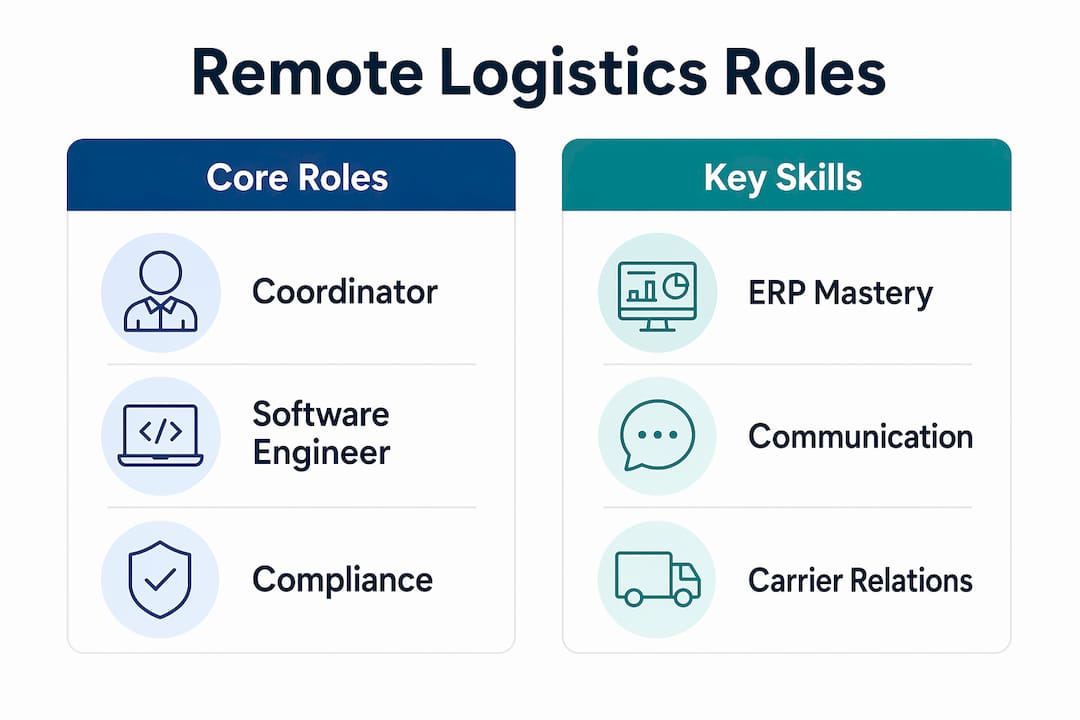
Remote logistics work, also called distributed supply chain management, spans a wide range of job functions. The most common roles include remote logistics coordinator, supply chain analyst, transportation manager, and software engineer specializing in freight platforms. Each role carries distinct technical requirements, but all share a common thread: the ability to manage complex operations without physical proximity to carriers, warehouses, or ports.
Technical skill requirements are non-negotiable. Mastery of cloud-based ERP systems such as SAP and Oracle is the primary gatekeeper for most remote logistics jobs. Professionals who cannot operate these platforms fluently are effectively screened out before the first interview. Digital freight management platforms, data analytics tools, and real-time tracking dashboards round out the core technical stack.
The roles break down into two broad categories:
- Entry-level and coordinator roles: Remote logistics coordinator jobs focus on day-to-day shipment tracking, carrier communication, documentation management, and exception handling. These positions require strong attention to detail and proficiency with transportation management systems (TMS).
- Analyst and mid-level roles: Supply chain analysts working remotely handle demand forecasting, cost modeling, and vendor performance reporting. Proficiency in data visualization tools such as Tableau or Power BI is increasingly expected.
- Strategic leadership roles: Remote logistics leadership demands managing large-scale global networks with expertise in digital strategy, transportation sourcing, and risk management. These positions go well beyond operational oversight.
- Technical and engineering roles: Software engineers and platform specialists build and maintain the freight management systems that make remote logistics work possible. Demand for this profile has grown sharply as digital freight forwarding expands.
Soft skills carry equal weight. Communication and carrier relationship-building remain core competencies for remote coordinators and managers alike. The ability to build trust with partners across time zones, resolve disputes without face-to-face interaction, and maintain operational alignment through digital channels separates effective remote logistics professionals from those who struggle.
Compensation reflects the skill premium. Remote logistics professionals command salaries 10–20% higher than local on-site counterparts. That premium reflects broader market access and the specialized technical skills these roles demand. For professionals building careers in remote logistics management, this salary advantage is a significant incentive to invest in ERP and analytics training.
How can logistics managers optimize remote team management?
Effective remote team management in logistics requires a structured approach to communication, scheduling, and accountability. The biggest mistake logistics managers make is treating remote teams like in-office teams with video calls substituted for meetings. The operational demands of international logistics, including time-sensitive customs clearance, carrier negotiations, and shipment exceptions, require a more deliberate framework.
- Establish synchronous communication protocols for urgent issues. Synchronous-first communication remains critical for urgent supply chain disruptions, even when teams are distributed across time zones. Define which issues trigger an immediate call versus an asynchronous message. Shipment delays, customs holds, and carrier failures all qualify as synchronous events.
- Build structured on-call schedules. International logistics does not pause for business hours. Rotating on-call schedules ensure coverage across time zones without burning out individual team members. Document escalation paths clearly so on-call staff know exactly who to contact and when.
- Use cloud-based visibility platforms. Supply chain digitalization tools give remote teams shared access to real-time shipment data, inventory levels, and carrier performance metrics. When every team member sees the same data simultaneously, decision-making accelerates and miscommunication drops.
- Create regular alignment rituals. Weekly team reviews, monthly performance debriefs, and quarterly planning sessions build the operational cohesion that remote teams can otherwise lack. These are not optional social events. They are the connective tissue of a distributed logistics operation.
- Invest in relationship-building across the team. Remote work in logistics creates natural silos. Managers who deliberately create cross-functional touchpoints, such as pairing coordinators with analysts on specific projects, build teams that perform better under pressure.
Pro Tip: Set a “golden hour” rule: any supply chain exception flagged as critical must receive a synchronous response within 60 minutes, regardless of time zone. This single protocol prevents the majority of escalation failures in distributed logistics teams.
The freight marketplace trends shaping 2025 and beyond make this kind of structured remote management increasingly urgent. As carrier networks grow more complex and international shipping lanes multiply, the margin for communication failure shrinks.
Which digital tools are transforming remote logistics operations?
The technology stack powering remote logistics work has matured significantly since 2021. Cloud ERP systems, digital freight platforms, and advanced cargo tracking tools now form the operational backbone of distributed supply chain teams.

| Tool Category | Primary Function | Operational Benefit |
|---|---|---|
| Cloud ERP (SAP, Oracle) | Centralized order, inventory, and financial management | Single source of truth across distributed teams |
| Transportation Management Systems | Carrier selection, rate management, shipment tracking | Reduces manual coordination and booking errors |
| Digital freight forwarding platforms | End-to-end shipment visibility and documentation | Faster customs clearance and fewer compliance gaps |
| Data analytics and visualization tools | Performance reporting, demand forecasting | Faster, evidence-based decision-making |
| Cargo tracking dashboards | Real-time shipment location and exception alerts | Proactive risk management and client communication |
Digital freight forwarding enables smoother global shipping through enhanced data visibility and freight analytics tools. That visibility is not a luxury for remote teams. It is the substitute for the physical oversight that on-site managers once relied on. When a remote logistics coordinator in Chicago can see the exact location and customs status of a container in Rotterdam, the geographic distance becomes operationally irrelevant.
Key capabilities that remote logistics professionals should prioritize:
- Real-time cargo tracking: Cargo tracking benefits extend beyond location data. Modern tracking platforms flag exceptions, predict delays using historical lane data, and trigger automated alerts to relevant team members.
- Integrated customs documentation: Digital freight platforms that connect directly with customs authorities reduce manual data entry and compliance errors. This is especially valuable for remote teams managing international shipments without a local customs presence.
- Freight analytics: Data visualization tools translate raw shipment data into carrier performance scores, lane cost comparisons, and on-time delivery trends. Remote managers who use these tools make faster, more accurate decisions than those relying on spreadsheets.
The growth of remote jobs in logistics has also created demand for a new profile: the logistics software engineer. These professionals build and maintain the platforms that make remote operations possible. Their presence on logistics teams signals a broader shift from manual oversight to digital strategy.
What challenges do remote logistics operations face?
Remote logistics operations carry real operational risks. Recognizing them early is the difference between a well-run distributed team and a reactive one.
- Geographic pay differentials: Salary negotiations for remote logistics roles involve complex geographic scaling, with compensation varying significantly by region. Managers hiring across multiple states or countries must build compensation frameworks that account for local cost-of-living differences while remaining competitive in a global talent market.
- Asynchronous communication limits: Not every logistics issue can wait for a response. Remote teams that rely too heavily on email or messaging platforms for time-sensitive decisions create operational gaps. The fix is a clear escalation matrix that defines when asynchronous communication is acceptable and when it is not.
- Customs and trade compliance complexity: Managing international trade compliance remotely requires access to up-to-date regulatory databases, strong relationships with licensed customs brokers, and documented compliance workflows. Remote teams that lack these resources face higher rates of customs delays and penalties.
- Technology dependency and system failures: Remote logistics operations have no manual fallback when systems go down. Business continuity planning must include offline protocols for critical functions such as shipment booking and carrier communication.
- Team cohesion and accountability: Distributed teams can drift toward siloed work patterns. Without deliberate management, accountability gaps emerge, particularly in handoff-heavy processes like documentation and carrier confirmation.
Pro Tip: Build a compliance calendar into your remote team’s shared project management system. Flag key regulatory deadlines, tariff change dates, and carrier contract renewals at least 30 days in advance. This single habit eliminates the majority of last-minute compliance scrambles.
The logistics sector is seeing growth in remote roles across multiple functions, which means the talent pool for distributed teams is expanding. Managers who build strong remote operations now will have a structural hiring advantage as the market matures.
Key Takeaways
Remote logistics is a proven operational model that delivers measurable cost savings and talent advantages when supported by cloud ERP systems, structured communication protocols, and digital freight tools.
| Point | Details |
|---|---|
| Remote logistics growth is real | Remote logistics jobs grew 30–40% faster than on-site roles between 2021 and 2024. |
| Cost savings are significant | Companies adopting remote logistics hiring reported 15–25% reductions in operational expenses. |
| Technical skills are the entry barrier | Mastery of SAP, Oracle, and digital freight platforms is required for most remote logistics roles. |
| Communication structure prevents failures | Synchronous-first protocols for urgent issues are the most effective safeguard against supply chain disruptions. |
| Digital tools replace physical oversight | Real-time cargo tracking, freight analytics, and cloud ERP give remote teams the visibility they need to manage international shipments effectively. |
The shift I did not see coming in remote logistics
When distributed supply chain management first gained traction, the conventional wisdom was that it worked for back-office functions but not for operational roles. Coordinators needed to be near the warehouse. Managers needed to walk the floor. That assumption turned out to be wrong, and the data has confirmed it decisively.
What surprised me most was not the technology. Cloud ERP and digital freight platforms were already mature enough to support remote work. What changed was the mindset of logistics leaders. The professionals who adapted fastest were not the most technically skilled. They were the ones who understood that managing a remote logistics team is fundamentally a communication design problem, not a technology problem.
The teams that struggled were those that replicated their on-site habits digitally. They held too many meetings, sent too many messages, and created too much noise. The teams that thrived built deliberate structures: clear escalation paths, shared visibility dashboards, and documented workflows that did not depend on anyone being in the same room.
The next shift worth watching is the convergence of supply chain risk management with remote operations. As geopolitical disruptions and climate events create more frequent supply chain shocks, the ability to manage risk from anywhere will become a core organizational capability, not a contingency plan. The logistics professionals who build that capability now will define the field in the years ahead.
— Ian
How Worldwideexpress supports remote freight forwarding teams
Remote logistics operations depend on freight forwarding partners who can match the pace and precision of digital supply chains.
Worldwideexpress specializes in international freight forwarding, customs brokerage, and supply chain management for businesses operating across borders. For remote logistics teams managing international shipments without a local physical presence, Worldwideexpress provides the expert support that fills that gap. From customs clearance and documentation to cargo insurance and real-time tracking, the services are built for teams that need reliable execution at a distance. The freight forwarding guide for 2026 is a strong starting point for logistics professionals evaluating their international shipping options. Contact Worldwideexpress to discuss a tailored solution for your remote operations.
FAQ
What is remote logistics?
Remote logistics is the practice of managing supply chain and transportation operations from decentralized, digital environments using cloud-based tools, ERP systems, and freight management platforms.
How fast are remote logistics jobs growing?
Remote logistics jobs grew 30–40% faster than traditional on-site roles between 2021 and 2024, driven by cloud adoption and supply chain digitalization.
What skills do remote logistics coordinators need?
Remote logistics coordinator jobs require mastery of cloud ERP systems such as SAP or Oracle, proficiency with transportation management systems, and strong communication skills for managing carrier relationships digitally.
Do remote logistics roles pay more than on-site positions?
Remote logistics professionals earn 10–20% more than local on-site counterparts, reflecting broader market access and the specialized technical skills these roles require.
How do remote logistics teams handle customs compliance?
Effective remote logistics teams use digital freight platforms with integrated customs documentation, maintain relationships with licensed customs brokers, and build compliance calendars to track regulatory deadlines in advance.
Recommended
- Remote work in logistics: efficient strategies for global teams – Worldwide Express, Inc.
- Remote Freight Forwarding Jobs: Your 2026 Career Guide – Worldwide Express, Inc.
- Global Shipping 2026: 72% Face Tariff Volatility – Worldwide Express, Inc.
- Remote Team Management Tips for Logistics Leaders – Worldwide Express, Inc.