TL;DR:
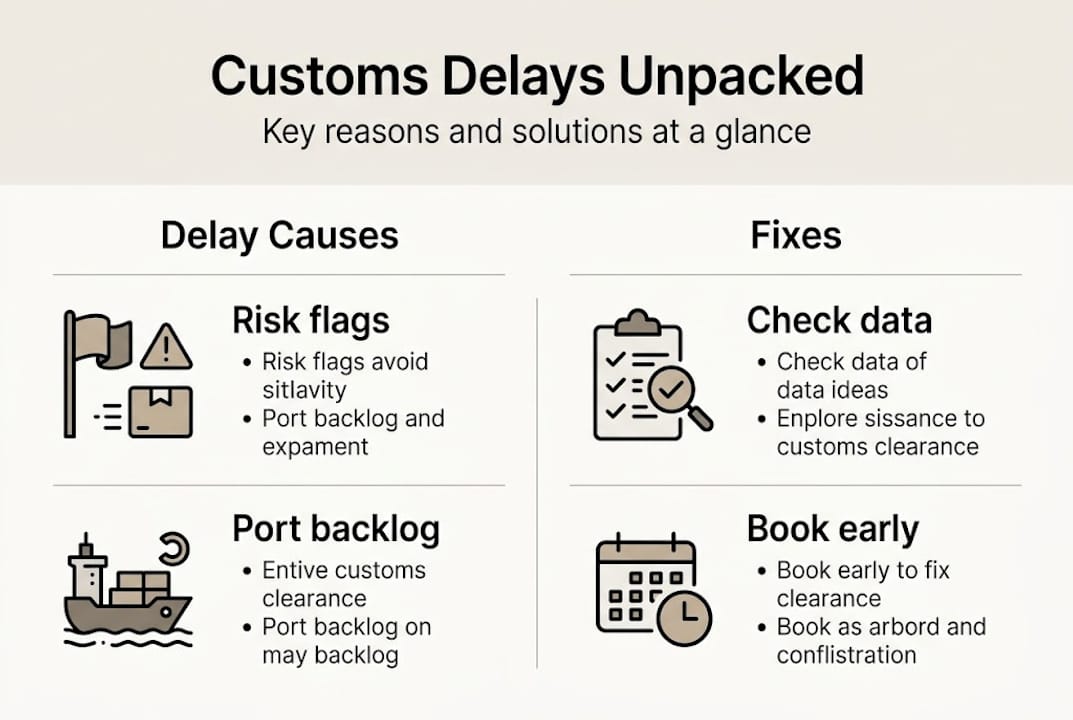
- Risk-based controls flag shipments based on patterns and inconsistencies beyond paperwork quality.
- Port congestion and infrastructural chokepoints significantly delay compliance despite proper documentation.
- Digital systems improve speed but introduce delays from data mismatches and system fragmentation.
Customs authorities use risk-based controls that flag even fully documented shipments for additional checks due to small inconsistencies or unusual patterns. Many importers and exporters assume their paperwork is the whole battle, but clearance speed is shaped by a combination of algorithmic risk screening, physical port conditions, systemic infrastructure gaps, and emerging digital fragmentation. Each of these factors operates independently, meaning a single weak point can stall an otherwise compliant shipment for days. This article breaks down the primary drivers of customs clearance delays in 2026 and gives practical direction on what businesses can realistically do about each one.
Table of Contents
- How risk-based controls delay shipments
- Port, terminal, and logistics chokepoints
- Trade facilitation gaps and systemic challenges
- Clearance delays in the digital era: New mismatches and interface risks
- Most overlooked truths about customs delays: Why it’s rarely just paperwork
- Overcome customs delays with the right expert support
- Frequently asked questions
Key Takeaways
| Point | Details |
|---|---|
| Risk-based customs reviews | Even the best-prepared shipments can be delayed by risk profiling and small inconsistencies. |
| Operational bottlenecks | Congested ports, terminals, and logistics chokepoints are major sources of clearance delays. |
| Systemic and digital challenges | Complex customs procedures and mismatched digital data cause delays beyond paperwork errors. |
| Coordinate for success | Collaborating internally and with logistics partners can help prevent avoidable customs delays. |
How risk-based controls delay shipments
Building on the introduction’s mention of unexpected delays, the first area worth examining closely is how today’s customs systems actually determine which shipments to review. The answer is less about your paperwork and more about pattern recognition at scale.
Modern customs agencies around the world no longer rely solely on human inspectors reviewing documents manually. Instead, risk-based clearance systems use algorithms and probabilistic assessments, meaning even minor inconsistencies or new trade patterns can trigger a review. A shipment may carry every required certificate, declaration, and permit, yet still get pulled aside because the declared value falls outside the expected range for that commodity, or because the importer appears for the first time in the system.
These algorithms analyze dozens of data points simultaneously. They cross-reference the declared origin, the Harmonized System (HS) code used for tariff classification, the value per unit, the chosen carrier, the route history, and the identities of both the shipper and the consignee. When any combination of these signals deviates from established norms, the system flags the shipment. The review that follows can range from a quick document verification to a full physical inspection, each carrying its own timeline.
Common triggers for automated risk flags include:
- Inconsistent or conflicting data across invoices, packing lists, or bills of lading
- New trade relationships where neither the exporter nor importer has a documented history in that corridor
- Unusual declared values that fall well below or above the statistical average for that commodity
- HS code mismatches between what the manifest states and what prior shipments have declared
- Odd routing patterns, such as multiple transshipment points for a direct trade lane
- Last-minute changes to the shipment details after initial filing
The challenge for importers is that many of these triggers are invisible at the transactional level. A business may have accurate, complete paperwork and still generate a risk flag simply because it is entering a new market or switching freight forwarders. There is no guarantee of clearance, only the ability to reduce friction.
Pro Tip: Before filing, cross-check every data field across all documents to ensure the declared weight, unit counts, and values match precisely. Even a minor rounding difference between your commercial invoice and packing list can surface as an inconsistency. Strategies for avoiding customs delays through data consistency are among the most underutilized tools available to businesses today.
| Risk signal | Likelihood of triggering review | Mitigation approach |
|---|---|---|
| Data mismatch across documents | High | Pre-file document reconciliation |
| First-time trade relationship | Medium to high | Register as a trusted trader if eligible |
| Atypical declared value | High | Include detailed valuation justification |
| Unusual routing or transshipment | Medium | Provide route documentation upfront |
| HS code inconsistency | High | Use a licensed customs broker for classification |
Following compliance tips around data accuracy and classification can significantly reduce how often your shipments attract automated review.
Port, terminal, and logistics chokepoints
Risk-based flagging is not the whole story. External chokepoints play a massive role in many delays, and these affect compliant and noncompliant shipments equally.
Even when a shipment clears customs risk screening without any flags, it can sit for extended periods simply because the physical infrastructure around the port or terminal is overwhelmed. According to findings from the logistics sector, port and terminal congestion traps or slows cargo clearance even for shipments that are fully compliant with customs regulations. The customs authority may technically release the cargo, but if there are no available inspection bays, insufficient crane operators, or trucking backlogs at the gate, the physical release cannot happen on schedule.
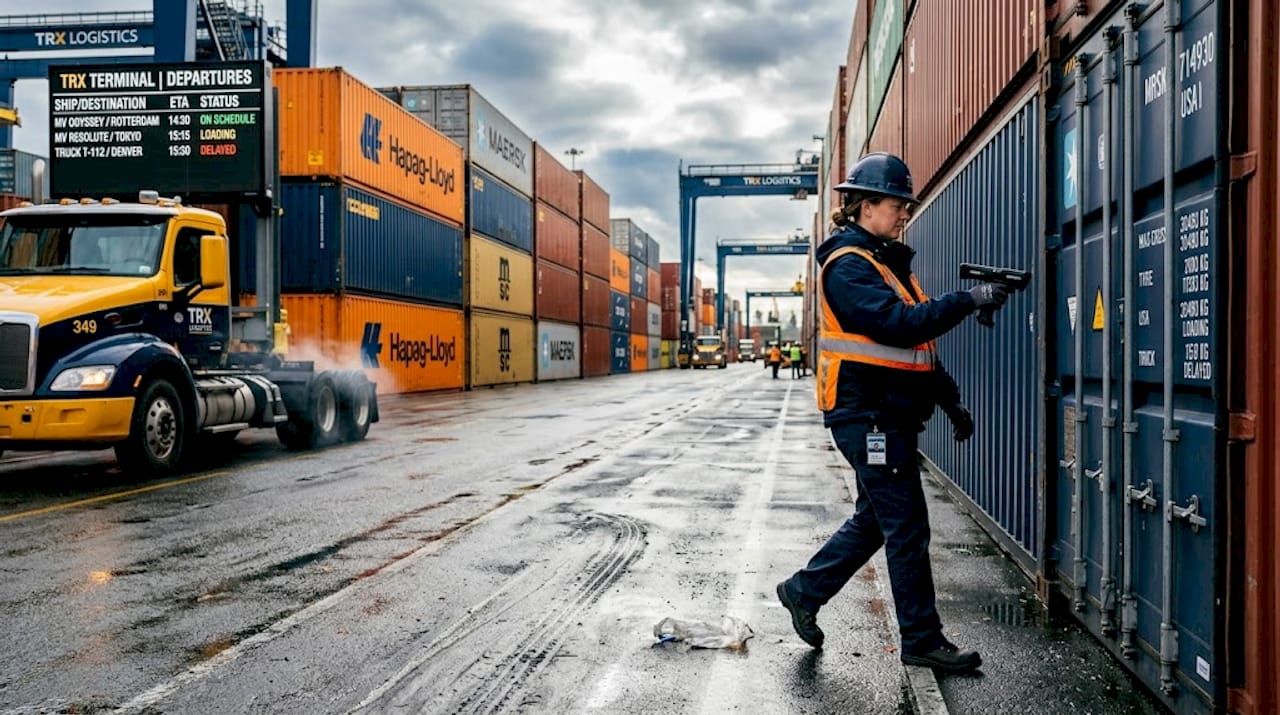
Industry analysts estimate that operational congestion accounts for a significant share of total clearance delay across major global trade corridors. At some of the world’s busiest container ports, berth wait times alone have reached several days during peak periods, compounding whatever administrative processing time is required. These delays accumulate costs quickly through demurrage (the charge for detaining a container beyond the allotted free time at a terminal) and detention fees, which can run into hundreds or thousands of dollars per container per day.
The most common sources of port and terminal bottlenecks include:
- Berth congestion caused by vessel bunching after weather events or schedule disruptions
- Yard overcrowding when container turnover slows due to inland transport shortfalls
- Rail and road bottlenecks connecting the port to distribution centers inland
- Inspection facility constraints where physical examination queues build faster than throughput
- Labor shortages or industrial action affecting terminal operations and drayage capacity
For recent port congestion updates affecting U.S. trade corridors, monitoring current conditions is essential for proactive planning.
| Chokepoint type | Primary cause | Common cargo impact |
|---|---|---|
| Berth delays | Vessel bunching | All cargo on affected vessels |
| Yard overflow | Slow truck pickup | Containers incur demurrage |
| Inland rail delays | Capacity shortfalls | Slower delivery to inland destinations |
| Inspection queues | Underfunded facilities | Extended dwell time at the terminal |
| Gate congestion | Driver shortage | Delays in container pickup |
Practical mitigation options for shippers include booking earlier vessel slots to avoid peak arrival windows, using inland container depots to reduce dwell time at the primary port, and establishing trucking contingency contracts ahead of peak season. Understanding the financial exposure from demurrage and extra costs is equally important for financial planning. For air cargo, streamlining airport customs clearance requires a parallel but distinct set of operational strategies.
Trade facilitation gaps and systemic challenges
Aside from transactional and operational delays, there are structural problems that make customs clearance harder for everyone and that no amount of better document preparation can fully resolve.
The World Bank has been direct in its assessment of this issue. Per the Business Ready framework, lengthy and complex customs processes, lack of coordination among border agencies, and limited infrastructure services lengthen import and export timelines and raise costs for businesses of all sizes. These are not isolated incidents but systemic features of customs administration in many jurisdictions.
“Lengthy and complex customs processes, lack of coordination among border agencies, and limited infrastructure services lengthen import/export timelines and raise costs.” — World Bank, Business Ready FAQ
The most frequent systemic problems businesses encounter include:
- Document redundancy: Multiple agencies requiring overlapping documentation that could be submitted once through a coordinated system
- Outdated or incompatible technology: Legacy systems that cannot accept or process modern electronic filings efficiently
- Poor inter-agency communication: Customs, agriculture, health, and transport departments operating with separate systems and no shared data access
- Inconsistent interpretation of regulations: Different officers applying the same rules differently at the same port on different days
- Lack of advance ruling access: Businesses unable to get binding guidance on classification or valuation before shipment
- Underfunded inspection capacity: Too few trained officers relative to the volume of cargo being processed
What businesses can control in this environment is relatively narrow but still meaningful. Choosing experienced customs brokers who understand the specific agency relationships and procedural norms at each port of entry makes a real difference. Engaging with trusted trader programs such as the Customs-Trade Partnership Against Terrorism (C-TPAT) in the United States or the Authorized Economic Operator (AEO) program in the European Union can unlock expedited processing that partially bypasses some of these systemic delays.
Free trade agreements (FTAs) also play an important mitigation role. Many FTAs include trade facilitation chapters that commit signatory governments to simplified documentation, faster processing commitments, and single-window filing environments. Understanding the trade agreement benefits available across different corridors can help businesses route shipments through jurisdictions with stronger facilitation infrastructure.
Clearance delays in the digital era: New mismatches and interface risks
With most clearance processes shifting digital, new challenges are emerging that even tech-savvy businesses might overlook. Digitization has brought genuine improvements in processing speed and transparency, but it has simultaneously introduced a new category of delay that is harder to see and harder to fix.
Digital customs platforms can create unprecedented delays when electronic data mismatches arise or when shipments pass through multiple unaligned systems. A shipment moving from a manufacturer in one country through a transshipment hub to a final destination may pass through three separate national customs platforms, none of which share a common data format or field structure. A commodity description that is perfectly acceptable in one system may cause an error or a rejection in the next.
Clearance delays also frequently occur at the data-to-decision interface, when declared information does not align with customs risk rules, causing costly rework. This means that even correctly submitted data can trigger delays if the receiving customs system interprets it differently than the filing system intended. The problem compounds when rework requires manual intervention from a customs officer who may already be managing a backlog.
Key digital clearance risks businesses face today include:
- Incompatible data field structures between exporter and importer country customs platforms
- Single-window system fragmentation where multiple agencies nominally use one portal but maintain separate backend processing
- Real-time validation failures where submission systems reject data without clear error codes
- API integration gaps between commercial trade platforms and government filing systems
- Version inconsistencies in electronic data interchange (EDI) standards across trading partners
Steps to reduce data delays in a digital workflow:
- Validate all data fields against the destination country’s specific requirements before filing, not just the origin country’s
- Use a unified trade management platform that maps your internal product data to multiple country-specific HS code requirements
- Build pre-filing checklists that require sign-off from both logistics and compliance staff before submission
- Test EDI connections with customs authorities when entering new trade corridors for the first time
- Monitor submission status actively rather than assuming no news is good news after filing
Pro Tip: Many customs authorities offer test environments or sandbox filing systems where businesses can validate their data format before submitting live shipments. Using these tools before entering a new market can eliminate a substantial number of first-filing rejections and the delays that follow.
The efficiency gains that digital customs systems promise are real, but they depend heavily on cross-system harmonization. Exploring supply chain digitalization strategies that account for these interface risks is increasingly a baseline requirement for competitive international trade. Businesses that invest in customs pre-clearance programs gain an additional buffer by submitting data before the shipment arrives, reducing the exposure window for real-time system errors.
Most overlooked truths about customs delays: Why it’s rarely just paperwork
The conventional advice around customs delays tends to focus on documentation quality: get the right forms, fill them out correctly, and clearance should proceed smoothly. That advice is not wrong, but it addresses only a fraction of the problem. The true bottlenecks in modern customs clearance are organizational and systemic, not clerical.
Risk-pattern recognition systems do not care that your paperwork is technically complete. They respond to behavioral signals, historical data, and statistical anomalies. Businesses that experience repeated delays despite accurate documentation are often generating risk flags through their trade patterns rather than their paperwork. Addressing this requires cross-functional collaboration between procurement, compliance, logistics, and finance teams, not simply training the clerical staff to double-check invoices.
Digitization, contrary to optimistic projections, can surface more risk flags rather than fewer, at least in the short term. As more data is submitted electronically, customs authorities gain richer datasets for pattern analysis, which expands their ability to flag anomalies. This is ultimately a good development for trade integrity, but it means businesses need to approach avoiding delays with a holistic strategy that accounts for algorithmic scrutiny, not just procedural compliance.
Systemic issues such as poor agency coordination and terminal congestion are real constraints that individuals cannot eliminate through better preparation alone. What businesses can control is their response speed when delays occur and their ability to anticipate chokepoints through better intelligence and experienced partnerships.
Overcome customs delays with the right expert support
For businesses facing persistent clearance bottlenecks, working with trusted logistics partners can change the trajectory of every shipment.
Worldwide Express offers customs brokerage and freight forwarding services designed specifically to reduce exposure to the risk flags, port congestion dynamics, and digital mismatch risks detailed throughout this article. From HS code classification support to trusted trader program enrollment and pre-clearance filing, the team brings operational expertise across major global trade corridors. Businesses ready to address systemic and transactional clearance challenges can explore tailored solutions, request a freight quote, or connect directly with a logistics specialist at worldwideexpress.com to begin building a clearance strategy that goes beyond paperwork.
Frequently asked questions
What is the most common reason for customs clearance delays?
Small inconsistencies and unfamiliar counterparties frequently trigger customs delays, even when all documents are present. Risk-based algorithms flag shipments based on patterns, not just document completeness.
How does port congestion cause customs delays?
Port and terminal congestion backlogs clearance and traps containers regardless of compliance status. Physical infrastructure limitations prevent released cargo from moving even after customs authorities approve it.
Can digitization really help customs clearance go faster?
Digital customs platforms can speed up processing but create new types of delays when data mismatches or multi-system disconnects arise. The speed gains require consistent, harmonized data across every system the shipment passes through.
How much of customs delay is outside my control?
Systemic factors like agency coordination failures and port congestion add time and cost for importers and exporters regardless of documentation quality. Businesses can mitigate exposure through trusted trader programs, experienced brokers, and proactive route planning, but cannot eliminate these structural delays entirely.
Recommended
- Streamline customs clearance for perishables: avoid delays – Worldwide Express, Inc.
- Streamline airport customs clearance for faster shipping – Worldwide Express, Inc.
- Airport Customs Clearance 2026: 40% Faster Processing – Worldwide Express, Inc.
- Unlock faster trade with customs pre-clearance benefits – Worldwide Express, Inc.