Customs clearance is one of those functions that looks deceptively simple from the outside. Many businesses assume it’s just a stack of forms and a rubber stamp. The reality is far more demanding. A single misclassified tariff code, one missing document, or an outdated permit can freeze a shipment at the border for days, triggering penalties, storage fees, and broken delivery promises. For companies operating in international trade, mastering customs clearance is not optional. It is a core operational competency that directly affects profitability, customer relationships, and long-term growth.
Table of Contents
- What is customs clearance and why does it matter for businesses?
- Key steps in the customs clearance process for importers and exporters
- Compliance essentials: What businesses must know to avoid penalties
- Major obstacles in customs clearance and how to overcome them
- The role of customs brokers and technology in streamlining clearance
- Best practices for efficient, compliant customs clearance
- How Worldwide Express helps your business clear customs with confidence
- Frequently asked questions
Key Takeaways
| Point | Details |
|---|---|
| Customs preparation saves money | Being proactive with documents, codes, and regulations slashes delays and unexpected costs. |
| Compliance prevents penalties | Accurate information and advance checks protect your shipments from fines and border issues. |
| Brokers and tech boost efficiency | Using experts and automation speeds up customs clearance and minimizes risk. |
| Best practices drive growth | Optimizing your customs processes frees up resources and supports global expansion. |
What is customs clearance and why does it matter for businesses?
Customs clearance is the formal process by which goods are authorized to enter or exit a country. It involves submitting documentation to the relevant government authority, paying applicable duties and taxes, and receiving official approval for cargo release. For businesses, this process sits at the intersection of legal compliance, supply chain efficiency, and financial planning.
The stakes are high. Improper customs documentation is a top reason for shipment delays, and those delays compound quickly into real costs. Storage charges accumulate daily. Buyers lose confidence. Production lines stall when components are held at port. The ripple effect of a single customs failure can be surprisingly wide.
Here are the most common consequences businesses face when customs clearance is mishandled:
- Shipment holds and port storage fees that escalate by the day
- Customs fines and penalties for incorrect declarations or missing permits
- Reputational damage with buyers and trading partners
- Delayed revenue recognition when goods cannot be delivered on schedule
- Increased scrutiny on future shipments once a compliance flag is raised
Understanding customs delay risks and building proactive systems around them is what separates businesses that scale internationally from those that struggle at every border crossing. Partnering with experienced customs brokerage services is one of the most effective ways to reduce exposure from the start.
Key steps in the customs clearance process for importers and exporters
With a fuller grasp of its importance, it’s time to zoom in on the tactical steps businesses must take to clear customs efficiently on every international shipment.
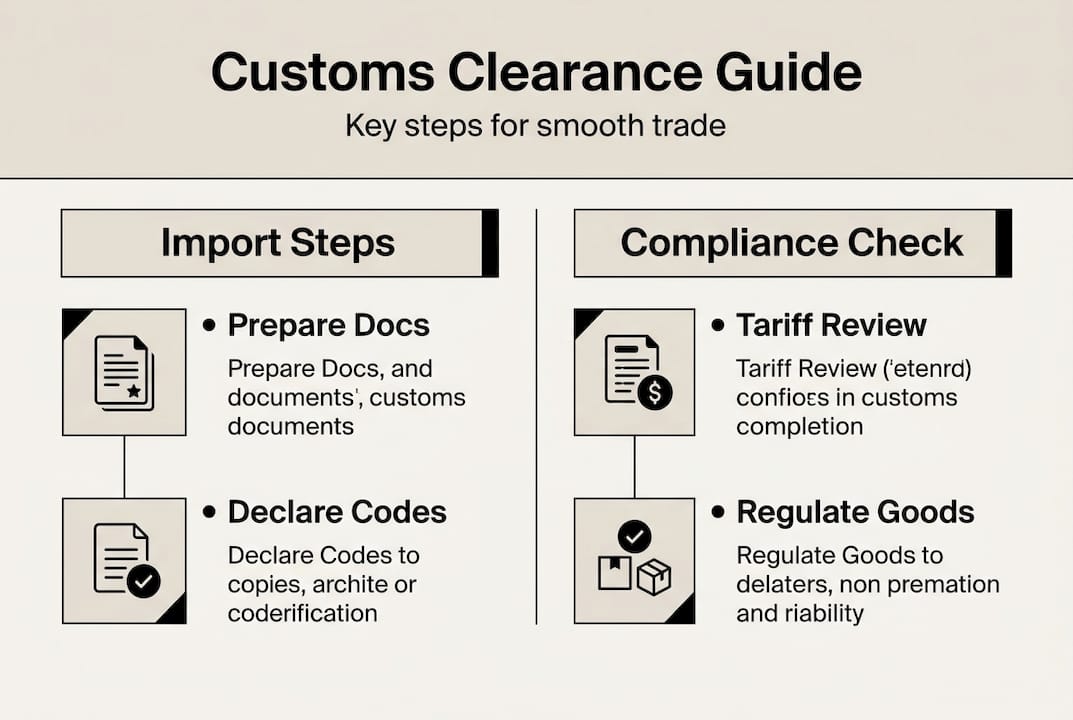
The process follows a logical sequence, but each step carries its own risk of error or delay:
- Document preparation — Gather the commercial invoice, packing list, bill of lading or airway bill, certificates of origin, and any commodity-specific permits. Accuracy here is everything.
- Submission to customs authority — Documents are filed electronically or physically with the relevant agency. In the U.S., this typically means U.S. Customs and Border Protection (CBP).
- Review and examination — Customs officers review the submission. Some shipments are flagged for physical inspection, which adds time and cost.
- Duties and taxes assessment — The authority calculates applicable tariffs based on the Harmonized System (HS) code assigned to the goods.
- Payment of duties — Importers pay assessed duties before cargo is released. Delays in payment extend the hold.
- Cargo release — Once all requirements are satisfied, the shipment is cleared and released for delivery.
Comprehensive documentation speeds up customs processing significantly. Errors in any of the above steps, particularly in HS code classification or valuation, are where most business shipments hit bottlenecks. Strategies for avoiding customs penalties start with getting these fundamentals right before the shipment ever leaves the origin point.
Pro Tip: Digitizing all shipping records and using a licensed customs broker can cut clearance cycle time by a meaningful margin. Brokers maintain up-to-date knowledge of country-specific requirements and can flag issues before submission, not after a hold is placed. Explore customs brokerage support to see how professional guidance fits your shipping volume.
Compliance essentials: What businesses must know to avoid penalties
Once the basic process is clear, the next challenge is staying compliant with complex, ever-shifting regulations to minimize risks and costs.
Customs regulations vary significantly by country, product category, and trade agreement. What clears smoothly in one market may trigger an automatic hold in another. Incorrect tariff codes are a frequent source of customs fines, and the consequences range from monetary penalties to outright seizure of goods.
The most common compliance mistakes businesses make include:
- Misclassifying goods under the wrong HS tariff code
- Undervaluing shipments to reduce duty liability, which customs agencies actively detect
- Failing to obtain required licenses for controlled or regulated commodities
- Ignoring country-specific labeling or packaging requirements
- Missing updates to restricted or prohibited goods lists
Following customs compliance best practices means building a review process that checks each of these areas before every shipment. Reviewing shipping compliance essentials for your specific trade lanes is a practical starting point. Businesses shipping high-value or fragile goods should also consider goods in transit insurance as a financial safeguard against unexpected losses during clearance holds.
Pro Tip: Run an advance compliance check at least 48 hours before a scheduled shipment. This window gives your team or broker time to correct classification errors, source missing documents, and verify that no new restrictions apply to the destination country. Reviewing brokerage solutions can help identify the right level of support for your compliance needs.
Major obstacles in customs clearance and how to overcome them
Having set a compliance baseline, businesses must tackle the practical realities of changing regulations and unpredictable delays.
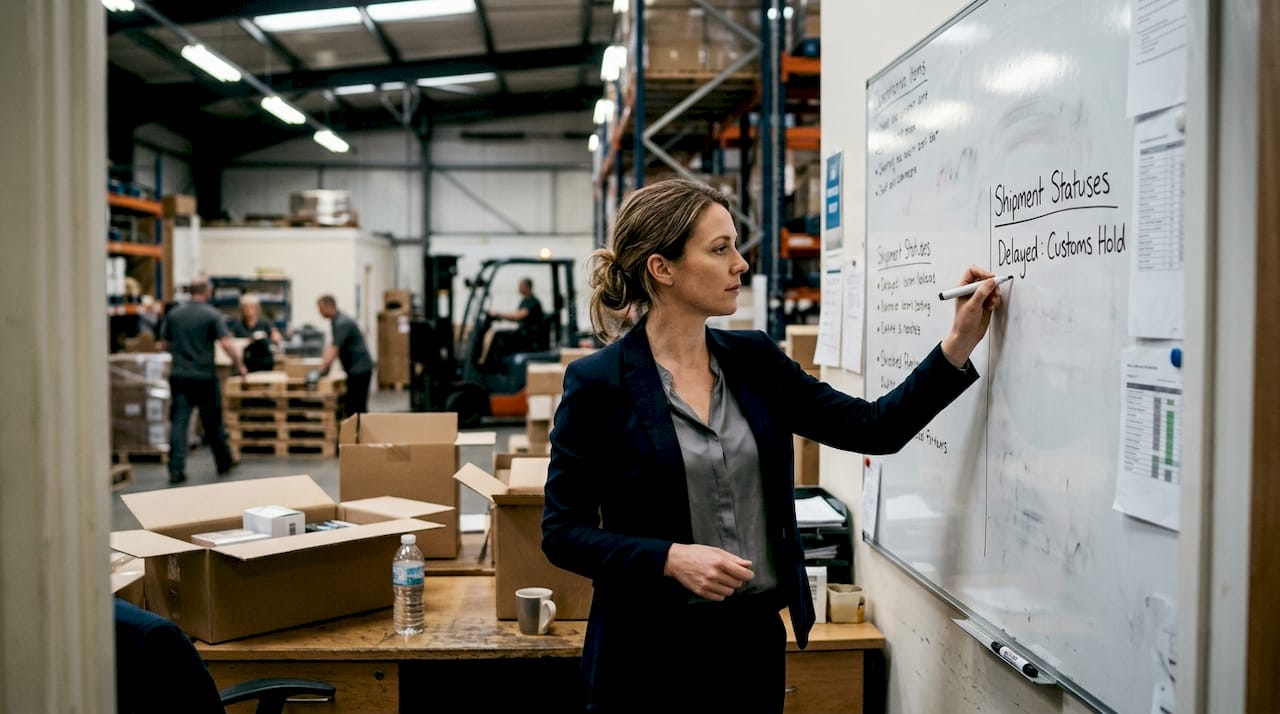
Delays, surcharges, or holds are often the result of missing documents or last-minute changes in requirements. The table below maps the most frequent obstacles to their typical impact:
| Obstacle | Typical delay | Estimated cost impact |
|---|---|---|
| Missing or incorrect documents | 2 to 5 days | Storage fees plus potential fines |
| Physical inspection triggered | 1 to 3 days | Inspection fees plus labor costs |
| Tariff code disputes | 3 to 10 days | Reclassification fees plus back duties |
| Regulatory changes mid-shipment | Variable | Rerouting or repackaging costs |
| Restricted or prohibited goods | Indefinite hold | Seizure or return shipping costs |
“Businesses that proactively monitor regulatory changes and maintain complete documentation are far less likely to face costly customs holds or penalties.”
Real-world disruptions from customs issues are not rare. Electronics importers have faced multi-week delays due to sudden changes in certification requirements. Food exporters have had entire shipments rejected over labeling discrepancies. These are not edge cases. They are predictable outcomes of reactive compliance management.
The solution is to shift from reactive to proactive. Preventing customs delays requires monitoring trade advisories, maintaining a pre-shipment checklist, and working with partners who track regulatory changes in real time. Comparing brokerage solutions can help businesses identify which level of support best matches their trade complexity.
The role of customs brokers and technology in streamlining clearance
To overcome these challenges, many businesses turn to professional brokers and technology. Both offer measurable benefits, and the right combination depends on shipment volume, complexity, and internal resources.
A licensed customs broker acts as an authorized intermediary between the importer or exporter and the customs authority. They classify goods, prepare and submit documentation, calculate duties, and manage communication with government agencies. Professional customs brokerage increases shipment clearance speed and reduces the risk of costly errors.
| Approach | Cost | Speed | Risk level | Visibility |
|---|---|---|---|---|
| DIY in-house | Low upfront | Slower | Higher | Limited |
| Licensed broker | Moderate fee | Faster | Lower | High |
| Automated software | Subscription | Fastest for routine | Low for standard | Real-time |
Technology-enabled compliance offers several distinct advantages:
- Automated HS code classification reduces human error in tariff assignment
- Real-time regulatory updates keep teams informed of changes before shipments depart
- Digital document management speeds up submission and reduces lost paperwork
- Shipment tracking integration provides end-to-end visibility across trade lanes
Understanding the difference between a customs broker vs freight forwarder is also important. Brokers focus on compliance and clearance. Forwarders manage the physical movement of goods. Many businesses benefit from working with a provider that offers both functions under one roof, reducing coordination gaps and improving overall customs brokerage advantages.
Best practices for efficient, compliant customs clearance
With strategies and support options in mind, here are best practices to help you optimize your customs processes for both speed and compliance.
Process optimization leads to fewer delays and measurable cost savings across international operations. The following numbered list provides an actionable playbook:
- Train staff on customs fundamentals — Everyone involved in shipping should understand basic classification, valuation rules, and documentation requirements.
- Digitize all shipping records — Paper-based systems slow down submissions and increase the risk of lost documents. Cloud-based platforms improve speed and auditability.
- Use pre-clearance programs — Programs like CBP’s Importer Self-Assessment (ISA) or Customs-Trade Partnership Against Terrorism (C-TPAT) can accelerate clearance for qualifying businesses.
- Engage a licensed customs broker — For complex or high-volume trade lanes, professional support pays for itself in avoided penalties and faster release times.
- Monitor regulatory changes in real time — Subscribe to trade advisories from CBP, the World Customs Organization (WCO), and destination country authorities.
- Conduct post-shipment audits — Review completed clearances for errors or inefficiencies. Patterns in past mistakes reveal where internal controls need strengthening.
Pro Tip: Build a compliance checklist specific to each trade lane you operate. Different countries have different documentation requirements, duty structures, and restricted goods lists. A lane-specific checklist, reviewed before every shipment, is one of the simplest and most effective controls a business can implement. Explore mastering customs tips for additional guidance on building these internal frameworks.
Setting up internal controls, such as dual-review processes for tariff classification and mandatory pre-shipment compliance sign-off, creates accountability and catches errors before they become expensive problems. These steps can be implemented this quarter without major investment.
How Worldwide Express helps your business clear customs with confidence
To help your business apply these best practices with ease, consider partnering with a provider that specializes in customs compliance and efficient global shipping.
Worldwide Express offers US customs brokerage services designed to take the complexity out of cross-border trade. From accurate tariff classification and document preparation to real-time shipment tracking and regulatory monitoring, the team brings deep expertise to every clearance. Whether your business is scaling into new markets or managing high-volume import and export lanes, freight forwarding guidance and consultative support are available to match your specific trade profile. Explore the customs streamlining guide to see how professional brokerage and digital tools work together to protect your shipments and your bottom line.
Frequently asked questions
What documents are required for customs clearance?
Most shipments require a commercial invoice, packing list, bill of lading, and relevant permits based on commodity and destination. Comprehensive documentation speeds up customs processing and reduces the risk of holds.
How can my business avoid customs delays and penalties?
Thorough documentation, correct tariff codes, and advance compliance checks are the best ways to avoid common customs delays and fines. Incorrect tariff codes are among the most frequent triggers for customs penalties.
When should a business use a customs broker?
A customs broker is recommended for complex shipments, frequent imports and exports, or when in-house compliance expertise is limited. Professional customs brokerage increases clearance speed and reduces costly errors.
Do customs clearance requirements differ by country?
Yes, every country may have unique rules, tariffs, and restricted items, so always verify requirements with local authorities or your broker before shipping.
How does technology improve customs compliance?
Automated software reduces classification errors, tracks regulatory changes in real time, and speeds up document handling for faster, more reliable clearance outcomes.
Recommended
- Master customs compliance tips for smoother shipping – Worldwide Express, Inc.
- Customs Clearance Is in Progress – What It Means for U.S. Importers – Worldwide Express, Inc.
- How to Handle Customs Audits for Smooth Compliance – Worldwide Express, Inc.
- Customs broker vs agent: Clear roles for easier compliance – Worldwide Express, Inc.
- Navigating UK food logistics for wholesalers in 2026 – WOODFORD – Bringing quality foods your way