TL;DR:
- Global logistics tracking involves real-time, unified monitoring of international shipments across multiple carriers and transport modes. Implementing this system requires correct carrier-specific tracking numbers, choosing appropriate tools, and setting up automated alerts to ensure visibility throughout the shipping process. Combining multi-carrier platforms with customs integration and proactive management enhances supply chain responsiveness and reduces tracking gaps.
Globe logistics tracking is defined as the unified, real-time monitoring of shipments across multiple carriers, transport modes, and international borders through a single integrated system. For businesses engaged in international trade, this capability is the difference between proactive supply chain control and reactive firefighting. Platforms like AfterShip, LOG-NET, and 17TRACK have made it possible to consolidate ocean, air, rail, and truck data into one view. The industry term for this discipline is supply chain visibility, and understanding both the concept and the tools behind it is the foundation of effective global shipment management.
What does globe logistics tracking actually require?
Effective globe logistics tracking starts with one thing most businesses overlook: the correct tracking number format for each carrier. FedEx uses a 12-digit number. UPS uses an 18-character alphanumeric string. Ocean carriers like Maersk and MSC issue Bill of Lading numbers that follow entirely different conventions. Using the wrong format in a carrier portal returns nothing, which wastes time and creates false alarms.
Beyond tracking numbers, businesses face a choice between three types of logistics tracking solutions.
| Tool Type | Carrier Coverage | Integration Depth | Implementation Time |
|---|---|---|---|
| Traditional TMS (e.g., LOG-NET) | 250+ carriers, all modes | Deep: customs, freight execution, EDI | 12–24 months |
| Dedicated visibility platforms (e.g., AfterShip, 17TRACK) | 700+ carriers | Moderate: milestone updates, alerts | 1–3 months |
| Control tower solutions (e.g., ShipERP GTT) | 250+ global carriers | High: AI analytics, exception management | 3–6 months |
The implementation gap between a traditional TMS and a dedicated visibility platform is significant. A 1–3 month deployment versus a 12–24 month one means businesses can gain real-time logistics tracking capability within a quarter rather than waiting nearly two years.
One critical gap that many businesses miss: visibility-only tools often lack integration with customs and freight execution systems. That gap means a shipment can show “in transit” on a dashboard while sitting in customs clearance with no actionable data attached to it.
Pro Tip: Enable push notifications on your tracking platform from day one. Push notifications keep stakeholders updated without manual checks, freeing your operations team to act on exceptions rather than hunt for status updates.
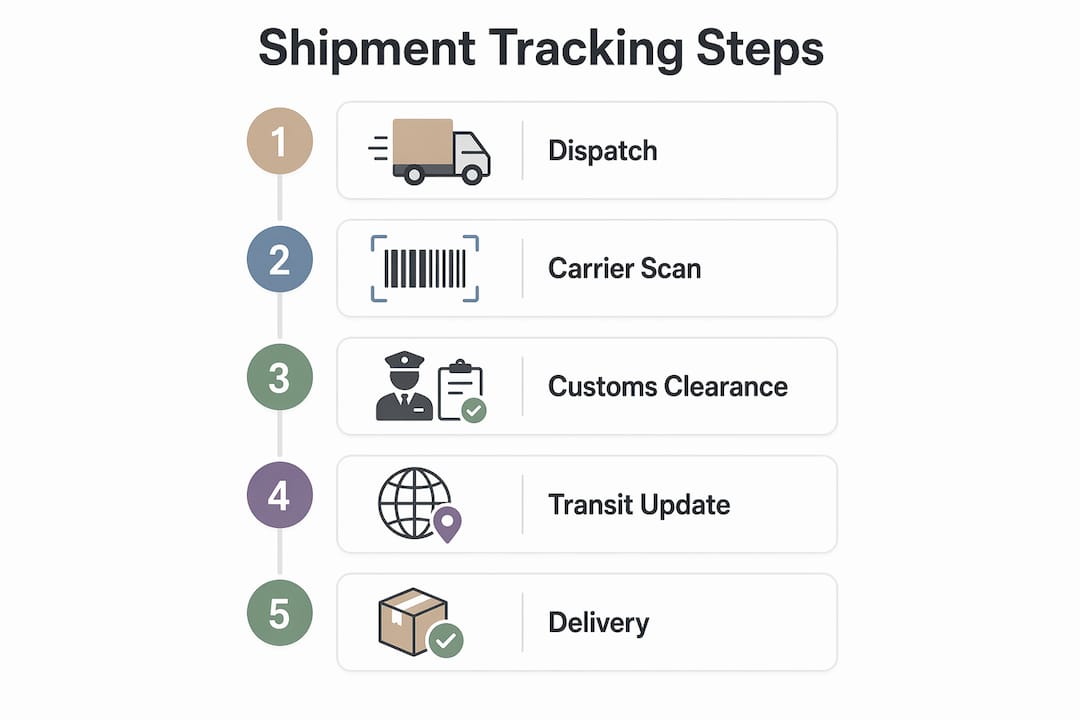
How to track globe logistics shipments step by step
Tracking an international shipment correctly requires more than entering a number into a portal. Follow this sequence to maintain visibility from origin to delivery.
-
Obtain the correct tracking number at booking. Request it directly from your freight forwarder or merchant at the time of dispatch. For ocean freight, this is the Bill of Lading number. For air freight, it is the Air Waybill number. For parcel carriers, it is the consignment number.
-
Check the origin carrier portal first. The origin carrier holds the most current data during the first leg. For cross-border shipments, this is often a regional carrier that hands off to an international operator at the export hub.
-
Wait 48–72 hours before expecting updates. Initial tracking events typically take 2–3 days to appear in tracking systems due to carrier processing and export handoffs. Checking before that window produces no useful data and creates unnecessary concern.
-
Load the tracking number into a multi-carrier platform. Tools like AfterShip and 17TRACK aggregate data from hundreds of carriers into one view. This is where you monitor key milestones: pickup confirmation, transit scans, customs clearance, carrier handovers, and proof of delivery.
-
Identify the destination carrier at handover. International shipments often change carriers upon entering the destination country. At that point, the original tracking number may stop updating. You will need a secondary reference number from the destination carrier to continue monitoring.
-
Set up automated exception alerts. Configure SMS, email, or push alerts for delays, customs holds, and failed delivery attempts. This converts your cargo tracking system from a passive lookup tool into an active management layer.
Pro Tip: Use a centralized dashboard to monitor all shipments in one view. Centralized dashboards replace manual checks across multiple portals, giving your team a unified exception queue instead of a fragmented list of browser tabs.
How to troubleshoot common globe logistics tracking problems

Even well-configured freight tracking services hit walls. Knowing what causes visibility gaps, and how to close them, separates experienced logistics teams from reactive ones.
The tracking “black hole” problem
The most common complaint in international shipping tracking is a shipment that stops updating for days. This is almost always a customs clearance or hub transit phase where physical scanning is not performed. The shipment is moving. The data is not. Businesses that understand this distinction avoid unnecessary carrier escalations and customer service calls.
Handover tracking failures
When a shipment crosses from an international carrier to a local last-mile carrier, the original tracking number frequently becomes inactive. The solution is to contact your freight forwarder for the secondary reference number assigned by the destination carrier. In some cases, the destination carrier’s portal requires a separate login and a locally formatted tracking ID.
Common mistakes that destroy visibility
- Relying on a single carrier portal for end-to-end tracking on multi-leg shipments
- Failing to record the destination carrier name at the time of booking
- Not setting up automated alerts, which forces manual status checks
- Expecting real-time updates during the first 48–72 hours after dispatch
- Using visibility platforms that lack customs integration, leaving clearance status invisible
“Fragmented tracking across multiple carrier portals wastes time. Integrated multi-carrier platforms replace manual checks across several portals and provide a unified, actionable view of every shipment in your network.”
When manual tracking fails and automated alerts are not configured, the right move is to contact the carrier directly with the Bill of Lading or Air Waybill number. If the carrier cannot provide an update within 24 hours, escalate to your freight forwarder. Worldwideexpress recommends documenting every escalation with timestamps, which becomes critical if a cargo insurance claim is needed later.
Multi-carrier TMS vs. visibility platforms vs. control towers
Choosing the right freight tracking service architecture depends on your shipment volume, the number of carriers you use, and how deeply you need tracking data to connect with execution systems.
Multi-carrier TMS platforms like LOG-NET are built for businesses that need tracking integrated with freight execution, customs brokerage, and EDI workflows. They support over 250 global carriers across ocean, air, rail, and truck. The tradeoff is implementation time and cost. These systems take 12–24 months to deploy and require dedicated IT resources.
Dedicated visibility platforms like AfterShip and 17TRACK are the fastest path to consolidated international shipping tracking. They cover 700 or more carriers, deploy in 1–3 months, and provide milestone-based alerts. The limitation is depth. They show you what happened, not why, and they rarely connect to customs or freight execution data.
Control tower solutions sit between the two. They aggregate data from 250 or more carriers and 3PLs, embed AI analytics, and provide exception management workflows. The standout capability is predictive ETAs. AI-powered predictive ETAs reach over 95% accuracy, enabling logistics teams to act on delays before they become customer problems. That level of foresight transforms a reactive tracking function into a proactive supply chain tool.
For businesses scaling their international trade operations, the upgrade path matters. Start with a visibility platform to gain immediate consolidation. Add a control tower layer as shipment volume grows. Migrate to a full multi-carrier TMS when customs integration and freight execution automation become priorities. You can explore a detailed breakdown of leading freight tracking tools to compare these options side by side.
Centralized dashboards with AI analytics go beyond milestone updates. They surface patterns: which lanes experience the most delays, which carriers miss ETAs most frequently, and which customs ports create the longest dwell times. That intelligence informs carrier selection, routing decisions, and inventory positioning in ways that milestone-only tracking cannot.
Key takeaways
Effective globe logistics tracking requires integrating multi-carrier platforms with customs and freight execution systems, not just monitoring milestone updates in isolation.
| Point | Details |
|---|---|
| Choose the right tool tier | Match your platform to shipment volume: visibility tools for speed, control towers for analytics, TMS for full execution integration. |
| Expect a 48–72 hour delay | First tracking events take 2–3 days to appear; checking earlier produces no useful data. |
| Manage carrier handovers actively | Obtain secondary destination carrier reference numbers at booking to avoid visibility gaps mid-shipment. |
| Enable automated alerts | Configure SMS, email, and push notifications to replace manual portal checks and catch exceptions early. |
| Integrate customs data | Visibility platforms without customs integration leave clearance status blind, creating false “in transit” readings. |
Why most businesses are still tracking shipments the wrong way
I have spent years watching logistics teams build elaborate spreadsheets to track shipments across a dozen carrier portals. The spreadsheet feels like control. It is not. It is a documentation system for problems that have already happened.
The shift I find most significant in 2026 is not the technology itself. It is the mindset change from tracking as a lookup function to tracking as an early warning system. Businesses that use shipment visibility tools with predictive ETAs and automated exception alerts are not just better informed. They are structurally faster at responding to disruptions than competitors still checking portals manually.
The advice I give most often is this: do not buy a visibility platform and stop there. The businesses that get the most value from tracking technology are the ones that connect it to their customs workflows and carrier contracts. A shipment stuck in customs is invisible on a milestone-only dashboard. That blind spot costs real money in demurrage, missed delivery windows, and customer trust.
My honest concern about the current market is vendor lock-in. Several control tower providers make it technically difficult to export your historical shipment data. Before signing any contract, ask specifically how you export your data and what format it comes in. That question alone tells you a great deal about how the vendor views your relationship.
— Ian
How Worldwideexpress supports your global tracking needs
Worldwideexpress provides businesses engaged in international trade with a full suite of logistics services designed to deliver visibility at every stage of the shipment journey. From air and ocean freight forwarding to customs brokerage and supply chain management, Worldwideexpress combines carrier network depth with real-time tracking tools built for complex cross-border operations. The platform supports multi-carrier shipment management across all major transport modes, giving your team a single point of control rather than a fragmented set of portals. For businesses ready to move beyond manual tracking and build a genuinely responsive supply chain, Worldwideexpress offers tailored solutions backed by deep industry experience and global reach.
FAQ
What is globe logistics tracking?
Globe logistics tracking is the real-time monitoring of shipments across multiple carriers and transport modes through a unified platform. It is the operational equivalent of supply chain visibility, applied specifically to international and cross-border freight.
How long does it take before tracking updates appear?
Initial tracking events typically take 48–72 hours to appear after dispatch due to carrier processing and export handoffs. Checking before that window will not return useful data.
Why does my shipment stop updating mid-transit?
Tracking gaps most commonly occur during customs clearance or hub transit phases where physical scanning is not performed. The shipment is still moving; the data simply is not being captured at that stage.
What is the fastest way to consolidate shipment tracking?
Dedicated visibility platforms like AfterShip and 17TRACK deploy in 1–3 months and cover 700 or more carriers. They are the fastest path to consolidated international shipping tracking for businesses that need results quickly.
How do I track a shipment after a carrier handover?
Contact your freight forwarder for the secondary reference number assigned by the destination carrier. The original tracking number often stops updating at the point of handover, and the destination carrier requires its own locally formatted ID.
Recommended
- Shipment Visibility Tools: A 2026 Guide for Logistics Pros – Worldwide Express, Inc.
- EDI Tracking for Logistics Pros: A 2026 Guide – Worldwide Express, Inc.
- How to track a delivery truck effectively in 2026 – Worldwide Express, Inc.
- Next-gen container tracking: real-time visibility in 2026 – Worldwide Express, Inc.