TL;DR:
- Remote freight forwarding jobs allow logistics professionals to coordinate and sell freight services from any location. Experience, technical skills, and client portfolios are essential for success in these roles, which are expanding in 2026. Compensation is competitive, and employers focus on outcomes over hours, emphasizing problem-solving and communication skills.
Remote freight forwarding jobs are roles in logistics that let professionals coordinate, manage, or sell freight services from any location using digital platforms and communication tools. The industry term for this work is freight forwarding, and the remote version of it has expanded well beyond a pandemic workaround. Companies like Alchemy GTS and hireneXus are actively recruiting for virtual freight coordinator positions, remote logistics coordinators, and business development directors who never need to set foot in a physical office. If you have logistics experience and want geographic freedom, the opportunity is real and growing in 2026.
What remote freight forwarding jobs are available right now
The most common remote freight forwarding jobs fall into four categories: transportation operations specialist, logistics coordinator, sales manager, and business development director. Each role carries distinct responsibilities, and understanding the differences helps you target the right applications.

Transportation operations specialists manage inbound and outbound freight flows from a remote Transportation Operations Center (TOC). These roles require real-time problem solving, carrier communication, and shipment tracking across multiple accounts. Per Hirevector, TOC roles run 24/7 with rotating shifts, meaning you need genuine schedule flexibility, not just a preference for working from home.
Logistics coordinators handle load building, carrier selection, and shipment tracking for national accounts. This is the most common entry point for work from home shipping jobs in freight forwarding. Sales managers and business development directors focus on client acquisition and portfolio growth, operating independently with minimal oversight.
One category that most job seekers overlook is the logistics operations partner role. These positions focus on shipper onboarding and relationship maintenance, allowing experienced professionals to avoid high-stress dispatch cycles while still contributing deep industry knowledge. Account management and analyst roles are also growing, per remote logistics partner insights.
- Transportation operations specialist: inbound/outbound freight, 24/7 shift coverage
- Logistics coordinator: load building, carrier coordination, national account support
- Sales manager: client portfolio management, consultative selling, revenue targets
- Business development director: new market development, strategic partnerships
- Logistics operations partner: shipper onboarding, relationship maintenance, account health
Pro Tip: If you want a remote logistics job with lower stress than active dispatch, look specifically for “logistics operations partner” or “account onboarding specialist” titles. These roles leverage your industry knowledge without the pressure of real-time freight crises.
What qualifications do you need for remote freight forwarding roles?
Experience requirements in remote freight forwarding are specific and non-negotiable. Employers are not hiring generalists. Here is what the market expects in 2026.
-
Experience baseline. Remote coordinator roles require 3–5 years in freight brokerage or third-party logistics (3PL) operations. Sales and business development positions at firms like Alchemy GTS require 5+ years of international air and ocean freight experience. That gap matters when you are targeting roles.
-
Technical skills. Proficiency in transportation management systems (TMS), load boards, and carrier portals is expected. Familiarity with tools like McLeod Software, Mercury Gate, or similar platforms puts your application ahead. Remote work also demands comfort with Slack, Microsoft Teams, Zoom, and project management tools.
-
Consultative selling ability. For sales roles, employers at Alchemy GTS prioritize solutions-based sales approaches over pure cold-calling experience. You need to demonstrate that you understand a shipper’s supply chain before proposing a solution.
-
Transferable client portfolio. This is the factor most candidates underestimate. Recruiters value active client relationships more than technical credentials in remote sales roles. If you can bring a book of business to a new firm, your negotiating position changes completely.
-
Remote work discipline. Employers screen for this explicitly. Expect interview questions about your home office setup, how you handle time zone differences, and how you document decisions without in-person oversight.
Pro Tip: Your freight forwarding knowledge transfers to non-traditional remote roles like compliance analyst or account onboarding specialist. These positions are less competitive and often pay comparably to coordinator roles. Search for them using terms like “remote logistics analyst” or “virtual account manager freight.”
How does compensation compare across remote freight roles?
Remote freight forwarding compensation is competitive with traditional office roles, and in some cases it exceeds them when you factor in eliminated commuting costs and geographic flexibility.
Remote logistics coordinators earn $55,000–$75,000 annually, with some firms offering profit-share models that pay up to 50% of gross profit on accounts you manage. That profit-share structure is significant. A coordinator managing $500,000 in gross freight revenue could earn well above the base salary range. Transportation operations specialists earn approximately $35 per hour, which translates to roughly $72,800 annually at full-time hours.
| Role | Base Compensation | Variable Pay | Key Benefits |
|---|---|---|---|
| Transportation operations specialist | ~$35/hour (~$72,800/year) | Performance bonuses | 401(k) match, health/dental/vision, equipment allowance |
| Logistics coordinator | $55,000–$75,000/year | Up to 50% gross profit share | PTO, health insurance, remote setup stipend |
| Sales manager | $60,000–$90,000/year | Commission on new business | 401(k), full benefits, car/phone allowance |
| Business development director | $80,000–$120,000/year | Commission + profit share | Full benefits, performance bonuses |
| Logistics operations partner | $50,000–$70,000/year | Account retention bonuses | Health coverage, flexible PTO |
Benefits packages across remote freight roles typically include 401(k) matching, health, dental, and vision coverage, paid time off, and a remote work equipment allowance. The equipment allowance is a practical detail worth confirming during negotiations. Some employers provide a laptop and headset; others offer a monthly stipend. Knowing which model a company uses before you accept an offer matters for your actual take-home value.
What do employers expect from remote freight forwarding staff?
The management model in remote freight forwarding has shifted. Employers are moving away from tracking hours and toward measuring outcomes. Per industry trend data, the dominant approach is now “outcomes over hours,” with managers evaluating problem-solving quality and service level results rather than time logged. This is good news for experienced professionals and a real challenge for those who need close supervision.
Here is what employers consistently prioritize when hiring for remote freight roles:
- Problem-solving speed. Freight moves in real time. A delayed shipment at 11 p.m. needs a solution, not an escalation chain. Employers want evidence that you have resolved complex freight issues independently.
- Communication across time zones. Remote logistics teams often span multiple U.S. time zones and international partners. Clear, concise written communication is as important as verbal skills.
- Trust and autonomy. Remote freight roles operate on a trust model. Employers expect you to manage your workload, document your decisions, and flag issues proactively without being prompted.
- Shift flexibility. For TOC roles, 24/7 rotating shift coverage is standard. If you are targeting operations roles, confirm the shift structure before applying.
- Relationship management. For sales and coordinator roles, the ability to maintain long-term client relationships remotely is the core competency. Employers want to see retention metrics, not just acquisition numbers.
Understanding remote team dynamics in logistics is something many candidates overlook when preparing for interviews. Demonstrating that you understand how distributed teams operate signals maturity to hiring managers.
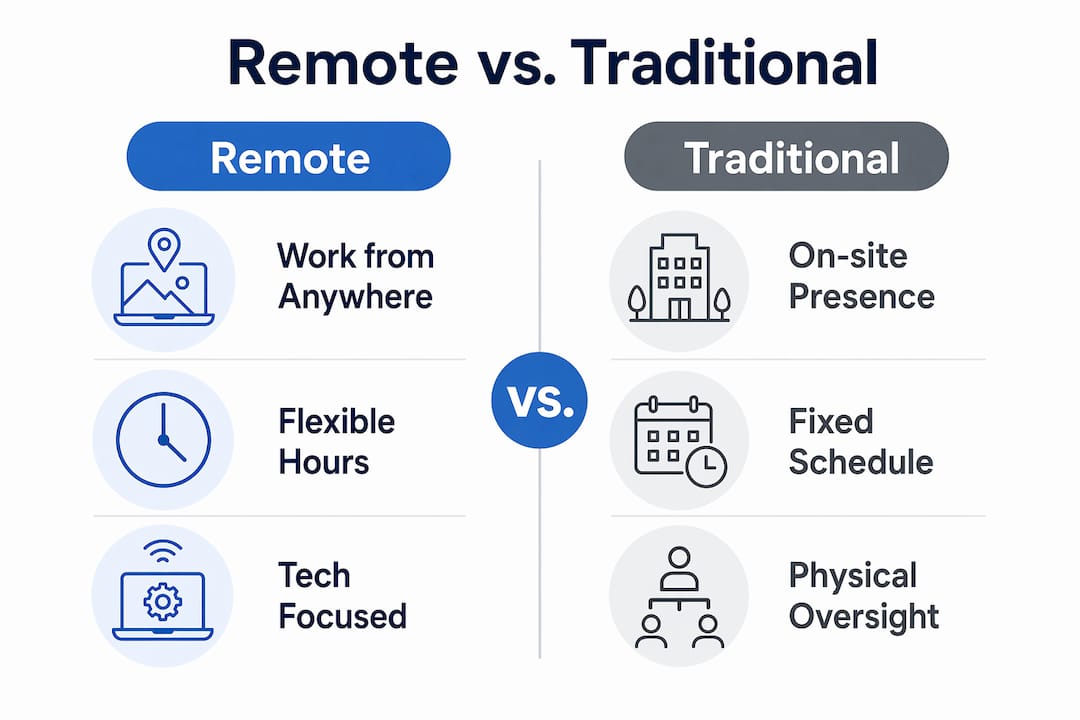
Remote vs. traditional freight forwarding careers: what is the real difference?
The core difference between remote and traditional freight forwarding careers is not just location. It is the type of work that can be done remotely versus what requires physical presence.
| Factor | Remote freight forwarding | Traditional freight forwarding |
|---|---|---|
| Location | Work from anywhere with internet | Office, warehouse, or port-based |
| Roles available | Coordinator, sales, analyst, account management | Dispatcher, warehouse ops, customs agent, broker |
| Schedule | Flexible, but may include rotating shifts | Standard business hours, some overtime |
| Career growth | Strong in sales and account management tracks | Strong in operations and compliance tracks |
| Compensation | Comparable to office roles, plus cost savings | Base salary with fewer variable components |
| Networking | Digital-first, requires proactive outreach | Organic, relationship-driven in person |
Traditional freight forwarding careers still require physical presence for roles like warehouse operations, customs inspection, and active dispatch. Remote roles concentrate in coordination, sales, analytics, and account management. The digital freight forwarding trends shaping the industry in 2026 are expanding the remote category, particularly in technology-adjacent roles like data analyst and TMS administrator.
The practical advice for choosing between the two paths is straightforward. If your strengths are relationship management, consultative selling, or data analysis, remote roles will reward you well. If your strengths are hands-on operations, physical cargo handling, or customs compliance work, traditional roles remain the better fit. Many professionals build hybrid careers, starting in traditional operations and transitioning to remote coordination or sales after accumulating the freight forwarding industry knowledge that remote employers pay a premium for.
Key Takeaways
Remote freight forwarding careers reward professionals who combine deep logistics experience with strong communication skills and the discipline to deliver results without direct supervision.
| Point | Details |
|---|---|
| Role variety is wide | Remote freight roles span operations, coordination, sales, and account management, not just dispatch. |
| Experience requirements are firm | Coordinator roles need 3–5 years; sales leadership roles require 5+ years of international freight experience. |
| Compensation is competitive | Remote coordinators earn $55,000–$75,000 annually, with profit-share models adding significant upside. |
| Employers measure outcomes | The industry has shifted to trust-based management, evaluating results and problem-solving over hours logged. |
| Client portfolios open doors | In sales roles, bringing an active book of business to a new employer is the single strongest differentiator. |
What I have learned about building a remote freight career
The most common mistake I see from logistics professionals pursuing remote roles is treating the job search like a traditional freight job hunt. They apply to coordinator positions with a resume built around physical dispatch experience and wonder why they are not getting callbacks.
Remote freight forwarding employers are not just hiring for logistics knowledge. They are hiring for self-management, digital fluency, and the ability to build trust without being in the same room. Those are learnable skills, but you have to demonstrate them explicitly in your application and interview, not assume they are implied by your operations background.
The other thing worth saying plainly: the client portfolio advantage in sales roles is real and it is large. I have seen candidates with fewer credentials land business development director roles because they walked in with 20 active shippers ready to move. Technical knowledge matters, but a warm book of business matters more in remote sales freight forwarding. If you are planning a move into remote sales, spend six months deepening your current client relationships before you start applying.
The freight marketplace trends shaping logistics in 2026 are creating more remote roles, not fewer. The professionals who will benefit most are those who invest now in digital tools, remote communication skills, and industry specialization rather than waiting for the perfect job posting to appear.
— Ian
How Worldwideexpress supports your freight forwarding career
Worldwideexpress has spent years building expertise across international freight forwarding, customs brokerage, air and ocean transportation, and supply chain management. For professionals building or advancing remote freight forwarding careers, that depth of industry knowledge is a resource worth using.
Whether you are researching the industry before your first application or looking to sharpen your understanding of international freight shipping before a senior role interview, Worldwideexpress provides practical, experience-backed resources. Explore the full range of logistics services and solutions that Worldwideexpress offers, and use that knowledge to position yourself as the informed, capable candidate that remote freight employers are actively looking for in 2026.
FAQ
What is a remote freight forwarding job?
A remote freight forwarding job is a logistics role where a professional coordinates, manages, or sells freight services using digital tools without working from a physical office or warehouse. Common titles include logistics coordinator, transportation operations specialist, and business development director.
How much do remote freight forwarding jobs pay?
Remote logistics coordinators typically earn $55,000–$75,000 annually, while transportation operations specialists earn approximately $35 per hour. Sales and business development roles carry higher base salaries plus commission structures.
How many years of experience do I need for remote freight roles?
Coordinator positions generally require 3–5 years of freight brokerage or 3PL experience. Remote sales leadership roles at firms like Alchemy GTS require 5+ years of international air and ocean freight experience.
What skills matter most for virtual freight coordinator positions?
Employers prioritize TMS proficiency, consultative selling ability, strong written communication, and the capacity to work independently across time zones. For sales roles, an active client portfolio is the most valued asset.
Are remote freight forwarding jobs available for entry-level candidates?
Most remote freight roles require at least 3 years of logistics experience. Entry-level candidates are better positioned to start in traditional operations roles and transition to remote positions after building a track record in load coordination or carrier management.
Recommended
- Understanding freight forwarding: a 2026 guide – Worldwide Express, Inc.
- Digital freight forwarding trends: navigate logistics smarter – Worldwide Express, Inc.
- Freight marketplace trends shaping logistics in 2025 – Worldwide Express, Inc.
- Top trucking trends shaping 2025 freight strategies – Worldwide Express, Inc.